Overview
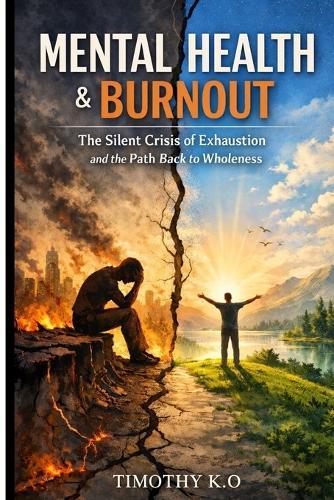
...every system has thresholds. Push a structure beyond its tolerance, and it doesn't become stronger - it fails... I didn't write this book because I have everything figured out. I wrote it because I've seen, studied, and quietly lived close enough to burnout to recognize it when it doesn't announce itself loudly. Burnout rarely arrives as a dramatic breakdown. More often, it shows up as a slow erosion - a dulling of enthusiasm, a constant tiredness that sleep no longer fixes, a strange emotional distance from things that once mattered. People don't collapse all at once. They thin out over time. This book exists because I've learned that mental exhaustion is not a personal failure. It is often a logical outcome of how modern life is structured. Coming from a background in Pure and Applied Mathematics, I've always been trained to look for patterns, limits, systems, and breaking points. Mathematics teaches you something subtle but powerful: every system has thresholds. Push a structure beyond its tolerance, and it doesn't become stronger - it fails. The human mind is no different. This book doesn't panic about those numbers. Panic clouds understanding. Instead, it slows down and asks better questions. Why do capable, intelligent, motivated people burn out? Why does rest sometimes fail to restore us? Why do people feel guilty for needing boundaries? Why does success so often arrive paired with emptiness? I approach these questions the same way I was taught to approach complex problems: define the system, identify the variables, observe the patterns, and be honest about the limits. Burnout is not simply about working too hard. It's about misaligned effort, unacknowledged emotional labor, loss of meaning, and constant internal pressure to perform. It's about living in a world that rewards output while ignoring inner cost. Throughout this book, I don't assume the reader is weak. I assume they are aware, tired, thoughtful, and trying to survive responsibly. I don't tell anyone to ""just think positively"" or ""push through."" History shows that civilizations, organizations, and individuals that ignore strain signals don't become resilient - they collapse quietly and then suddenly. What I offer instead is understanding. Understanding creates relief before motivation ever does. Understanding removes shame. Understanding allows recovery to begin without fear. Recovery, as explored here, is not framed as escape from life, but as a return to wholeness - a state where effort, rest, ambition, and emotional honesty can coexist without constant internal conflict. This book does not promise a perfect life. Mathematics taught me better than that. There are no perfect systems - only stable ones. Stability comes from respecting constraints, not denying them. So this book walks carefully. It explains. It reflects. It connects psychology with history, personal experience with broader patterns, inner struggle with external structure. It respects science without dehumanizing the reader. It motivates without lying. Most importantly, it speaks to fear without amplifying it.
Full Product Details
Author: Timothy K O
Publisher: Independently Published
Imprint: Independently Published
Dimensions:
Width: 15.20cm
, Height: 0.50cm
, Length: 22.90cm
Weight: 0.127kg
ISBN: 9798248088799
Pages: 86
Publication Date: 12 February 2026
Audience:
General/trade
,
General
Format: Paperback
Publisher's Status: Active
Availability: Available To Order

We have confirmation that this item is in stock with the supplier. It will be ordered in for you and dispatched immediately.