|
|
|||
|
||||
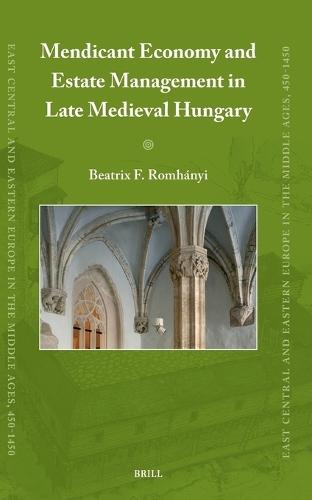
OverviewThis volume offers an original, comprehensive study of the economic foundations and estate management of mendicant orders in late medieval Hungary, setting this within a broader East-Central European context. Focusing on the Franciscans, Dominicans, Austin Hermits, and Carmelites, it examines how communities devoted to apostolic poverty adapted locally through alms, landholding, and manual work. By analysing patronage, urban and rural networks, and resilience to external pressures, this book provides new perspectives on mendicant practices and the economic life of medieval society. Drawing on comparative examples and underutilised sources, it reveals how Hungary’s unusually dense mendicant presence shaped its religious and social landscape. Full Product DetailsAuthor: Beatrix F. RomhányiPublisher: Brill Imprint: Brill Volume: 99 Dimensions: Width: 15.50cm , Height: 2.40cm , Length: 23.50cm Weight: 0.787kg ISBN: 9789004749542ISBN 10: 9004749543 Pages: 360 Publication Date: 10 December 2025 Audience: College/higher education , Postgraduate, Research & Scholarly Format: Hardback Publisher's Status: Active Availability: Manufactured on demand We will order this item for you from a manufactured on demand supplier. Language: Hungarian Table of ContentsReviewsAuthor InformationBeatrix F. Romhányi, Ph.D. (1997), Hungarian Academy of Sciences, is a medievalist at the Károli Gáspár University. Her research focuses on medieval church history, economic and environmental history, and regional differences. Her most recently published monograph is Pauline Economy in the Middle Ages (Brill, 2020). Tab Content 6Author Website:Countries AvailableAll regions |
||||