Awards
- Short-listed for Lambda Literary Awards (Gay Men's Studies) 1999
Overview
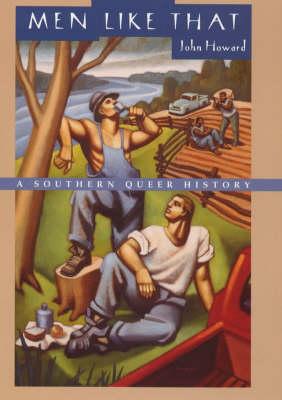
One doesn't usually associate thriving queer culture with rural America, but John Howard's history of queer life in the South seeks to debunk the myth that same-sex desires can't find expression outside the big city. In fact, this book shows that the nominally conservative institutions of small-town life - home, church, school and workplace - were the very sites where queer sexuality flourished. As Howard recounts the life stories of the ordinary and the famous, often in their own words, he also locates the material traces of queer sexuality in the landscape: from the farmhouse to the church social, from sports facilities to roadside rest areas. Spanning four decades, this book complicates traditional notions of a post-World War II conformist wave in America. Howard argues that the 1950s, for example, were a period of vibrant queer networking in Mississippi, while during the so-called ""free love"" 1960s homosexuals faced aggressive oppression. When queer sex was linked to racial agitation and when key civil rights leaders were implicated in homosexual acts, authorities cracked down and literally ran the accused out of town. In addition to firsthand accounts, the text finds representations of homosexuality in regional pulp fiction and artwork, as well as in the number one pop song about a suicidal youth who jumps off the Tallahatchie Bridge. And Howard offers assessments of outrageous public scandals: a conservative US congressman caught in the act in Washington and a white candidate for governor accused of patronizing black transgender sex workers. This history of the queer South aims to reorient the presuppositions about gay identity and about the dynamics of country life.
Full Product Details
Author: John Howard
Publisher: The University of Chicago Press
Imprint: University of Chicago Press
Edition: 2nd ed.
Dimensions:
Width: 16.00cm
, Height: 3.10cm
, Length: 23.50cm
Weight: 0.690kg
ISBN: 9780226354712
ISBN 10: 0226354717
Pages: 418
Publication Date: 01 December 1999
Audience:
College/higher education
,
Professional and scholarly
,
Undergraduate
,
Postgraduate, Research & Scholarly
Format: Hardback
Publisher's Status: Out of Stock Indefinitely
Availability: In Print

Limited stock is available. It will be ordered for you and shipped pending supplier's limited stock.
Reviews
With a scrupulous eye for detail, Howard traces the evolution of homosexual identities in Mississippi from 1945 to 1985 and, in the process, offers a perceptive look into queer lives away from America's urban centers. Howard (American History/Univ. of York, England) takes a twin approach in his history, recounting and contextualizing the oral histories of queer Mississippians, as well as uncovering queer lives through documents of historical record. Howard's informants provide an insider's view into how gay networks developed and evolved in rural Mississippi, how men found one another despite the manifold dangers of discovery involved. Concluding against the conventional wisdom that the 1950s were a period of sexual repression, Howard explores how queer men of the time carried on a lifestyle pulsating with sexuality, through an analysis of their lives at home, school, church, college, and work. He also argues that for gay men in Mississippi, the 1960s brought about a tightening of sexual codes (in order to combat racial activism), which ended with disastrous results for the many men whose lives and careers were Mined after they were exposed as homosexuals. The stories that Howard uncovers - the murder of a gay interior decorator in 1955, a congressman's sex scandal, and queer rumors in a gubernatorial election among them - parade an eclectic cast of characters through the wilds of Mississippi's queer life and the thickets of public opinion. Complementing Howard's historical analysis is his reading of queer representations in the media, including physique art, pulp fiction, and Bobbie Gentry's song Ode to Billy Joe. With his clear methodology and circumspect analysis, Howard creates a history remarkable in its complexity yet intimate in its portraiture. At long last an intimate and full vision of queer lives in America that did not unfold in San Francisco's discos. (Kirkus Reviews)
Author Information
John Howard is professor in and head of the Department of American Studies at King's College London and the author of Men Like That: A Southern Queer History, also published by the University of Chicago Press.