Overview
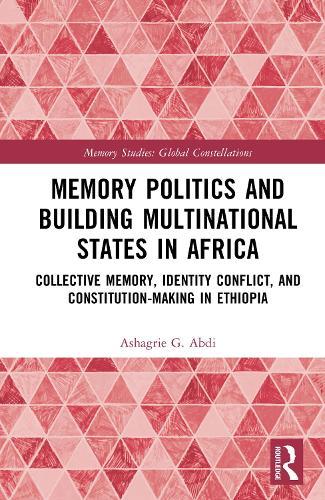
This book tackles the fundamental question of how a society with competing collective memories and visions can build a common nation while trying to reconcile the past and forge a common future. Delving into the complex interplay between collective memory, identity, nation-building, and constitution making within the Ethiopian context, it offers a detailed case of how law, memory, and power interact in post-conflict, multi-ethnic societies. Using the 1995 Ethiopian Constitution as a case study, the book investigates how competing collective memories and identity conflicts have shaped Ethiopia's national identity, governance, and broader efforts toward nation-building in a multinational state. Drawing on in-depth interviews, document analysis, and theoretical insights, it explores how historical grievances, identity politics, and contested memories were embedded in constitutional debates over federalism, language, the flag, and the right to self-determination. The analysis highlights the ways in which these collective memories influence political dynamics, contribute to ongoing internal conflicts, and shape national narratives. Offering a deeper understanding of how memory politics affects governance and stability, this work addresses the broader implications for scholars and policymakers interested in the intersections of memory, identity, and constitutional processes in diverse societies. By centering Ethiopia, and through a synthesis of theoretical frameworks and empirical research, this book provides crucial insights into the challenges and possibilities of nation-building across the Global South, making it essential reading for researchers and advanced students interested in the complexities of governing multinational states, African politics and law, and those with interests in memory studies, sociology, social psychology more broadly.
Full Product Details
Author: Ashagrie G. Abdi
Publisher: Taylor & Francis Ltd
Imprint: Routledge
Weight: 0.690kg
ISBN: 9781041114024
ISBN 10: 1041114028
Pages: 270
Publication Date: 31 December 2025
Audience:
College/higher education
,
Professional and scholarly
,
Tertiary & Higher Education
,
Professional & Vocational
Format: Hardback
Publisher's Status: Active
Availability: Not yet available

This item is yet to be released. You can pre-order this item and we will dispatch it to you upon its release.
Reviews
'This book makes a major contribution to the field of conflict analysis and resolution by demonstrating how memory and identity shape constitutional design in deeply divided societies. Through a rigorous study of Ethiopia’s 1995 Constitution, it reveals how competing collective memories both enabled and constrained the project of nation-building. The book demonstrates how constitutional texts embody not only legal choices but also contested identities and historical narratives, opening new pathways for understanding why some constitutions heal division while others entrench it. By merging insights from psychology, sociology, political science, and law, it weaves together diverse yet interlinked concepts and theories to explain why achieving a constitution based on broad consensus is often so difficult. A vital resource for scholars, mediators, policymakers, and practitioners engaged in national reconciliation, inclusive dialogue, and peace processes who seek to reconcile memory, identity, and governance—particularly in the context of protracted conflicts. It will also serve as an essential reference for students of memory studies, identity, and constitutional law, offering the conceptual foundations and analytical tools needed to navigate these complex debates.' Karina V. Korostelina, Professor at Jimmy and Rosalynn Carter School for Peace and Conflict Resolution,George Mason University. 'Ethiopia is a country both blessed and cursed by its competing and often polarizing historical memories. In this book, Ashagrie G. Abdi takes on these socially constructed narratives and their role in shaping the constitutional debates of the mid-1990s. This approach allows us to understand both processes of nation building and the dynamics of deadly internal conflicts. Ethiopia’s 1995 constitution has been the subject of vigorous debate and substantial scholarly interest. In this book Ashgarie provides a new perspective by weaving collective memory into the very heart of the analysis. This approach allows us to see how the making of the constitution shaped notions of identity but, in the end, failed to create a collective memory to which all Ethiopians could ascribe. The issues engaged in the constitutional debates remain at the core of the contemporary Ethiopian crises. Drawing on political science, law, and memory studies, this book will be required reading for scholars of Ethiopia as well as those interested in how historical memories are created and shape political dynamics. Ashagrie offers insights into Ethiopia’s contentious politics but also the wider challenge of governing diversity in deeply divided societies.' Terrence Lyons, Professor at Jimmy and Rosalynn Carter School for Peace and Conflict Resolution, George Mason University.
Author Information
Ashagrie G. Abdi is an accomplished international human rights lawyer and strategic advisor. He holds a PhD in Conflict Analysis from George Mason University and an LL.M. in International Human Rights Law from Northwestern University. For over a decade, he has conducted high-level research and authored indices on governance, conflict, and societal transitions.