Overview
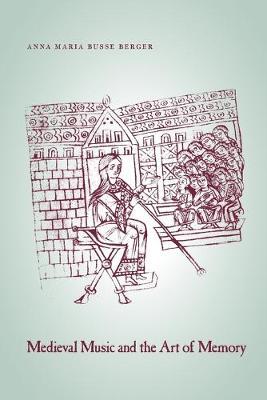
Winner of the ASCAP Deems Taylor Award and Society of Music Theory's Wallace Berry Award This bold challenge to conventional notions about medieval music disputes the assumption of pure literacy and replaces it with a more complex picture of a world in which literacy and orality interacted. Asking such fundamental questions as how singers managed to memorize such an enormous amount of music and how music composed in the mind rather than in writing affected musical style, Anna Maria Busse Berger explores the impact of the art of memory on the composition and transmission of medieval music. Her fresh, innovative study shows that although writing allowed composers to work out pieces in the mind, it did not make memorization redundant but allowed for new ways to commit material to memory. Since some of the polyphonic music from the twelfth century and later was written down, scholars have long assumed that it was all composed and transmitted in written form. Our understanding of medieval music has been profoundly shaped by German philologists from the beginning of the last century who approached medieval music as if it were no different from music of the nineteenth century. But Medieval Music and the Art of Memory deftly demonstrates that the fact that a piece was written down does not necessarily mean that it was conceived and transmitted in writing. Busse Berger's new model, one that emphasizes the interplay of literate and oral composition and transmission, deepens and enriches current understandings of medieval music and opens the field for fresh interpretations.
Full Product Details
Author: Anna Maria Busse Berger
Publisher: University of California Press
Imprint: University of California Press
Dimensions:
Width: 15.20cm
, Height: 2.00cm
, Length: 22.90cm
Weight: 0.454kg
ISBN: 9780520314276
ISBN 10: 0520314271
Pages: 304
Publication Date: 08 October 2019
Audience:
Professional and scholarly
,
Professional & Vocational
Format: Paperback
Publisher's Status: Active
Availability: Out of stock

The supplier is temporarily out of stock of this item. It will be ordered for you on backorder and shipped when it becomes available.
Reviews
Groundbreaking in its scope, depth, and thoroughness. * Journal of the American Musicological Society * Medieval Music and the Art of Memory is clearly an important work. Its reconsideration of entrenched assumptions in the scholarly literature will likely provoke intense discussion. . . .This book deserves the close attention of anyone interested in medieval music. It will also deepen and fortify the growing body of work on memory in other disciplines. * Speculum: A Journal of Medieval Studies * Anna Maria Busse Berger's important new book is the first sustained response to the role of memory in the learning, transmission and composition of medieval music. . . .This is an important book that will challenge perceptions and suppositions that still dominate medieval music history. * The Musical Times * If you are looking for intellectual stimulation of interdisciplinary nature, you will find here one of the most stimulating books of the last years. * Philomusica * [Berger] leads the way for others in the discipline to question long-held assumptions and query historical prejudices that may still operate today. Her uncovering of the complicated relationships between orality and literacy in music has far-ranging implications for later periods. * H-Net Reviews * [an] important and provocative study of medieval music. * Early Music History * [Berger's] bibliography is a useful source for later scholarship, from the tenth century onwards, and with her fluent narrative and appropriate diagrams and medieval musicology, that rivals works by Mary Carruthers on medieval literature. * Journal of the Australian Early Medieval Association *
"“[Berger’s] bibliography is a useful source for later scholarship, from the tenth century onwards, and with her fluent narrative and appropriate diagrams and medieval musicology, that rivals works by Mary Carruthers on medieval literature.” * Journal of the Australian Early Medieval Association * “[an] important and provocative study of medieval music.” * Early Music History * “[Berger] leads the way for others in the discipline to question long-held assumptions and query historical prejudices that may still operate today. Her uncovering of the complicated relationships between orality and literacy in music has far-ranging implications for later periods.” * H-Net Reviews * “If you are looking for intellectual stimulation of interdisciplinary nature, you will find here one of the most stimulating books of the last years."" * Philomusica * “Anna Maria Busse Berger's important new book is the first sustained response to the role of memory in the learning, transmission and composition of medieval music. . . .This is an important book that will challenge perceptions and suppositions that still dominate medieval music history.” * The Musical Times * “Medieval Music and the Art of Memory is clearly an important work. Its reconsideration of entrenched assumptions in the scholarly literature will likely provoke intense discussion. . . .This book deserves the close attention of anyone interested in medieval music. It will also deepen and fortify the growing body of work on memory in other disciplines.” * Speculum: A Journal of Medieval Studies * “Groundbreaking in its scope, depth, and thoroughness.” * Journal of the American Musicological Society *"
[Tilley] leads the way for others in the discipline to question long-held assumptions and query historical prejudices that may still operate today. Her uncovering of the complicated relationships between orality and literacy in music has far-ranging implications for later periods. -- Janette Tilley, * H-Net Reviews * Medieval Music and the Art of Memory is clearly an important work. Its reconsideration of entrenched assumptions in the scholarly literature will likely provoke intense discussion. . . .This book deserves the close attention of anyone interested in medieval music. It will also deepen and fortify the growing body of work on memory in other disciplines. * Speculum: A Journal Of Medieval Stds * If you are looking for intellectual stimulation of interdisciplinary nature, you will find here one of the most stimulating books of the last years. * Philomusica * Groundbreaking in its scope, depth, and thoroughness. * Journal of the American Musicological Society * Important and provocative study of medieval music. * Early Music History * Anna Maria Busse Berger's important new book is the first sustained response to the role of memory in the learning, transmission and composition of medieval music. . . .This is an important book that will challenge perceptions and suppositions that still dominate medieval music history. * The Musical Times * [Berger's] bibliography is a useful source for later scholarship, from the tenth century onwards, and with her fluent narrative and appropriate diagrams and medieval musicology, that rivals works by Mary Carruthers on medieval literature. * Journal of the Australian Early Medieval Association *
[Berger] leads the way for others in the discipline to question long-held assumptions and query historical prejudices that may still operate today. Her uncovering of the complicated relationships between orality and literacy in music has far-ranging implications for later periods. * H-Net Reviews * Medieval Music and the Art of Memory is clearly an important work. Its reconsideration of entrenched assumptions in the scholarly literature will likely provoke intense discussion. . . .This book deserves the close attention of anyone interested in medieval music. It will also deepen and fortify the growing body of work on memory in other disciplines. * Speculum: A Journal of Medieval Studies * If you are looking for intellectual stimulation of interdisciplinary nature, you will find here one of the most stimulating books of the last years. * Philomusica * Groundbreaking in its scope, depth, and thoroughness. * Journal of the American Musicological Society * [an] important and provocative study of medieval music. * Early Music History * Anna Maria Busse Berger's important new book is the first sustained response to the role of memory in the learning, transmission and composition of medieval music. . . .This is an important book that will challenge perceptions and suppositions that still dominate medieval music history. * The Musical Times * [Berger's] bibliography is a useful source for later scholarship, from the tenth century onwards, and with her fluent narrative and appropriate diagrams and medieval musicology, that rivals works by Mary Carruthers on medieval literature. * Journal of the Australian Early Medieval Association *
Author Information
Anna Maria Busse Berger is Professor of Music at the University of California, Davis where she specializes in Medieval and Renaissance history and theory. She is the author of Mensuration and Proportion Signs: Origins and Evolution. First published in 2005, this book went on to win the ASCAP Deems Taylor Award and the Wallace Berry Award from the Society of Music Theory.