Overview
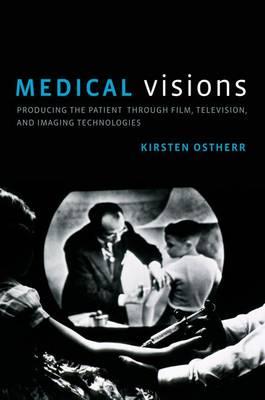
How do visual images shape the practice of medicine? What role does visual representation play in the cultivation of medical ways of seeing? How might the history of medical imaging technologies help us understand the future of medical media? How has medicine's visual culture changed in the digital age? Kirsten Ostherr's ambitious book explores 120 years of medical image-making to explain how visual representations shape medical education and practice. She demonstrates how medical images created by the healthcare industry, documentary filmmakers, experimental artists and the mass media acquire cultural meaning and influence professional and popular understandings of health and disease. Her analysis proceeds chronologically, turning from the earliest experiments with medical filmmaking by the American College of Surgeons, to the place of health films in the ""golden age"" of instructional film in the 1960s. Ostherr considers the shift to television as the dominant medium of health education, highlighting the evolving status of realism, the techniques employed to bridge the entertainment-education divide, the role of expert consultants and sponsors, and the tradeoffs made by professionals to reach a broad audience. The role of newsmagazines forms a transition between the medical dramas of the 60s, 70s, and 80s (from Frederick Wiseman's Hospital to Marcus Welby, MD) and more recent reality shows like The Swan and Doctor 90210. Reality-based miniseries (Hopkins, Boston Med) continue the long cycle of comingling between professional and entertainment medicine. The study concludes with an in-depth look at the advertising, moving image, and social media circuits active in the health care setting today, closing with ten key lessons for the future of medical media.
Full Product Details
Author: Kirsten Ostherr (Associate Professor, Associate Professor, Rice University)
Publisher: Oxford University Press Inc
Imprint: Oxford University Press Inc
Dimensions:
Width: 15.50cm
, Height: 2.30cm
, Length: 23.10cm
Weight: 0.431kg
ISBN: 9780199737253
ISBN 10: 0199737258
Pages: 320
Publication Date: 11 April 2013
Audience:
Professional and scholarly
,
College/higher education
,
Professional & Vocational
,
Postgraduate, Research & Scholarly
Format: Paperback
Publisher's Status: Active
Availability: Available To Order

We have confirmation that this item is in stock with the supplier. It will be ordered in for you and dispatched immediately.
Reviews
<br> Kirsten Ostherr shows us how we might learn to see--and to experience--health and illness differently. Medical Visions is crucial reading for anyone who practices medicine and for anyone who is, has been, or will be a patient--which is to say, all of us. --Priscilla Wald, author of Contagious: Cultures, Carriers, and the Outbreak Narrative<p><br> With fascinating discussions of documentaries, training films, television shows, advertisements, and more, Medical Visions underscores the key role played by the media in shaping our common sense ideas about medicine and objectivity. Ostherr's important study provides a guide to watching and understanding today's new health media. This book is an example of the medical humanities at its finest. --Joseph Dumit, author of Drugs for Life: How Pharmaceutical Companies Define Our Health<p><br>
extensive archival work and the depth of its analysis makes it essential reading for any historians with an interest in the role that visual mass media have played in the development of science, technology and medicine * David. A Kirby, Social History of Medicine *
extensive archival work and the depth of its analysis makes it essential reading for any historians with an interest in the role that visual mass media have played in the development of science, technology and medicine David. A Kirby, Social History of Medicine
Kirsten Ostherr shows us how we might learn to see--and to experience--health and illness differently. Medical Visions is crucial reading for anyone who practices medicine and for anyone who is, has been, or will be a patient--which is to say, all of us. --Priscilla Wald, author of Contagious: Cultures, Carriers, and the Outbreak Narrative With fascinating discussions of documentaries, training films, television shows, advertisements, and more, Medical Visions underscores the key role played by the media in shaping our common sense ideas about medicine and objectivity. Ostherr's important study provides a guide to watching and understanding today's new health media. This book is an example of the medical humanities at its finest. --Joseph Dumit, author of Drugs for Life: How Pharmaceutical Companies Define Our Health
Author Information
Kirsten Ostherr is an Associate Professor of English at Rice University. She is author of Cinematic Prophylaxis: Globalization and Contagion in the Discourse of World Health.