Overview
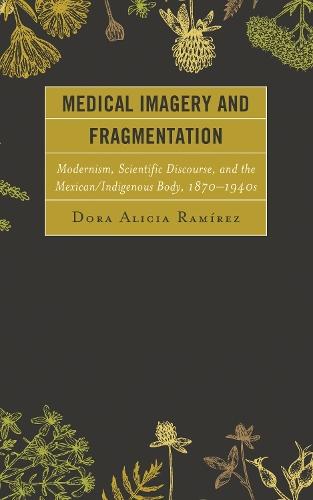
This Book marks a time period (1870s-1940s) when Mexican authors writing in English saw themselves as transnational authors whose role was to teach the English speaking public about Mexico. This book takes a look at four inspiring women whose ideas represent the way medicine and science permeated the personal lives of Mexican and Indigenous peoples whose lifestyles did not happen to meet the requirements of an industrialized or modern citizenry. These women include historical figures such as the folkloric healer, Teresa Urrea (1873-1906), and authors, Maria Amparo Ruiz de Burton (1872), Maria Cristina Mena (1914), and Josefina Niggli (1947). These women writers focused on the modernist construction of the body and brought in aspects of how the soul (through racial, gendered, national, political, and socio-economic lenses) was reconstructed as a way to manage the health and space of the Mexican/Indigenous populations in order to move into an era of industrialism and positivism. By focusing on how industrialism led to the negation of racialized bodies, knowledges, and spaces, this book takes a deeper look at the concept of the “individual” as a medical, economic, political, and theoretical term, focusing on the way medical knowledge, the doctor, surgery, experimentation, healing, and specifically, the soul, is treated in Latina modernist literature. This book adds to the modernist discussions of literary figures such as Bernard Shaw, T.S. Eliot, D.H. Lawrence, William Carlos Williams, Frida Kahlo, Ezra Pound, and Gertrude Stein. Urrea, Ruiz de Burton, Mena, and Niggli continue the critique of a burgeoning medical system and rhetoric, and they add the Mexican/Indigenous viewpoint and transnational perspective that is important to any dialogue.
Full Product Details
Author: Dora Alicia Ramírez
Publisher: Bloomsbury Publishing Plc
Imprint: Lexington Books
Dimensions:
Width: 16.00cm
, Height: 1.50cm
, Length: 23.70cm
Weight: 0.358kg
ISBN: 9780739198285
ISBN 10: 0739198289
Pages: 112
Publication Date: 19 July 2017
Audience:
College/higher education
,
Postgraduate, Research & Scholarly
Format: Hardback
Publisher's Status: Active
Availability: In Print

This item will be ordered in for you from one of our suppliers. Upon receipt, we will promptly dispatch it out to you. For in store availability, please contact us.
Reviews
Dora Ramirez examines the writings of Amparo Ruiz de Burton, Teresa Urrea, Maria Cristina Mena, and Josefina Niggli through the critical lens of contemporary medical environmental theories of the body and of the soul. She explodes the modernist concerns with the body and the soul by deploying an eclectic medical humanities and Chicana feminist analysis to highlight the contributions of these stars in the Chicanx literary heavens. Undoubtedly students and scholars of American literature and specifically Native American, Chicanx or Latinx literatures will find a treasure trove of observations and insights in Medical Imagery and Fragmentation: Modernism, Scientific Discourse, and the Mexican, Indigenous Body, 1870-1940s -- Norma Cantu, Trinity University
Author Information
Dora Alicia Ramírez is associate professor in the English department at Boise State University.