|
|
|||
|
||||
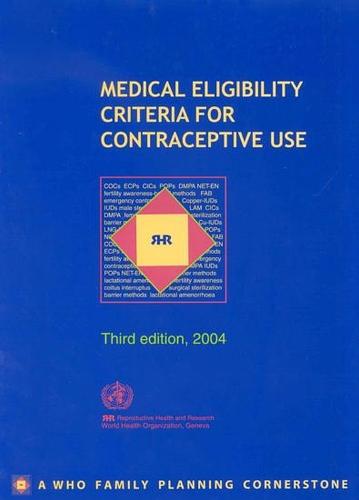
OverviewThis document provides recommendations for appropriate medical eligibility criteria based on the latest clinical and epidemiological data and is intended to be used by policy-makers, family planning programme managers and the scientific community in the preparation of guidelines for service delivery of contraceptives. It updates the 2nd edition, and summarises the main recommendations of an Expert Working Group meeting held at WHO in Geneva, October 2003. The document covers the following family planning methods: low-dose combined oral contraceptives (COCs), combined injectable contraceptives (CICs), combined patch (P), combined vaginal ring (R), progestogen-only pills (POPs), depot medroxyprogesterone acetate (DMPA), norethisterone enantate (NET-EN), levonorgestrel (LNG) and etonogestrel (ETG) implants, emergency contraceptive pills (ECPs), copper intrauterine devices (Cu-IUDs), levonorgestrel-releasing IUDs (LNG-IUDs), copper-IUD for emergency contraception (E-IUD), barrier methods (BARR), fertility awareness-based methods (FAB), lactational amenorrhoea method (LAM), coitus interruptus (CI), and female and male sterilization (STER). Full Product DetailsAuthor: World Health Organization , World Health Organization , UNAIDS , World Health OrganizationPublisher: World Health Organization Imprint: World Health Organization Edition: 3rd Revised edition Dimensions: Width: 21.10cm , Height: 1.80cm , Length: 29.50cm Weight: 0.087kg ISBN: 9789241562669ISBN 10: 9241562668 Pages: 154 Publication Date: 31 December 2004 Audience: Professional and scholarly , Professional & Vocational Format: Paperback Publisher's Status: Active Availability: In Print This item will be ordered in for you from one of our suppliers. Upon receipt, we will promptly dispatch it out to you. For in store availability, please contact us. Table of ContentsReviewsAuthor InformationWorld Health Organization is a Specialized Agency of the United Nations, charged to act as the world's directing and coordinating authority on questions of human health. It is responsible for providing leadership on global health matters, shaping the health research agenda, setting norms and standards, articulating evidence-based policy options, providing technical support to countries, and monitoring and assessing health trends. Tab Content 6Author Website:Countries AvailableAll regions |
||||