Overview
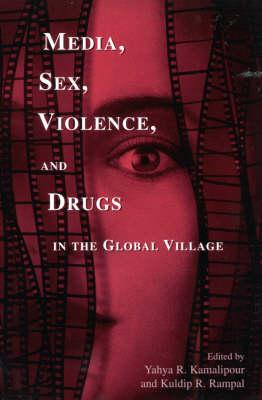
Prominent media scholars such as Herbert Schiller have long noted the implications of Western - especially American - cultural influence on peoples of the developing Third World. Media, Sex, Violence, and Drugs in the Global Village provides a multicultural analysis of the impact of globalized Western media, including movies, syndicated radio programs, the Internet, and satellite and cable television programs. Looking specifically at themes of sex, violence, and drugs, an international cast of media scholars offers case studies of countries grappling with the influences of both Western cultural imports and similar local productions.
Full Product Details
Author: Yahya R. Kamalipour ,
Kuldip R. Rampal ,
Hussein Y. Amin ,
Jane D. Brown
Publisher: Bloomsbury Publishing Plc
Imprint: Rowman & Littlefield
Dimensions:
Width: 14.70cm
, Height: 1.70cm
, Length: 22.90cm
Weight: 0.408kg
ISBN: 9780742500617
ISBN 10: 0742500616
Pages: 312
Publication Date: 16 October 2001
Audience:
College/higher education
,
Professional and scholarly
,
Undergraduate
,
Postgraduate, Research & Scholarly
Format: Paperback
Publisher's Status: Active
Availability: In Print

This item will be ordered in for you from one of our suppliers. Upon receipt, we will promptly dispatch it out to you. For in store availability, please contact us.
Reviews
This book is both original and significant in that it attempts to grab a worldview of media problems that have hitherto been most extensively studied in the United States alone.--Richard Maxwell
Media, Sex, Violence, and Drugs in the Global Village shows the use of these powerful themes in changing the habits of audiences in many different contexts. These new habits reflect one of the driving forces of media-globalization-particularly on television and the Internet. The book provides a useful set of case studies on countries from Turkey to Korea and South Africa to Canada, along with some cross-national studies. Students learn not only about a variety of national mediascapes but also a variety of methodological approaches-from the quantitative to the qualitative, from media effects to political economy. . . . Any student wishing to understand the role of programming (and racy or 'taboo' programming in particular) in transforming audience habits and values will find this book useful. -- Waddick Doyle, American University of Paris This is a unique and welcome addition to debates about the global dominance of American culture in the twenty-first century. Media, Sex, Violence, and Drugs in the Global Village brings together insights from American media and cultural critics and observations on the global influence of American culture from commentators living outside the United States. An important contribution to the analysis of globalization, it will be essential reading for students and academics in communication, media, and cultural studies. -- Cynthia Carter, Cardiff University This book is both original and significant in that it attempts to grab a worldview of media problems that have hitherto been most extensively studied in the United States alone. -- Richard Maxwell, Queens College?CUNY
Media, Sex, Violence, and Drugs in the Global Village shows the use of these powerful themes in changing the habits of audiences in many different contexts. These new habits reflect one of the driving forces of media-globalization-particularly on television and the Internet. The book provides a useful set of case studies on countries from Turkey to Korea and South Africa to Canada, along with some cross-national studies. Students learn not only about a variety of national mediascapes but also a variety of methodological approaches-from the quantitative to the qualitative, from media effects to political economy... Any student wishing to understand the role of programming (and racy or 'taboo' programming in particular) in transforming audience habits and values will find this book useful. -- Waddick Doyle, American University of Paris This is a unique and welcome addition to debates about the global dominance of American culture in the twenty-first century. Media, Sex, Violence, and Drugs in the Global Village brings together insights from American media and cultural critics and observations on the global influence of American culture from commentators living outside the United States. An important contribution to the analysis of globalization, it will be essential reading for students and academics in communication, media, and cultural studies. -- Cynthia Carter, Cardiff University This book is both original and significant in that it attempts to grab a worldview of media problems that have hitherto been most extensively studied in the United States alone. -- Richard Maxwell, Queens College?CUNY
Author Information
Yahya R. Kamalipour is professor of mass and international communication at Purdue University Calumet. Kuldip R. Rampal is professor of mass communication at Central Missouri State University.