Overview
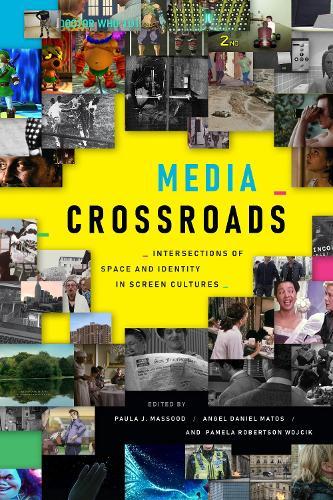
The contributors to Media Crossroads examine space and place in media as they intersect with sexuality, race, ethnicity, age, class, and ability. Considering a wide range of film, television, video games, and other media, the authors show how spaces-from the large and fantastical to the intimate and virtual-are shaped by the social interactions and intersections staged within them. The highly teachable essays include analyses of media representations of urban life and gentrification, the ways video games allow users to adopt an experiential understanding of space, the intersection of the regulation of bodies and spaces, and how style and aesthetics can influence intersectional thinking. Whether interrogating the construction of Portland as a white utopia in Portlandia or the link between queerness and the spatial design and gaming mechanics in the Legend of Zelda video game series, the contributors deepen understanding of screen cultures in ways that redefine conversations around space studies in film and media. Contributors. Amy Corbin, Desiree J. Garcia, Joshua Glick, Noelle Griffis, Malini Guha, Ina Rae Hark, Peter C. Kunze, Paula J. Massood, Angel Daniel Matos, Nicole Erin Morse, Elizabeth Patton, Matthew Thomas Payne, Merrill Schleier, Jacqueline Sheean, Sarah Louise Smyth, Erica Stein, Kirsten Moana Thompson, John Vanderhoef, Pamela Robertson Wojcik
Full Product Details
Author: Paula J. Massood ,
Angel Daniel Matos ,
Pamela Robertson Wojcik
Publisher: Duke University Press
Imprint: Duke University Press
Weight: 0.612kg
ISBN: 9781478010616
ISBN 10: 1478010614
Pages: 352
Publication Date: 26 March 2021
Audience:
Professional and scholarly
,
Professional & Vocational
Format: Hardback
Publisher's Status: Active
Availability: To order

Stock availability from the supplier is unknown. We will order it for you and ship this item to you once it is received by us.
Reviews
Media Crossroads offers a remarkable set of essays that demonstrate the new insights that can emerge when we apply a purposeful intersectional lens in media studies. As we move through screen spaces of different types (past, present, public, private) in different media (television, cinema, video games, social media), we feel the exhilaration of its collective experimental project to identify and interrogate spatialized structures of power across the media landscape. --Jacqueline Najuma Stewart, author of Migrating to the Movies: Cinema and Black Urban Modernity
Media Crossroads offers a remarkable set of essays that demonstrate the new insights that can emerge when we apply a purposeful intersectional lens in media studies. As we move through screen spaces of different types (past, present, public, private) in different media (television, cinema, video games, social media), we feel the exhilaration of this volume's collective experimental project to identify and interrogate spatialized structures of power across the media landscape. -- Jacqueline Najuma Stewart, author of * Migrating to the Movies: Cinema and Black Urban Modernity * Media Crossroads invites scholars to rethink space and intersectionality, including and going beyond the confines of cities, lands, and architectures. Its analysis of commercial, mainstream, and avant-garde film and media as well as its focus on intersectionality makes it an innovative and important contribution to film and media studies. -- Yeidy M. Rivero, author of * Broadcasting Modernity: Cuban Commercial Television, 1950-1960 *
Media Crossroads invites scholars to rethink space and intersectionality, including and going beyond the confines of cities, lands, and architectures. Its analysis of commercial, mainstream, and avant-garde film and media as well as its focus on intersectionality makes it an innovative and important contribution to film and media studies. -- Yeidy M. Rivero, author of * Broadcasting Modernity: Cuban Commercial Television, 1950-1960 * Media Crossroads offers a remarkable set of essays that demonstrate the new insights that can emerge when we apply a purposeful intersectional lens in media studies. As we move through screen spaces of different types (past, present, public, private) in different media (television, cinema, video games, social media), we feel the exhilaration of this volume's collective experimental project to identify and interrogate spatialized structures of power across the media landscape. -- Jacqueline Najuma Stewart, author of * Migrating to the Movies: Cinema and Black Urban Modernity *
Author Information
Paula J. Massood is Professor, Feirstein Graduate School of Cinema, City University of New York. Angel Daniel Matos is Assistant Professor of Gender, Sexuality, and Women's Studies at Bowdoin College. Pamela Robertson Wojcik is Professor of Film, Television, and Theatre at the University of Notre Dame.