Overview
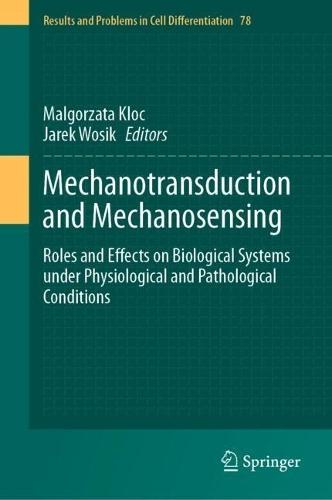
This volume explores how cells and tissues sense and respond to mechanical forces, revealing their roles in health and disease, and presenting the latest models and therapeutic strategies in the field of mechanobiology. All living organisms are subject to mechanical forces, such as tension, compression, shear, torsion, bending and friction. Organisms and their components must sense and respond to these forces. Cells, cellular organelles, tissues and organs detect the physical properties of their internal and external environments, including spatial topography, substrate rigidity, compactness and porosity. After sensing these mechanical cues, they transmit the information to their structural and molecular components. These components then adjust the cell's structure, molecular composition, gene expression, signalling pathways, spatial arrangement, cell cycle, longevity, and other functions. The book looks at new developments in our understanding of these processes in various cells, describes the roles of mechanosensing and mechanotransduction in disease, and presents novel mechanosensation models and therapeutic approaches.
Full Product Details
Author: Malgorzata Kloc ,
Jarek Wosik
Publisher: Springer Nature Switzerland AG
Imprint: Springer Nature Switzerland AG
ISBN: 9783032195081
ISBN 10: 303219508
Pages: 455
Publication Date: 08 June 2026
Audience:
Professional and scholarly
,
College/higher education
,
Professional & Vocational
,
Postgraduate, Research & Scholarly
Format: Hardback
Publisher's Status: Forthcoming
Availability: Not yet available

This item is yet to be released. You can pre-order this item and we will dispatch it to you upon its release.
Author Information
Malgorzata Kloc: Prior to completing her postdoctoral training in Canada, Dr. Kloc was a tenured Associate Professor in the Department of Zoology at the University of Warsaw, Poland. She also served as a Research Associate in the Department of Biology at Carleton University in Ottawa, Canada. While completing her postdoctoral training, Dr. Kloc earned the AHFMR Research Award from the University of Calgary and the MRC Biotechnology Training Award from Dalhousie University. She joined the University of Texas M.D. Anderson Cancer Center as a Research Scientist in the Department of Molecular Genetics in 1987, and became an Associate Professor in the Department of Biochemistry and Molecular Biology there in 2006. Dr. Kloc joined the Houston Methodist Research Institute in 2008. Currently, Dr. Kloc is the Weill Cornell Professor of Cell and Molecular Biology at The Houston Methodist Hospital. Jarek Wosik: After completing his PhD at the Institute of Physics, Polish Academy of Sciences in Poland in 1986, he worked as a Research Scientist at the Research and Development Center for Semiconductors, the Institute of Electron Technology, the Institute of Electronic Materials Technology, and at the Institute of Physics, Polish Academy of Science. In 1987, he moved to Houston and worked at the Department of Electrical and Computer Engineering, University of Houston, and Texas Heart Institute. In 2003, he became a Research Professor at the Department of Electrical & Computer Engineering and Texas Center for Superconductivity, University of Houston. He is a member of the American Physical Society, Material Research Society, and International Society for Magnetic Resonance in Medicine. Since 2001, he has also been a Director of High Frequency Bioengineering Laboratory. His scientific interests include designing magnetic nanoconstructs for the imaging and hyperthermia of tumor cells and neovasculature, water extraction from lunar polar ice by microwave heating, development of noninvasive sensors of metabolic activity, and electromagnetic time-reversal techniques for targeted radiofrequency cancer therapy. He also closely collaborates with Dr. M. Kloc on the magnetic field-induced cytoskeleton alteration to prevent the rejection of transplanted organs.