Overview
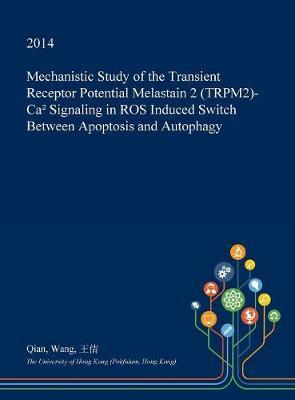
This dissertation, Mechanistic Study of the Transient Receptor Potential Melastain 2 (TRPM2)-Ca⁺ Signaling in ROS Induced Switch Between Apoptosis and Autophagy by Qian, Wang, 王倩, was obtained from The University of Hong Kong (Pokfulam, Hong Kong) and is being sold pursuant to Creative Commons: Attribution 3.0 Hong Kong License. The content of this dissertation has not been altered in any way. We have altered the formatting in order to facilitate the ease of printing and reading of the dissertation. All rights not granted by the above license are retained by the author. Abstract: Autophagy is a major catabolic pathway for maintaining cell homeostasis through degradation and recycle of macromolecules and organelles. Autophagy can be activated under environmental stress conditions, including reactive oxygen species (ROS). TRPM2, a non-selective trans-membrane calcium channel, can be activated by ROS that, in turn, leads to intracellular 〖Ca〗 DEGREES(2+) increase through 〖Ca〗 DEGREES(2+) influx. It is well known that ROS regulates autophagy, and vice versa. Yet, the molecular mechanisms underlying the interplay between ROS and autophagy remain elusive. Here we studied the role of TRPM2-mediated 〖Ca〗 DEGREES(2+) influx in interplay between ROS and autophagy. From our study, we found that ROS activated TRPM2 for 〖Ca〗 DEGREES(2+) influx via ADPR to inhibit early autophagy induction, which ultimately led to apoptosis in TRPM2 expressing cancer cell lines. On the other hand, ROS induced autophagy, not apoptosis, for cell survival in cancer cell lines which do not express TRPM2, and autophagy inhibition, either by ATG5 knockdown or by treating cells with bafilomycin A1 (an autophagy inhibitor), converted cells to apoptosis upon ROS treatment. In addition, ROS dramatically changed mitochondrial morphology, increased mitochondrial 〖Ca〗 DEGREES(2+) content, and abolished mitochondrial membrane potential in TRPM2 expressing cells. Moreover, we found that ROS-induced Ca2+ influx via TRPM2 actually activated calmodulin-dependent protein kinase II (CaMKII) to phosphorylate Ser295 on Beclin1. Phosphorylated Beclin1, in turn, decreased the association between Beclin1 and VPS34, but induced the binding between Beclin1 and BCL-2. In summary, our data demonstrated that the TRPM2/〖Ca〗 DEGREES(2+)/CaMKII/ Beclin1 cascade is the molecular switch between autophagy and apoptosis in response to ROS. Since dysregulation of ROS and autophagy has been associated with a variety of human diseases, e.g. cancer, neurological disorders, heart diseases, and liver diseases, manipulating the TRPM2/〖Ca〗 DEGREES(2+)/CaMKII/ Beclin1 cascade should provide novel treatment option for these diseases. DOI: 10.5353/th_b5328057 Subjects: TRP channels
Full Product Details
Author: Qian Wang (University of South Carolina USA) ,
王倩
Publisher: Open Dissertation Press
Imprint: Open Dissertation Press
Dimensions:
Width: 21.60cm
, Height: 1.10cm
, Length: 27.90cm
Weight: 0.712kg
ISBN: 9781361357644
ISBN 10: 1361357649
Publication Date: 27 January 2017
Audience:
General/trade
,
General
Format: Hardback
Publisher's Status: Active
Availability: Temporarily unavailable

The supplier advises that this item is temporarily unavailable. It will be ordered for you and placed on backorder. Once it does come back in stock, we will ship it out to you.