|
|
|||
|
||||
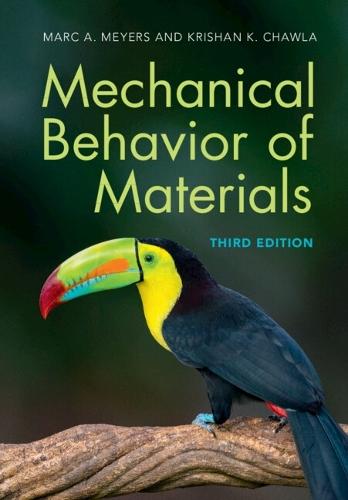
OverviewFully revised and updated, the new edition of this classic textbook places a stronger emphasis on real-world test data and trains students in practical materials applications; introduces new testing techniques such as micropillar compression and electron back scatted diffraction; and presents new coverage of biomaterials, electronic materials, and cellular materials alongside established coverage of metals, polymers, ceramics and composites. Retaining its distinctive emphasis on a balanced mechanics-materials approach, it presents fundamental mechanisms operating at micro- and nanometer scales across a wide range of materials, in a way that is mathematically simple and requires no extensive knowledge of materials, and demonstrates how these microstructures determine the mechanical properties of materials. Accompanied by online resources for instructors, and including over 40 new figures, over 100 worked examples, and over 740 exercises, including over 280 new exercises, this remains the ideal introduction for senior undergraduate and graduate students in materials science and engineering. Full Product DetailsAuthor: Marc A. Meyers (University of California, San Diego) , Krishan K. Chawla (University of Alabama, Birmingham)Publisher: Cambridge University Press Imprint: Cambridge University Press Edition: 3rd Revised edition Dimensions: Width: 17.80cm , Height: 5.10cm , Length: 25.40cm Weight: 2.169kg ISBN: 9781108837903ISBN 10: 1108837905 Pages: 987 Publication Date: 22 May 2025 Audience: Professional and scholarly , Professional & Vocational Format: Hardback Publisher's Status: Active Availability: Manufactured on demand We will order this item for you from a manufactured on demand supplier. Table of ContentsPreface to the third edition; Preface to the second edition; A note to the reader; 1. Materials: structure, properties, and performance; 2. Elasticity and viscoelasticity; 3. Plasticity; 4. Imperfections: point and line defects; 5. Imperfections: interfacial and volumetric defects; 6. Geometry of deformation and work-hardening; 7. Fracture: macroscopic aspects; 8. Fracture: microscopic aspects; 9. Fracture testing; 10. Solid solution, precipitation, and dispersion strengthening; 11. Martensitic transformation; 12. Special materials: intermetallics and foams; 13. Creep and superplasticity; 14. Fatigue; 15. Composite materials; 16. Environmental effects; Appendixes; Index.ReviewsAuthor InformationMarc A. Meyers is a Distinguished Professor of Nanoengineering at the University of California, San Diego, known for his expertise on the dynamic behavior of materials. He is a recipient of the TMS Educator Award (2013), the ASM International Albert Easton White Distinguished Teacher Award (2015), and the APS George Duvall Shock Compression Science Award (2017). He is a co-author of Biological Materials Science (2014), and is a Fellow of TMS, ASM International, and the APS. Krishan K. Chawla is an Emeritus Professor of Materials Science and Engineering at the University of Alabama at Birmingham, and a former Program Director for Metals and Ceramics in the US NSF Division of Materials Research. He is the Editor and Chairman of the ASM Editorial Board for International Materials Reviews, the author of Fibrous Materials, 2nd ed. (2016), and a Fellow of ASM International. Tab Content 6Author Website:Countries AvailableAll regions |
||||