Overview
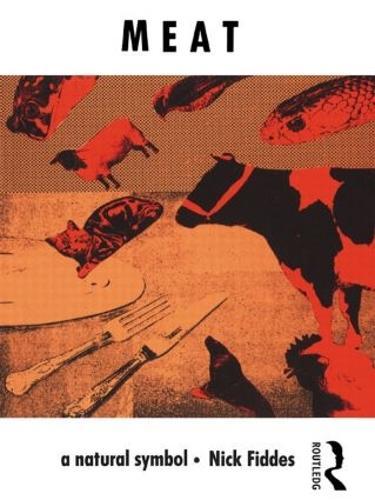
Meat is a broad-ranging and provocative study of the human passion for meat. It will intrigue anyone who has ever wondered why meat is important to us; why we eat some animals but not others; why vegetarianism is increasing; why we aren't cannibals; and how meat is associated with environmental destruction. Nick Fiddes argues that meat's primary cultural importance is founded on its vividly representing to us the domination we have sought over nature - not as individuals, but as members of a society which has historically placed great value on that power. The book draws on original research and analyses academic work, trade journals, advertisements, the popular press, fiction and film. It is extensively illustrated by quotes from conversations with farmers, butchers, vegetarian campaigners, and members of the general public. Placing western preferences in a historical and cross-cultural context, Fiddes questions the rationality of much that we take for granted, and explains many inconsistencies and incongruities in our behaviour. It is a penetrating and highly original discussion of our natural' everyday world.
Full Product Details
Author: Nick Fiddes (University of Edinburgh, UK)
Publisher: Taylor & Francis Ltd
Imprint: Routledge
Edition: New edition
Dimensions:
Width: 13.80cm
, Height: 2.30cm
, Length: 21.60cm
Weight: 0.500kg
ISBN: 9780415089296
ISBN 10: 0415089298
Pages: 272
Publication Date: 01 October 1992
Audience:
College/higher education
,
General/trade
,
General/trade
,
Tertiary & Higher Education
,
General
Format: Paperback
Publisher's Status: Active
Availability: In Print

This item will be ordered in for you from one of our suppliers. Upon receipt, we will promptly dispatch it out to you. For in store availability, please contact us.
Reviews
Though not a vegetarian himself, Fiddes (Social Anthropology/Edinburgh Univ.) has wondered at the vehemence with which vegetarianism is often dismissed as a fad, attacked as a conspiracy, or worse. In this sound inquiry, he examines the unstated symbolic importance that meat has for all of us, determining why we do or do not eat it and how we think, feel, and behave regarding it. While discoursing along the way on such matters as our views on cannibalism; our exemption of pets, primates, and carnivores from the edible animal category; and our association of meat with different aspects of sex, the sexes, and relations between them, Fiddes sees meat chiefly as a symbol and clement of human mastery over nature. (Thus the cruel and bloody aspect of meat is not a regrettable side effect but essential to its role.) Meat-eating, he notes, increased in practice and prestige during the Industrial Revolution, with its emphasis on mastering and transforming nature. Earlier, when people had more to fear from wild animals and natural forces, meat killing and eating was a comforting symbol of control. But now that we are recognizing the environmental destruction caused by the abuse of human power over nature, meat-eating is declining - a trend, Fiddes suggests, that could be the harbinger of the evolution of new values. Harbinger or no, Fiddes's discussion of all this is perceptive and sensible. As for the common dangers of this sort of undertaking - pedantic obscurity, belaboring the obvious, sounding far-fetched - he triumphantly avoids them all. (Kirkus Reviews)