|
|
|||
|
||||
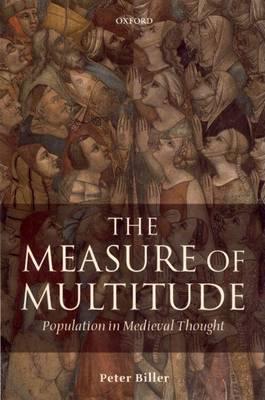
OverviewPeter Biller's innovative study challenges the view that medieval thought was fundamentally abstract. He shows how, by 1300, medieval men and women were beginning to measure multitude, counting, for example, numbers of boys and girls being baptized. Their mental capacity to grapple with population, to get its measure, was developing, and the author describes how medieval people thought about population through both the texts which contained their thought and the medieval realities which shaped it. He asserts that they found many topics - such as the history of population and variations between polygamy, monogamy and virginity-through theology, and that crusade and travel literature supplied the themes of Muslim polygamy, military numbers, the colonization of the Holy Land, and the populations of Mongolia and China. Translations of Aristotle provided not only new themes but also a new vocabulary with which to think about population. The Measure of Multitude sets academic discussions of population alongside the medieval facts of 'birth, and copulation, and death' to provide a challenging new approach to the study of medieval demographic thought. Full Product DetailsAuthor: Senior Lecturer in History Peter Biller (University of York)Publisher: Oxford University Press, USA Imprint: Oxford University Press, USA ISBN: 9781280445231ISBN 10: 1280445238 Pages: 476 Publication Date: 01 January 2000 Audience: General/trade , General Format: Electronic book text Publisher's Status: Active Availability: Available To Order We have confirmation that this item is in stock with the supplier. It will be ordered in for you and dispatched immediately. Table of ContentsReviewsAuthor InformationTab Content 6Author Website:Countries AvailableAll regions |
||||