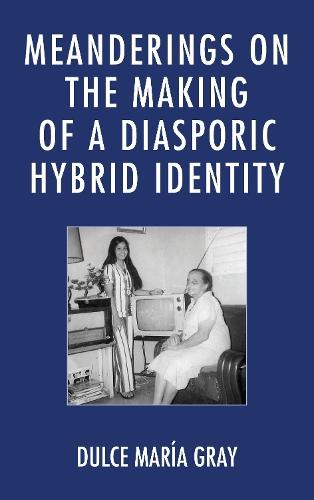
Full Product Details
Author: Dulce María Gray
Publisher: University Press of America
Imprint: University Press of America
Dimensions:
Width: 15.40cm
, Height: 1.20cm
, Length: 22.90cm
Weight: 0.209kg
ISBN: 9780761865940
ISBN 10: 0761865942
Pages: 130
Publication Date: 31 August 2015
Audience:
Professional and scholarly
,
Professional & Vocational
Format: Paperback
Publisher's Status: Active
Availability: Manufactured on demand

We will order this item for you from a manufactured on demand supplier.
Reviews
Half testimonio half theoretical reflection on the construction of a hybrid cultural condition, this is a well-written and fascinating book. Contrary to cryptic academic books, Gray graciously intertwines testimonio, family, and historical recollections, and abstract concepts to identify unexpected connections and revelations in the making of Dominican-American identity. Her gendered perspective anchors discussions about race, ethnicity, socio-economic class, literacy and her Abuelita’s patio in Santo Domingo as the locus of persistent and influential memories. Clearly, for Gray, writing this book is a way of healing the open wounds of exile and of mourning and overcoming the loss inherent in being transplanted to American culture. If I were to characterize Meanderings on the Making of a Diasporic Hybrid Identity in three adjectives, I would say: deep, versatile, and clear. -- Fernando Valerio-Holguín, professor of Spanish and Latin American literature at Colorado State University In Meanderings on the Making of a Diasporic Hybrid Identity, the author, Dulce María Gray, describes her journey from her birth in the Dominican Republic, her immigration as a child to the United States, growing up in the Bronx, and becoming a scholar with a Ph.D. She analyzes her experiences fighting labels, categorizations, and denigrating perceptions about Latinos and the often painful process of negotiating her ethnic identity until she arrives at a more intellectual and liberated way of seeing herself. Dr. Gray’s passion and respect for “writing” is palpable. She finds that writing provides the means to understand and shape her own development; she writes: ‘when I consider my self, that self reveals itself to me and thus I change, usually for the better.’ Dr. Gray’s stories about herself, her family and friends are interwoven with her two countries’ histories, creating a beautiful personal and cultural tapestry. -- Yuko Kurahashi, associate professor of theatre history, theory and criticism in the School of Theatre and Dance at Kent State University, author of <I>Asian American Culture on Stage, Multicultural Theater</i> Profound in its sincerity, in its cartography of the often painful journey to arrive at a self that is realigned with the cosmic grace that sustains our everydayness, and which her palimpsest-like writing and her life experiences illuminate—in this book Gray examines the layered process of constructing a hybrid identity. -- Aida L. Heredia, associate professor of Hispanic studies at Connecticut College, author of De la recta a las cajas chinas: la poesía de José Koser and La representación del haitiano en las letras dominicanas
Half testimonio half theoretical reflection on the construction of a hybrid cultural condition, this is a well-written and fascinating book. Contrary to cryptic academic books, Gray graciously intertwines testimonio, family, and historical recollections, and abstract concepts to identify unexpected connections and revelations in the making of Dominican-American identity. Her gendered perspective anchors discussions about race, ethnicity, socio-economic class, literacy and her Abuelita's patio in Santo Domingo as the locus of persistent and influential memories. Clearly, for Gray, writing this book is a way of healing the open wounds of exile and of mourning and overcoming the loss inherent in being transplanted to American culture. If I were to characterize Meanderings on the Making of a Diasporic Hybrid Identity in three adjectives, I would say: deep, versatile, and clear. -- Fernando Valerio-Holguin, professor of Spanish and Latin American literature at Colorado State University, author of <I>Banalidad posmoderna: ensayos sobre identidad cultural latinoamericana</I>, <I>Elogio de las salamandras</I>, <I>Presencia de Trujillo en la narrativa contemporanea</i> In Meanderings on the Making of a Diasporic Hybrid Identity, the author, Dulce Maria Gray, describes her journey from her birth in the Dominican Republic, her immigration as a child to the United States, growing up in the Bronx, and becoming a scholar with a Ph.D. She analyzes her experiences fighting labels, categorizations, and denigrating perceptions about Latinos and the often painful process of negotiating her ethnic identity until she arrives at a more intellectual and liberated way of seeing herself. Dr. Gray's passion and respect for writing is palpable. She finds that writing provides the means to understand and shape her own development; she writes: `when I consider my self, that self reveals itself to me and thus I change, usually for the better.' Dr. Gray's stories about herself, her family and friends are interwoven with her two countries' histories, creating a beautiful personal and cultural tapestry. -- Yuko Kurahashi, associate professor of theatre history, theory and criticism in the School of Theatre and Dance at Kent State University, author of <I>Asian American Culture on Stage, Multicultural Theater</i> Profound in its sincerity, in its cartography of the often painful journey to arrive at a self that is realigned with the cosmic grace that sustains our everydayness, and which her palimpsest-like writing and her life experiences illuminate-in this book Gray examines the layered process of constructing a hybrid identity. -- Aida L. Heredia, associate professor of Hispanic studies at Connecticut College, author of De la recta a las cajas chinas: la poesia de Jose Koser and La representacion del haitiano en las letras dominicanas
Half testimonio half theoretical reflection on the construction of a hybrid cultural condition, this is a well-written and fascinating book. Contrary to cryptic academic books, Gray graciously intertwines testimonio, family, and historical recollections, and abstract concepts to identify unexpected connections and revelations in the making of Dominican-American identity. Her gendered perspective anchors discussions about race, ethnicity, socio-economic class, literacy and her Abuelita's patio in Santo Domingo as the locus of persistent and influential memories. Clearly, for Gray, writing this book is a way of healing the open wounds of exile and of mourning and overcoming the loss inherent in being transplanted to American culture. If I were to characterize Meanderings on the Making of a Diasporic Hybrid Identity in three adjectives, I would say: deep, versatile, and clear. -- Fernando Valerio-Holguin, professor of Spanish and Latin American literature at Colorado State University, author of <I>Banalidad posmoderna: ensayos sobre identidad cultural latinoamericana</I>, <I>Elogio de las salamandras</I>, <I>Presencia de Trujillo en la narrativa contemporanea</i> In Meanderings on the Making of a Diasporic Hybrid Identity, the author, Dulce Maria Gray, describes her journey from her birth in the Dominican Republic, her immigration as a child to the United States, growing up in the Bronx, and becoming a scholar with a Ph.D. She analyzes her experiences fighting labels, categorizations, and denigrating perceptions about Latinos and the often painful process of negotiating her ethnic identity until she arrives at a more intellectual and liberated way of seeing herself. Dr. Gray's passion and respect for writing is palpable. She finds that writing provides the means to understand and shape her own development; she writes: 'when I consider my self, that self reveals itself to me and thus I change, usually for the better.' Dr. Gray's stories about herself, her family and friends are interwoven with her two countries' histories, creating a beautiful personal and cultural tapestry. -- Yuko Kurahashi, associate professor of theatre history, theory and criticism in the School of Theatre and Dance at Kent State University, author of <I>Asian American Culture on Stage, Multicultural Theater</i> Profound in its sincerity, in its cartography of the often painful journey to arrive at a self that is realigned with the cosmic grace that sustains our everydayness, and which her palimpsest-like writing and her life experiences illuminate-in this book Gray examines the layered process of constructing a hybrid identity. -- Aida L. Heredia, associate professor of Hispanic studies at Connecticut College, author of De la recta a las cajas chinas: la poesia de Jose Koser and La representacion del haitiano en las letras dominicanas
Half testimonio half theoretical reflection on the construction of a hybrid cultural condition, this is a well-written and fascinating book. Contrary to cryptic academic books, Gray graciously intertwines testimonio, family, and historical recollections, and abstract concepts to identify unexpected connections and revelations in the making of Dominican-American identity. Her gendered perspective anchors discussions about race, ethnicity, socio-economic class, literacy and her Abuelita's patio in Santo Domingo as the locus of persistent and influential memories. Clearly, for Gray, writing this book is a way of healing the open wounds of exile and of mourning and overcoming the loss inherent in being transplanted to American culture. If I were to characterize Meanderings on the Making of a Diasporic Hybrid Identity in three adjectives, I would say: deep, versatile, and clear. -- Fernando Valerio-Holguin, professor of Spanish and Latin American literature at Colorado State University, author of Banalidad posmoderna: ensayos sobre identidad cultural latinoamericana, Elogio de las salamandras, Presencia de Trujillo en la narrativa contemporanea In Meanderings on the Making of a Diasporic Hybrid Identity, the author, Dulce Maria Gray, describes her journey from her birth in the Dominican Republic, her immigration as a child to the United States, growing up in the Bronx, and becoming a scholar with a Ph.D. She analyzes her experiences fighting labels, categorizations, and denigrating perceptions about Latinos and the often painful process of negotiating her ethnic identity until she arrives at a more intellectual and liberated way of seeing herself. Dr. Gray's passion and respect for writing is palpable. She finds that writing provides the means to understand and shape her own development; she writes: 'when I consider my self, that self reveals itself to me and thus I change, usually for the better.' Dr. Gray's stories about herself, her family and friends are interwoven with her two countries' histories, creating a beautiful personal and cultural tapestry. -- Yuko Kurahashi, associate professor of theatre history, theory and criticism in the School of Theatre and Dance at Kent State University, author of Asian American Culture on Stage, Multicultural Theater Profound in its sincerity, in its cartography of the often painful journey to arrive at a self that is realigned with the cosmic grace that sustains our everydayness, and which her palimpsest-like writing and her life experiences illuminate-in this book Gray examines the layered process of constructing a hybrid identity. -- Aida L. Heredia, associate professor of Hispanic studies at Connecticut College, author of De la recta a las cajas chinas: la poesia de Jose Koser and La representacion del haitiano en las letras dominicanas
Author Information
Dulce María Gray is professor of English at West Valley College where she teaches composition, women’s studies, and contemporary American and world literature. She earned a Ph.D. in language, literature, and literacy studies at Indiana University Bloomington. She is an avid traveler and is currently working on a collection of travel narratives.