Overview
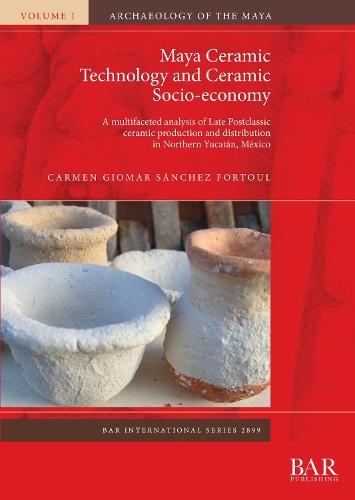
The socio-economic nature of Late Postclassic (c. AD 1100-1500) Maya society is not well understood and still eludes researchers. Through a combination of analytical methods, including petrographic, chemical and experimental, examination of surface features and ethnographic analyses, this study reconstructs ceramic production technology, seeking regional patterns in the technology applied to vessels from the main centre of Mayapán and several north-central and eastern sites. The results provide new insights into the raw material selection and the manufacture of Late Postclassic ceramics, the existence and nature of technological traditions, and cultural divisions between Mayapán and north-central and eastern sites. Furthermore, new perspectives are gained on longstanding questions about the socio-economic role of Mayapán and neighbouring centres and the scope and mechanisms of ceramic exchange and distribution, informing current ceramic production and exchange models, and advancing our understanding of the socio-economic nature of this period.
Full Product Details
Author: Carmen Giomar Sánchez Fortoul
Publisher: BAR Publishing
Imprint: BAR Publishing
Weight: 1.053kg
ISBN: 9781407316406
ISBN 10: 1407316400
Pages: 264
Publication Date: 31 May 2018
Audience:
Professional and scholarly
,
Professional & Vocational
Format: Paperback
Publisher's Status: Active
Availability: Available To Order 
We have confirmation that this item is in stock with the supplier. It will be ordered in for you and dispatched immediately.
Table of Contents
LIST OF FIGURES LIST OF TABLES ABSTRACT Chapter 1 INTRODUCTION 1.1 Brief Introduction to the Late Postclassic in Northern Yucatán 1.2 Late Postclassic Debates 1.2.1 The Decadent View 1.2.2 The Revivalist Views 1.2.3 The Political Economy Views 1.2.4 The Collective Reciprocity View 1.3 The Problem 1.4 The Objectives of the Research 1.5 Outline of the Methodology Chapter 2 THE LATE POSTCLASSIC: A VIEW FROM THE NORTH 2.1 The Late Postclassic in Northern Yucatán 2.1.1 Political Organisation of Northern Yucatán 2.1.2 The Institution of Tribute 2.1.3 Markets and other Economic Aspects 2.2 Current Research 2.2.1 Late Classic at Tikal and Palenque 2.2.2 The Late Postclassic 2.3 Explanatory Models of Ceramic Production Organisation 2.3.1 The Mercantile Production-Distribution Trajectory 2.3.2 A Dichotomous Ceramic Economy 2.3.3 The Tributary Mode of Production 2.3.4 Production for Rituals, Ceremonies, Gifting, and Feasting 2.3.5 Calendrically Shifting Production Location 2.4 Summary Chapter 3 CERAMICS OF THE LATE POSTCLASSIC 3.1 The Northern Yucatán Late Postclassic Ceramics, Period, and Region 3.1.1 Tases and Eastern Tases Ceramic Spheres 3.1.2 The Period and Region 3.1.3 Ceramic Classification 3.1.4 Origins of Northern Yucatán Late Postclassic Ceramics 3.1.4.1 Red-slipped Wares 3.1.4.2 Unslipped Wares 3.2 Description of the Late Postclassic Northern Yucatán Ceramics 3.2.1 Mayapán Red Ware 3.2.2 Mayapán Unslipped Ware 3.2.3 Tulum Red Ware 3.2.4 Peto Cream Ware Chapter 4 THE GEOLOGICAL SETTING 4.1 The Geological Setting of the Study Region 4.2 The Rocks within the Region 4.3 Other Surface Features 4.3.1 Cenotes 4.3.2 Calcrete (Caliche) Layer 4.3.3 Sascab 4.3.4 Altillos and Planicies 4.4 Clays within the Region 4.4.1 Kaolinite 4.4.2 Red Soils and Clays 4.4.3 Palygorskite 4.4.4 Smectite 4.4.5 Kaolinite-montmorillonite 4.4.6 Montmorillonite 4.4.7 Montmorillonite-kaolinite 4.5 Summary Chapter 5 RESEARCH METHODS 5.1 Technology as Cultural Production 5.2 Outline of the Methodology 5.3 Sampling Strategy 5.3.1 Sites Selected 5.3.1.1 Case Study A 5.3.1.2 Case Study B 5.3.2 Samples Selected 5.3.2.1 Ceramics Selected 5.3.2.2 Sampling Strategy 5.4 Collection of Raw Materials from the North-central Area 5.5 Preliminary Survey of Pottery Samples 5.5.1 Hypothesis A: Unslipped Jars 5.5.2 Hypothesis B: Red-slipped Mama Jars 5.5.3 Hypothesis C: Eastern Red-slipped Payil Items 5.6 Petrographic Analysis 5.6.1 Petrographic Analysis of Hand Specimens 5.6.2 Petrographic Analysis of Thin Sections 5.7 Chemical Analysis Chapter 6 RESULTS OF HAND-SPECIMEN ANALYSIS 6.1 Attributes, Scales, and Measurements 6.2 Types of Inclusions Observed 6.2.1 Micrite 6.2.2 Sparry Grains 6.2.3 Dark Particles 6.2.4 Single Crystals 6.3 Hand-specimen Fabrics 6.4 White Micrite Fabrics 6.4.1 Micrite-Medium-W (WM-m-W) Fabric 6.4.2 Micrite-Medium-W-hard (WM-m-W-h) Fabric 6.5 Sparry Fabrics 6.5.1 Spar-Coarse-W (SP-c-W) Fabric 6.5.2 Spar-Medium-W (SP-m-W) Fabric 6.5.3 Sparry-Coarse-B (SP-c-B) Fabric 6.6 Dark Particles Fabrics 6.6.1 Dark-Coarse/Medium-W (GM-cm-W) Fabric 6.6.2 Dark-Coarse-R/B (GM-cm-R/B) Fabric 6.7 Single-crystal Fabrics 6.7.1 Crystal-Fine-R/B (XT-f-R/B) Fabric 6.7.2 Crystal-Coarse-R/B (XT-c-R/B) Fabric 6.8 Associations between Hand-specimen Fabrics, Sites, and Ceramic Typology 6.8.1 North-central Sites 6.8.2 Eastern Sites 6.9 Key for the Assignment of Fabrics: Procedure for the Characterisation into Fabrics 6.10 Hand-specimen Analysis of Local Sascab Materials 6.11 Summary Chapter 7 RESULTS OF THE CHEMICAL ANALYSIS 7.1 The Structure of the Data 7.1.1 Cluster Analysis 7.1.2 Principal Components Analysis 7.1.3 Bivariate Plots 7.1.4 Mahalanobis Distance 7.1.5 Discriminant Analysis 7.1.6 Mahalanobis Distance Test 7.2 Location of the Sources of the Chemical Groups 7.3 The Chemical Groups 7.4 Chemical Group 1 (n=82) 7.4.1 Associations between Group 1, Ceramic Typology, and Sites 7.4.2 Sources of Group 1 Vessels 7.5 Chemical Group 2 (n=34) 7.5.1 Associations between Group 2, Ceramic Typology, and Sites 7.5.2 Sources of Group 2 Vessels 7.6 Chemical Group 3 (n=8) 7.6.1 Associations between Group 3, Ceramic Typology, and Sites 7.6.2 Sources of Group 3 Vessels 7.7 Chemical Group 4 (n=11) 7.7.1 Associations between Group 4, Ceramic Typology, and Sites 7.7.2 Sources of Group 4 Vessels 7.8 Chemical Group 5 (n=16) 7.8.1 Associations between Group 5, Ceramic Typology, and Sites 7.8.2 Source of Group 5 Vessels 7.9 Conclusions Chapter 8 RESULTS FROM PETROGRAPHIC THIN-SECTION ANALYSIS 8.1 Type
Reviews
'A real addition to our understanding of late Maya history. . It helps to fill the huge gap that exists on what we know about the Maya following the collapse.' Prof. Elizabeth Graham, Institute of Archaeology, University College London 'This multi-layered approach . is a valuable contribution that other ceramic researchers will find useful the world over.' Prof. Kerry Sagebiel, Northern Illinois University
'A real addition to our understanding of late Maya history. . It helps to fill the huge gap that exists on what we know about the Maya following the collapse.' Prof. Elizabeth Graham, Institute of Archaeology, University College London 'This multi-layered approach . is a valuable contribution that other ceramic researchers will find useful the world over.' Prof. Kerry Sagebiel, Northern Illinois University
'A real addition to our understanding of late Maya history. . It helps to fill the huge gap that exists on what we know about the Maya following the collapse.' Prof. Elizabeth Graham, Institute of Archaeology, University College London 'This multi-layered approach . is a valuable contribution that other ceramic researchers will find useful the world over.' Prof. Kerry Sagebiel, Northern Illinois University
Author Information
Carmen G. Sánchez F. obtained her PhD at the University of Leicester. Her research interests include Maya socio-economy, with a focus on the reconstruction of ceramic production and the mechanisms of ceramic distribution and exchange. Her approach incorporates petrography, forming technique analysis, ethnographic and contextual information, and experimental archaeology.
Tab Content 6
Author Website:
Countries Available
All regions
|