Overview
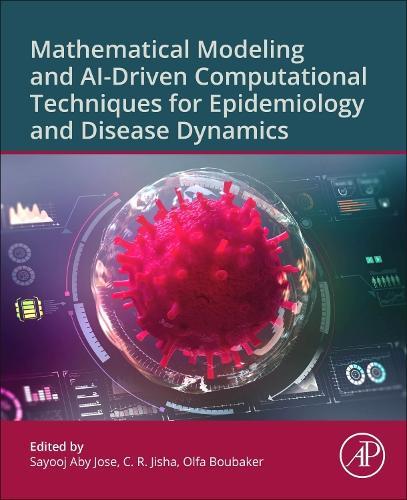
Mathematical Modeling and AI-Driven Computational Techniques for Epidemiology and Disease Dynamics offers a comprehensive exploration of innovative methodologies at the intersection of mathematics, biology, and medicine. This book delves into advanced mathematical modeling, artificial intelligence, and computational intelligence, providing essential tools for understanding and managing complex disease dynamics. Covering a wide range of topics, including fractional-order modeling, optimal control strategies, and privacy-preserving technologies, it addresses critical challenges in public health and healthcare systems. With contributions from leading experts, this volume bridges theoretical advancements and practical applications, making it an invaluable resource for researchers, healthcare professionals, and academics seeking interdisciplinary solutions to global health issues.
Full Product Details
Author: Sayooj Aby Jose, PhD (Assistant Research Professor at the Institute for Pandemic Sciences AI.celerator (IPSAI), Artificial Intelligence Institute, Seoul National University, South Korea) ,
Jisha C.R., PhD (Project Scientist II, National Centre for Medium Range Weather Forecasting (NCMRWF), India) ,
Olfa Boubaker (Full Professor, National Institute of Applied Sciences and Technology (INSAT), University of Carthage, Tunisia)
Publisher: Elsevier Science Publishing Co Inc
Imprint: Academic Press Inc
Weight: 0.450kg
ISBN: 9780443332340
ISBN 10: 0443332347
Pages: 300
Publication Date: 27 February 2026
Audience:
Professional and scholarly
,
Professional & Vocational
Format: Paperback
Publisher's Status: Forthcoming
Availability: Not yet available

This item is yet to be released. You can pre-order this item and we will dispatch it to you upon its release.
Author Information
Dr. Sayooj Aby Jose is currently working as an Assistant Research Professor at the Institute for Pandemic Sciences AI.celerator (IPSAI), Artificial Intelligence Institute, Seoul National University, South Korea. Previously, he worked as a Postdoctoral Researcher in the Department of Statistics at Seoul National University. He earned his Ph.D. in Mathematics from Alagappa University, India, specializing in mathematical epidemiology, biostatistics, and artificial intelligence. He is actively involved in various international professional roles and projects and serves as an editor for seven reputed journals. Since 2023, he has been supervising and coordinating international student project programme (ISPP) and seminar series in collaboration with the Department of Mathematics, Faculty of Education, Phuket Rajabhat University, Thailand, with a specific focus on modeling in public health. Dr. Jisha C. R. is a Project Scientist II at the National Centre for Medium Range Weather Forecasting (NCMRWF), India, specializing in applied mathematics, particularly in partial differential equations, machine learning, and scientific computing. She earned her Ph.D. from SRM Institute of Science and Technology, focusing on transient PDEs, and holds a Bachelor's, Master's, and M.Phil. in Mathematics from Calicut University, Kerala. Dr. Jisha has postdoctoral experience at UNIST, South Korea, and has published her research in leading journals. Pr. Olfa Boubaker is a full professor at the National Institute of Applied Sciences and Technology (INSAT) at the University of Carthage, Tunisia, where she specializes in control theory, nonlinear systems, and robotics. She holds a Ph.D. in Electrical Engineering from the National Engineering School of Tunis and a Habilitation Universitaire in Control Engineering from the National Engineering School of Sfax. Prof. Boubaker is the series editor of the book series Medical Robots and Devices: New Developments and Advances.""