|
|
|||
|
||||
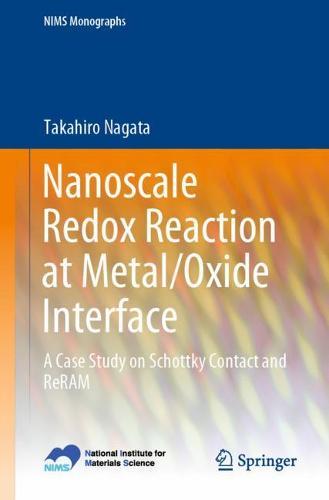
OverviewOxide materials are good candidates for replacing Si devices, which are increasingly reaching their performance limits, since the former offer a range of unique properties, due to their composition, design and/or doping techniques. The author introduces a means of selecting oxide materials according to their functions and explains metal/oxide interface physics. As he demonstrates, material development is the key to matching oxide materials to specific practical applications. In this book, the investigation and intentional control of metal/oxide interface structure and electrical properties using data obtained with non-destructive methods such as x-ray photoelectron spectroscopy (XPS) and x-ray reflectometry (XRR) are discussed. Further, it shows how oxide materials can be used to support the development of future functional devices with high-k, ferroelectric, magnetic and optical properties. In closing, it explains optical sensors as an application of metal Schottky contact and metal/oxide resistive random access memory structure. Full Product DetailsAuthor: Takahiro NagataPublisher: Springer Verlag, Japan Imprint: Springer Verlag, Japan Edition: 2020 ed. Weight: 0.454kg ISBN: 9784431548492ISBN 10: 4431548491 Pages: 89 Publication Date: 22 May 2020 Audience: Professional and scholarly , Professional & Vocational Format: Paperback Publisher's Status: Active Availability: Manufactured on demand We will order this item for you from a manufactured on demand supplier. Table of ContentsReviewsAuthor InformationTakahiro Nagata is a Group Leader at the Research Center for Functional Materials, National Institute for Materials Science (NIMS). He received his Ph.D. from Osaka Prefecture University in 2003. He joined NIMS as a Researcher at the Advanced Electric Materials Center in 2006, was appointed a Senior Researcher in the Semiconductor Device Materials Group at MANA in 2011, and has served in his current position since 2018. He was also a Visiting Scientist at the Department of Materials, University of California Santa Barbara in 2008-2009. Currently he is also a Visiting Professor at the Graduate School of Science and Technology, Meiji University. His work focuses on developing combinatorial synthesis systems and high-throughput characterization tools for screening candidate materials in the context of materials informatics. Most recently, he has begun expanding his focus to nanoelectronics materials, including wide band-gap semiconductors. Tab Content 6Author Website:Countries AvailableAll regions |
||||