Overview
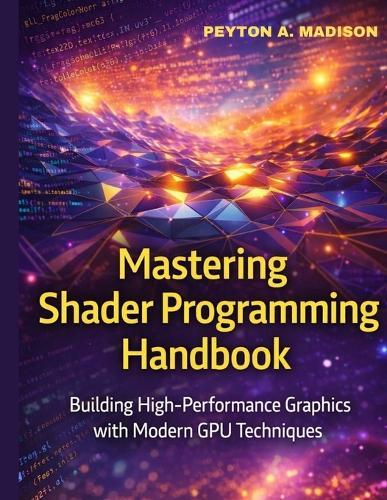
Have you ever looked at a game, simulation, or real-time application and wondered how those stunning visual effects are actually created? Have you ever opened a shader file and thought, ""Where do I even begin?"" Or maybe you've seen glowing materials, realistic lighting, water waves, and breathtaking environments in modern games and asked yourself: Is it really possible for me to build effects like that? The truth is, shader programming often feels mysterious at first. Many developers believe it requires advanced mathematics or years of graphics programming experience. But what if learning shaders could be practical, approachable, and even exciting? Mastering Shader Programming Handbook is designed to remove the confusion and show you exactly how shaders work-and how you can start creating powerful visual effects of your own. This book walks you through the world of shader development in a clear, practical, and hands-on way. Instead of overwhelming you with theory alone, it focuses on helping you understand the concepts that matter and apply them immediately. Think about this for a moment: What exactly happens when a 3D object is rendered on screen? How does the GPU transform raw geometry into a fully lit, textured surface? How do developers create glowing materials, reflections, distortions, and animated effects? And most importantly, how can you build these effects yourself? Inside this handbook, you'll discover the answers step by step. You'll learn how modern graphics pipelines work and how shaders fit into every stage of rendering. You'll explore how vertex and fragment shaders control geometry, lighting, color, and visual detail. You'll see how textures, materials, and lighting models combine to create believable digital worlds. But this book goes further than just the basics. What if you could design dynamic visual effects that react in real time? What if you could animate surfaces, simulate light behavior, or create procedural patterns directly on the GPU? Through practical explanations and real-world examples, this book shows you how to do exactly that. You'll explore topics such as: Writing and understanding vertex and fragment shaders Working with coordinate spaces and transformations Implementing lighting models and realistic materials Using textures, cube maps, and environment mapping Creating procedural effects and dynamic animations Understanding color blending, HDR rendering, and tone mapping Optimizing shader performance for real-time applications Debugging and improving shader code efficiently Building effects that work across modern game engines And along the way, you'll start to realize something powerful. Shaders are not magic. They are tools. Tools that give you direct control over how graphics appear on the screen. Once you understand them, you can transform simple geometry into vibrant environments, immersive effects, and visually stunning experiences. Are you a programmer curious about graphics development? A game developer tired of relying only on default engine shaders? A technical artist who wants deeper control over visual effects? Then ask yourself one final question: What could you create if you truly understood how shaders work? The journey into modern graphics programming starts here. Open this handbook, start experimenting, and discover how to turn code into breathtaking visual effects.
Full Product Details
Author: Peyton A Madison
Publisher: Independently Published
Imprint: Independently Published
Dimensions:
Width: 21.60cm
, Height: 2.00cm
, Length: 27.90cm
Weight: 0.862kg
ISBN: 9798251012286
Pages: 372
Publication Date: 06 March 2026
Audience:
General/trade
,
General
Format: Paperback
Publisher's Status: Active
Availability: Available To Order

We have confirmation that this item is in stock with the supplier. It will be ordered in for you and dispatched immediately.