Overview
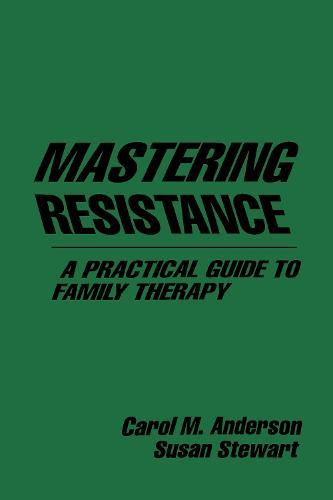
Resistance--any attitude or behavior of the therapist, patient, or system that resists change--is integral to every therapeutic relationship. Family therapists are all too familiar with challenges to their professional credentials, families' reluctance to convene for treatment, cancellations, rejection of therapy, requests to exclude a family member, and numerous other maneuvers that frustrate therapeutic goals. Mastering Resistance presents concrete, accessible strategies for coping directly with specific, commonly encountered problems of resistance. Moreover, it demonstrates how resistance can effectively be used to foster a stronger therapist-client alliance.
Full Product Details
Author: Carol M. Anderson ,
Susan Stewart
Publisher: Guilford Publications
Imprint: Guilford Publications
Dimensions:
Width: 15.20cm
, Height: 2.60cm
, Length: 22.90cm
Weight: 0.560kg
ISBN: 9780898620443
ISBN 10: 0898620449
Pages: 259
Publication Date: 25 December 1983
Audience:
Professional and scholarly
,
Professional & Vocational
Format: Hardback
Publisher's Status: Active
Availability: Available To Order

We have confirmation that this item is in stock with the supplier. It will be ordered in for you and dispatched immediately.
Reviews
I am always looking for good reading for trainees, and Mastering Resistance is just that. <br>--Family Process<br>
Mastering Resistance is an outstanding guide for trainees in the field of family therapy, and family therapy teachers should be delighted to have this book to assign to their students. Without oversimplifying the complexities of family therapy, it offers in a very clear format a way for beginners to grasp and keep in perspective the basics about avoiding becoming entangled in useless struggles with their clinical families. The writing style is clear, humorous where appropriate, and full of examples of the typical problems families present, along with suggested rules of thumb to consider in dealing with the everyday difficulties of clinical practice. By recognizing resistance and its functions in families, therapists can learn to respond positively and effectively. --Monica McGoldrick, LCSW, PhD (h.c.) <br> Written with enlightenment, knowledge, and wisdom on a subject that is dear to the heart of every therapist. Its appeal is universal, since resistance, regardless of the name giv
I am always looking for good reading for trainees, and Mastering Resistance is just that. --Family Process (02/11/1983) Mastering Resistance is an outstanding guide for trainees in the field of family therapy, and family therapy teachers should be delighted to have this book to assign to their students. Without oversimplifying the complexities of family therapy, it offers in a very clear format a way for beginners to grasp and keep in perspective the basics about avoiding becoming entangled in useless struggles with their clinical families. The writing style is clear, humorous where appropriate, and full of examples of the typical problems families present, along with suggested rules of thumb to consider in dealing with the everyday difficulties of clinical practice. By recognizing resistance and its functions in families, therapists can learn to respond positively and effectively. --Monica McGoldrick, LCSW, PhD (h.c.) Written with enlightenment, knowledge, and wisdom on a subject that is dear to the heart of every therapist. Its appeal is universal, since resistance, regardless of the name given it, is a central and continuing issue in all the healing arts. --Peggy Papp, MSW
Mastering Resistance is an outstanding guide for trainees in the field of family therapy, and family therapy teachers should be delighted to have this book to assign to their students. Without oversimplifying the complexities of family therapy, it offers in a very clear format a way for beginners to grasp and keep in perspective the basics about avoiding becoming entangled in useless struggles with their clinical families. The writing style is clear, humorous where appropriate, and full of examples of the typical problems families present, along with suggested rules of thumb to consider in dealing with the everyday difficulties of clinical practice. By recognizing resistance and its functions in families, therapists can learn to respond positively and effectively.--Monica McGoldrick, LCSW, PhD (h.c.) Written with enlightenment, knowledge, and wisdom on a subject that is dear to the heart of every therapist. Its appeal is universal, since resistance, regardless of the name given it, is a central and continuing issue in all the healing arts.--Peggy Papp, MSW -I am always looking for good reading for trainees, and Mastering Resistance is just that.--Family Process, 2/11/1983
Author Information
Carol M. Anderson is Associate Professor of Psychiatry at the University of Pittsburgh. Susan Stewart is Assistant Professor of Psychiatry at the University of Pittsburgh.