Overview
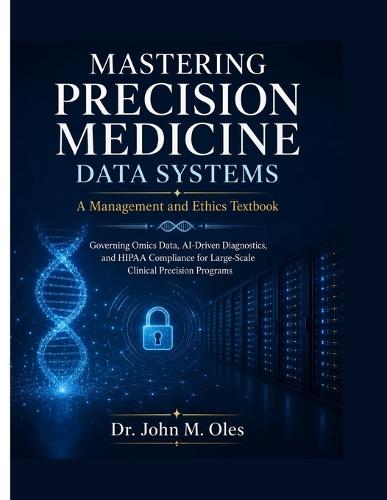
Precision medicine programs are among the most data-intensive, regulatory-complex, and ethically consequential initiatives that health systems and research institutions undertake today. Yet the professionals charged with leading them - program directors, clinical informaticists, compliance officers, bioinformaticians, and health system administrators - have had no single authoritative resource that addresses the full governance and management landscape they must navigate. Mastering Precision Medicine Data Systems fills that gap. Written for graduate students in biomedical informatics, health administration, and clinical genetics, as well as working professionals managing large-scale precision medicine initiatives, this textbook provides the conceptual frameworks, governance methodologies, and practical tools needed to plan, operate, and evaluate precision medicine programs that are scientifically rigorous, regulatory-compliant, and ethically accountable. Across fifteen chapters, the book develops an integrated treatment of the four governance domains that define modern precision medicine practice. The data infrastructure domain covers omics data architecture, next-generation sequencing pipelines, cloud and federated storage systems, and the interoperability standards - HL7 FHIR, SNOMED CT, LOINC - through which genomic and clinical data are integrated. The regulatory and compliance domain provides comprehensive, applied treatment of HIPAA's application to genomic data, the Common Rule's evolving consent frameworks, FDA regulation of AI-based diagnostic tools, the 21st Century Cures Act's information-blocking provisions, and the GDPR's heightened requirements for genetic data as a special category of personal information. The artificial intelligence governance domain addresses the full AI/ML model lifecycle - development, validation, deployment, monitoring, and retirement - with particular attention to algorithmic fairness, explainability requirements, FDA SaMD pathways, and the institutional governance structures through which clinical AI systems are accountably managed. The ethics and equity domain weaves principles of biomedical ethics, participant rights, return-of-results governance, and health equity through every chapter, treating equity not as a supplementary concern but as a core governance obligation. The book's final chapters and appendices translate governance frameworks into operational tools: a HIPAA compliance checklist specific to genomic data environments, a complete data use agreement template, an AI model governance policy framework with deployment approval workflows and fairness thresholds, a comprehensive glossary of over eighty precision medicine data governance terms, and a regulatory reference guide spanning US federal law, GDPR, and key international frameworks. Each chapter includes learning objectives, case-based exercises grounded in realistic program scenarios, discussion questions designed for graduate seminar use, and curated further reading drawn from the primary literature. The result is a textbook that bridges the gap between policy and practice - giving readers not only the conceptual vocabulary to understand precision medicine governance but the analytical tools to exercise it in the complex, multi-stakeholder, rapidly evolving environments where precision medicine programs operate.
Full Product Details
Author: Dr John M Oles
Publisher: Independently Published
Imprint: Independently Published
Dimensions:
Width: 21.60cm
, Height: 2.20cm
, Length: 27.90cm
Weight: 0.984kg
ISBN: 9798196304750
Pages: 428
Publication Date: 10 May 2026
Audience:
General/trade
,
General
Format: Paperback
Publisher's Status: Active
Availability: Available To Order

We have confirmation that this item is in stock with the supplier. It will be ordered in for you and dispatched immediately.