Awards
- Winner of Winner of the Rose Mary Crawshay Prize 2015..
Overview
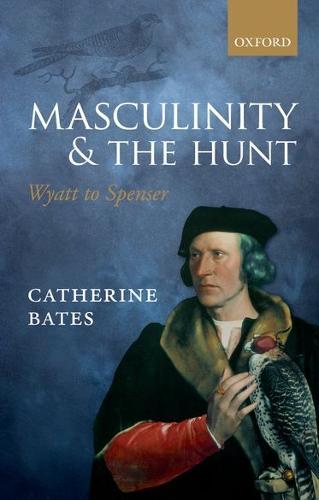
As an age-old metaphor for the sexual chase, the hunt provides a uniquely conflicted site for the representation of masculinity. On the one hand, hunting had from ancient times served to define a particular and culturally approved mode of masculinity as heroic, pursuant, and goal-oriented, where success was measured by the achievement of the objectives set: the capture and killing of prey. When applied to love, on the other hand, hunting was inflected quite differently. At first glance, the basic scenario of a male subject pursuing elusive quarry over which he ultimately comes to assert control might seem to epitomise the dynamic of the sexual chase, yet when poets invoke the hunt in an amorous context, this most obvious manifestation of the metaphor is not the one they put to use. On the contrary, in lyric poetry and romance, the hunt metaphor serves to demote or destabilise the masculine subject in some way. The huntsman is routinely a figure of failure: for all his efforts, he either fails to catch what he pursues, catches the wrong thing, ends up being caught by others, or runs round in circles chasing himself. His failure is measured precisely as a shortfall from the cultural ideal. The metaphor of the hunt thus opens up possibilities for exploring definitions of masculinity that deviate from culturally approved models of mastery and power. It shows how limited those models are and offers examples of alternative and counter-cultural versions of a masculine subjectivity that radically query patriarchal stereotypes of gender and class. The hunt has been the subject of increased critical interest over last few years, partly as a result of its politicisation as an issue, as reflected in recent changes to hunting legislation within the UK. Shifting attitudes to the hunt indicate that as a cultural phenomenon it continues to mobilise strong opinion and to activate notions of class and gender identity to this day. Masculinity and the Hunt is a unique study considering the link between hunting and masculinity in the literature of the sixteenth century.
Full Product Details
Author: Catherine Bates (Professor of English, Department of English and Comparative Literary Studies, University of Warwick)
Publisher: Oxford University Press
Imprint: Oxford University Press
Dimensions:
Width: 13.70cm
, Height: 2.00cm
, Length: 21.60cm
Weight: 0.446kg
ISBN: 9780198778325
ISBN 10: 0198778325
Pages: 356
Publication Date: 04 August 2016
Audience:
College/higher education
,
Professional and scholarly
,
Undergraduate
,
Postgraduate, Research & Scholarly
Format: Paperback
Publisher's Status: Active
Availability: To order

Stock availability from the supplier is unknown. We will order it for you and ship this item to you once it is received by us.
Reviews
[Bates] offers fascinating accounts of early modern hunt practices, from blood sports to aristocratic tilting; revisionary arguments about the period's renderings of male subjectivity and desire; sophisticated conceptualizations of narrative voice and lyric utterance; and, above all, brilliant readings of works by Wyatt, Gascoigne, Turberville, Sidney, Greville, and Spenser. Capacious in its ambit, this incisive volume is a major contribution to Renaissance literary and cultural criticism as well as to theories of subjectivity and gender and sexuality studies. --Renaissance Quarterly
[Bates] offers fascinating accounts of early modern hunt practices, from blood sports to aristocratic tilting; revisionary arguments about the period's renderings of male subjectivity and desire; sophisticated conceptualizations of narrative voice and lyric utterance; and, above all, brilliant readings of works by Wyatt, Gascoigne, Turberville, Sidney, Greville, and Spenser. Capacious in its ambit, this incisive volume is a major contribution to Renaissance literary and cultural criticism as well as to theories of subjectivity and gender and sexuality studies. --Renaissance Quarterly
Author Information
Catherine Bates is Professor of English in the Department of English and Comparative Literary Studies at the University of Warwick. She studied English at Oxford and was a Fellow of Balliol College, Oxford, and of Peterhouse, Cambridge, before moving to Warwick in 1995.