Overview
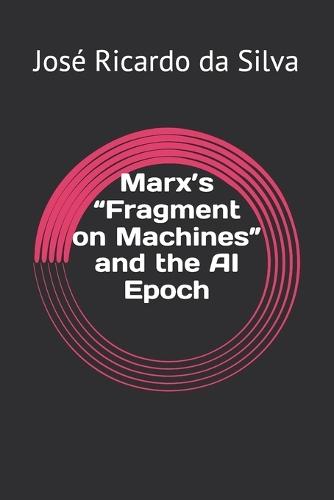
It is a profoundly disorienting experience to watch a prophecy materialize in real-time. For those of us who have spent years studying the historical currents of political economy, the rapid, violent acceleration of Artificial Intelligence over the past half-decade has felt less like a technological breakthrough and more like an earthquake we always knew was coming. When the first highly capable Large Language Models breached the public consciousness in the early 2020s, the world was gripped by a collective, dizzying vertigo. We watched in awe and terror as the machine began to converse, to write, to code, and to paint. The media was instantly flooded with breathlessly speculative debates: Is the machine sentient? Will it destroy humanity? Are we building a digital god? But as I watched my own colleagues in the professional classes-writers, software engineers, legal analysts, and educators-begin to receive termination notices, their livelihoods suddenly deemed economically superfluous by algorithmic efficiency, I realized that our cultural conversation about AI was fatally flawed. We were treating Artificial Intelligence as an ethereal, independent intelligence descending from the cloud. We were missing the underlying economic metal. We were ignoring the architecture of capital. It was during the anxious, feverish months of late 2023, amidst the historic Hollywood writers' strikes and the sudden, mass restructuring of the global tech sector, that I found myself retreating not into the latest computer science journals, but into a dense, sprawling manuscript written by a penniless German exile in the winter of 1857. I opened Karl Marx's Grundrisse, turned to the obscure, brilliant pages known as the ""Fragment on Machines,"" and found that the map to our twenty-first-century labyrinth had already been drawn. The genesis of this book lies in the shock of that rediscovery. When we strip away the soot and steam of the Victorian era, Marx's diagnosis of the machine is razor-sharp and terrifyingly applicable to our present moment. Marx understood that capital is driven by an insatiable hunger to eliminate the unpredictable, expensive variable of human labor. He foresaw that this drive would eventually force capital to systematically extract the knowledge, skill, and intellect of the human species, objectifying it and embedding it directly into the machinery of production. He called this crystallized, externalized network of human intelligence the ""General Intellect."" Today, we call it Artificial Intelligence.
Full Product Details
Author: José Ricardo Da Silva
Publisher: Independently Published
Imprint: Independently Published
Dimensions:
Width: 15.20cm
, Height: 0.80cm
, Length: 22.90cm
Weight: 0.163kg
ISBN: 9798199083843
Pages: 128
Publication Date: 28 May 2026
Audience:
General/trade
,
General
Format: Paperback
Publisher's Status: Active
Availability: Available To Order

We have confirmation that this item is in stock with the supplier. It will be ordered in for you and dispatched immediately.