Overview
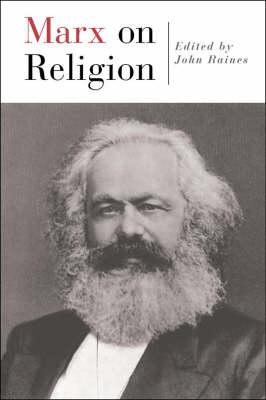
""Religious suffering is at one and the same time the expression of real suffering and a protest against real suffering. Religion is the sigh of the oppressed creature, the heart of a heartless world and the soul of soulless conditions.""Few people would ever expect that Karl Marx is the writer of the above statement. He not only wrote it, but he did so in the same breath of his more famous dictum that ""religion is the opiate of the masses."" How can one reconcile such different perspectives on the power and ubiquity of religion?In this compact reader of Marx's essential thought on religion, John Raines offers the full range of Marx's thoughts on religion and its relationship to the world of social relations. Through a careful selection of essays, articles, pamphlets, and letters, Raines shows that Marx had a far more complex understanding of religious belief. Equally important is how Marx's ideas on religion were intimately tied to his inquiries into political economy, revolution, social change, and the philosophical questions of the self.Raines offers an introduction that shows the continuing importance of the Marxist perspective on religion and its implications for the way religion continues to act in and respond to the momentous changes going on in our social and environmental worlds. Marx on Religion also includes a study guide to help professors and students-as well as the general reader-continue to understand the significance of this often under-examined component of Marx.
Full Product Details
Author: John Raines
Publisher: Temple University Press,U.S.
Imprint: Temple University Press,U.S.
Dimensions:
Width: 15.20cm
, Height: 2.10cm
, Length: 22.90cm
Weight: 0.463kg
ISBN: 9781566399395
ISBN 10: 1566399394
Pages: 272
Publication Date: 01 October 2001
Audience:
Professional and scholarly
,
Professional & Vocational
Format: Hardback
Publisher's Status: Active
Availability: Out of stock

The supplier is temporarily out of stock of this item. It will be ordered for you on backorder and shipped when it becomes available.
Reviews
Marx on Religion is a thoughtfully chosen, intellectually challenging selection from the writings of Marx (and Engels) on religion. ...Marx on Religion is a valuable teaching tool. Its particular merit in our polarized times is that it promotes contact across the widening abyss. -Science and Society The collection is probably a good way into the study of Marx for those who begin from a religious orientation. -Philosophy in Review Like the Hebrew prophets of old, Marx knew that to speak of social justice we must become socially self-critical, and that means becoming critical of the ruling powers-whether they be kings or priests or investment bankers.... For Marx, all ideas are relative to the social location and interests of their production. And like the prophets before him, the most revealing perspective is not from the top down or the center outward, but the...point of view of the exploited and marginalized. Suffering can see through and unveil official explanations; it can cry out and protest against the arrogance of power. -John Raines, from the Introduction
Like the Hebrew prophets of old, Marx knew that to speak of social justice we must become socially self-critical, and that means becoming critical of the ruling powers-whether they be kings or priests or investment bankers.... For Marx, all ideas are relative to the social location and interests of their production. And like the prophets before him, the most revealing perspective is not from the top down or the center outward, but the...point of view of the exploited and marginalized. Suffering can see through and unveil official explanations; it can cry out and protest against the arrogance of power. -John Raines, from the Introduction The collection is probably a good way into the study of Marx for those who begin from a religious orientation. -Philosophy in Review Marx on Religion is a thoughtfully chosen, intellectually challenging selection from the writings of Marx (and Engels) on religion. ...Marx on Religion is a valuable teaching tool. Its particular merit in our polarized times is that it promotes contact across the widening abyss. -Science and Society
Marx on Religion is a thoughtfully chosen, intellectually challenging selection from the writings of Marx (and Engels) on religion. . Marx on Religion is a valuable teaching tool. Its particular merit in our polarized times is that it promotes contact across the widening abyss. Science and Society Like the Hebrew prophets of old, Marx knew that to speak of social justice we must become socially self-critical, and that means becoming critical of the ruling powers--whether they be kings or priests or investment bankers... For Marx, all ideas are relative to the social location and interests of their production. And like the prophets before him, the most revealing perspective is not from the top down or the center outward, but the...point of view of the exploited and marginalized. Suffering can see through and unveil official explanations; it can cry out and protest against the arrogance of power. --John Raines, from the Introduction The collection is probably a good way into the study of Marx for those who begin from a religious orientation. --Philosophy in Review
"""Like the Hebrew prophets of old, Marx knew that to speak of social justice we must become socially self-critical, and that means becoming critical of the ruling powers—whether they be kings or priests or investment bankers.... For Marx, all ideas are relative to the social location and interests of their production. And like the prophets before him, the most revealing perspective is not from the top down or the center outward, but the...point of view of the exploited and marginalized. Suffering can see through and unveil official explanations; it can cry out and protest against the arrogance of power.""—John Raines, from the Introduction ""The collection is probably a good way into the study of Marx for those who begin from a religious orientation.""—Philosophy in Review ""Marx on Religion is a thoughtfully chosen, intellectually challenging selection from the writings of Marx (and Engels) on religion. ...Marx on Religion is a valuable teaching tool. Its particular merit in our polarized times is that it promotes contact across the widening abyss.""—Science and Society"
Author Information
John Raines is Professor of Religion at Temple University. He is the author of over a half-dozen books, including, most recently, What Men Owe to Women: Men's Voices from World Religions.