Overview
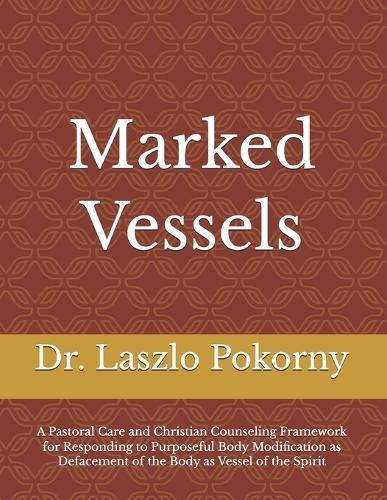
The practice of purposeful body modification-including tattooing, body piercing, cosmetic surgery, and scarification-has become a statistically normative feature of contemporary American culture, with 32% of U.S. adults reporting at least one tattoo (Ipsos, 2023) and 17.5 million cosmetic procedures performed annually (American Society of Plastic Surgeons, 2022). Despite this prevalence, the Christian church lacks a comprehensive, theologically grounded pastoral care framework for responding to congregants who have or are considering body modifications. This dissertation addresses this gap through a sequential exploratory mixed-methods design grounded in Richard Osmer's four tasks of practical theological interpretation, Emmanuel Lartey's intercultural pastoral care model, and David Entwistle's integrative approach to psychology and Christianity. Phase 1 employed qualitative content analysis of denominational documents from Catholic, Eastern Orthodox, Evangelical Protestant, and Mainline Protestant traditions, identifying seven deductive themes and three emergent themes structuring Christian ethical reasoning about the body. Phase 2 conducted descriptive quantitative analysis of five publicly available datasets-the General Social Survey (2010-2022, N = 19,347), Pew Research Center (2023), American Society of Plastic Surgeons (2022), Ipsos (2019), and Barna Group (2018, 2022, 2023)-revealing an inverse relationship between religious commitment and body modification prevalence, significant generational divides (40% of Millennials vs. 10% of Baby Boomers have tattoos), and a 17-percentage-point decline in Christian identification among Generation Z. Phase 3 integrated findings through joint display analysis, producing four meta-inferences: the Religiosity-Modification Gradient, Theological Consensus Amid Pastoral Divergence, the Generational Pastoral Imperative, and the Autonomy-Identity-Spiritual Formation Tension. The primary contribution is the VESSEL Framework-a six-component pastoral care and Christian counseling model comprising Validate (affirming dignity and Imago Dei), Explore (understanding motivation and narrative), Scripture (collaborative theological reflection), Spiritual Formation (bodily stewardship and discipleship), Ecclesial Integration (community belonging), and Long-term Discipleship (ongoing pastoral relationship). The framework is theologically conservative, ecumenically adaptable, empirically informed, and practically actionable. Implications extend to pastoral practice, Christian counseling, theological education, and the academy.
Full Product Details
Author: Laszlo Pokorny
Publisher: Independently Published
Imprint: Independently Published
Dimensions:
Width: 21.60cm
, Height: 1.40cm
, Length: 27.90cm
Weight: 0.599kg
ISBN: 9798195977757
Pages: 256
Publication Date: 07 May 2026
Audience:
General/trade
,
General
Format: Paperback
Publisher's Status: Active
Availability: Available To Order

We have confirmation that this item is in stock with the supplier. It will be ordered in for you and dispatched immediately.