Overview
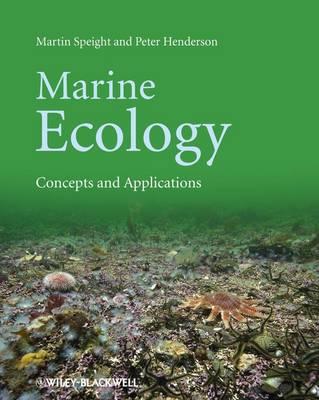
This book began life as a series of lectures given to second and third year undergraduates at Oxford University. These lectures were designed to give students insights as to how marine ecosystems functioned, how they were being affected by natural and human interventions, and how we might be able to conserve them and manage them sustainably for the good of people, both recreationally and economically. This book presents 10 chapters, beginning with principles of oceanography important to ecology, through discussions of the magnitude of marine biodiversity and the factors influencing it, the functioning of marine ecosystems at within trophic levels such as primary production, competition and dispersal, to different trophic level interactions such as herbivory, predation and parasitism. The final three chapters look at the more applied aspects of marine ecology, discussion fisheries, human impacts, and management and conservation. Other textbooks covering similar topics tend to treat the topics from the point of view of separate ecosystems, with chapters on reefs, rocks and deep sea. This book however is topic driven as described above, and each chapter makes full use of examples from all appropriate marine ecosystems. The book is illustrated throughout with many full colour diagrams and high quality photographs. The book is aimed at undergraduate and graduate students at colleges and universities, and it is hoped that the many examples from all over the world will provide global relevance and interest. Both authors have long experience of research and teaching in marine ecology. Martin Speight’s first degree was in marine zoology at UCNW Bangor, and he has taught marine ecology and conservation at Oxford for 25 years. His research students study tropical marine ecology from the Caribbean through East Africa to the Far East. Peter Henderson is a Senior Research Associate at the University of Oxford, and is Director of Pisces Conservation in the UK. He has worked on marine and freshwater fisheries, as well as ecological and economic impacts and exploitation of the sea in North and South America as well as Europe.
Full Product Details
Author: Martin R. Speight (University of Oxford) ,
Peter A. Henderson (Pisces Conservation Ltd)
Publisher: John Wiley and Sons Ltd
Imprint: Wiley-Blackwell
Dimensions:
Width: 21.80cm
, Height: 1.80cm
, Length: 27.40cm
Weight: 0.907kg
ISBN: 9781444335453
ISBN 10: 1444335456
Pages: 288
Publication Date: 23 April 2010
Audience:
College/higher education
,
Professional and scholarly
,
Undergraduate
,
Professional & Vocational
Format: Paperback
Publisher's Status: Active
Availability: Available To Order

We have confirmation that this item is in stock with the supplier. It will be ordered in for you and dispatched immediately.
Reviews
This is a well organized, easily read text that provides a useful introduction to marine ecology for senior undergraduate students...teachers looking for an up-to-date text with a modern approach should, nevertheless, look at this book to see whether it meets their particular course needs. ( Aquaculture International, July 2010)
This work by Speight and Henderson (both, Oxford Univ., UK) details physical and chemical marine environments and their effect on various organisms and ecological functions. The book is divided into 10 chapters. The first two chapters address essential aspects of oceanography, including factors such as ocean currents, temperature, salinity, and various elements in sea water and their influence on marine organisms. Subsequent chapters focus on the diversity of organisms in various oceanic realms, factors underlying the distribution and diversity of organisms, and the functional aspects of the oceans, including primary production, chemosynthesis, predation, parasitism, and more.Concluding chapters address the larger picture, including global fisheries, sustainable exploitation of marine resources, anthropogenic impacts on oceans, and conservation of marine resources. Appropriate examples and graphs illustrate the points made in each chapter. Pictures and graphics are excellent. (CHOICE, December 2010) This is a well organized, easily read text that provides a useful introduction to marine ecology for senior undergraduate students...teachers looking for an up-to-date text with a modern approach should, nevertheless, look at this book to see whether it meets their particular course needs. (Aquaculture International, July 2010)
This work by Speight and Henderson (both, Oxford Univ., UK) details physical and chemical marine environments and their effect on various organisms and ecological functions. The book is divided into 10 chapters. The first two chapters address essential aspects of oceanography, including factors such as ocean currents, temperature, salinity, and various elements in sea water and their influence on marine organisms. Subsequent chapters focus on the diversity of organisms in various oceanic realms, factors underlying the distribution and diversity of organisms, and the functional aspects of the oceans, including primary production, chemosynthesis, predation, parasitism, and more.Concluding chapters address the larger picture, including global fisheries, sustainable exploitation of marine resources, anthropogenic impacts on oceans, and conservation of marine resources. Appropriate examples and graphs illustrate the points made in each chapter. Pictures and graphics are excellent. (CHOICE, December 2010) This is a well organized, easily read text that provides a useful introduction to marine ecology for senior undergraduate students...teachers looking for an up-to-date text with a modern approach should, nevertheless, look at this book to see whether it meets their particular course needs. (Aquaculture International, July 2010)
This work by Speight and Henderson (both, Oxford Univ., UK) details physical and chemical marine environments and their effect on various organisms and ecological functions. The book is divided into 10 chapters. The first two chapters address essential aspects of oceanography, including factors such as ocean currents, temperature, salinity, and various elements in sea water and their influence on marine organisms. Subsequent chapters focus on the diversity of organisms in various oceanic realms, factors underlying the distribution and diversity of organisms, and the functional aspects of the oceans, including primary production, chemosynthesis, predation, parasitism, and more.Concluding chapters address the larger picture, including global fisheries, sustainable exploitation of marine resources, anthropogenic impacts on oceans, and conservation of marine resources. Appropriate examples and graphs illustrate the points made in each chapter. Pictures and graphics are excellent. (CHOICE, December 2010) This is a well organized, easily read text that provides a useful introduction to marine ecology for senior undergraduate students...teachers looking for an up-to-date text with a modern approach should, nevertheless, look at this book to see whether it meets their particular course needs. (Aquaculture International, July 2010)
Author Information
Both authors have long experience of research and teaching in marine ecology. Martin Speight's first degree was in marine zoology at UCNW Bangor, and he has taught marine ecology and conservation at Oxford for 25 years. His research students study tropical marine ecology from the Caribbean through East Africa to the Far East. Peter Henderson is a Senior Research Associate at the University of Oxford, and is Director of Pisces Conservation in the UK. He has worked on marine and freshwater fisheries, as well as ecological and economic impacts and exploitation of the sea in North and South America as well as Europe.