Overview
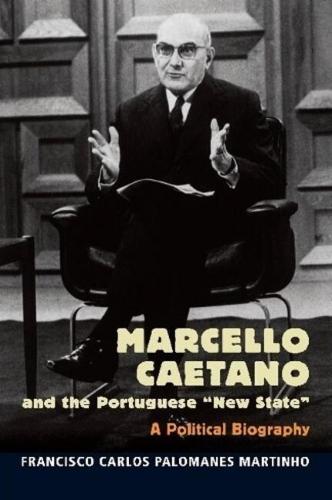
Prime Minister Marcello Caetano was the successor of Antonio de Oliveira Salazar. Considered the second most important figure of the Portuguese dictatorship (the Estado Novo regime, 1933-1974), Caetano has generated considerable disagreement amongst scholars with regard to his persona and politics; some consider him more authoritarian than his predecessor, others more liberal. After providing background on his childhood and entry to university, the author explains his growing activism in the Integralismo Lusitano and in the Catholic Church; his monarchist and nationalist ideology. Caetano's decision to support the Salazar Regime coincided with publications in the mainstream media on corporatism, colonialism, European politics and the relationship between Brazil and Portugal. His role in the office of General Secretary of Mocidade Portuguesa (MP), an organization of Portuguese youth similar to the fascist youth organizations in Italy or Germany, was at odds with his neutrality policy in the Second World War. The leadership of Uniao Nacional (the single party of the regime) and the presidency of the Camara Corportiva (a parliament for corporative interests) led to national recognition at a time when the Portuguese regime had to reform its colonial policy. His tensions with other notables of Salazarism resulted in his political demotion and devotion toward the University in the 1960s. As Rector of Lisbon University he supported universities' autonomy, dividing public opinion. Caetano's Presidency (beginning in September 1968) reflected the tense relationship between the government and the liberal wing on the colonial crisis. Ultimately this led to the final crisis of the New State regime; the fragmentation of the armed forces; and the Carnation Revolution on April 25, 1974. During his exile in Brazil between 1974 and 1980 Caetano maintained correspondence with his Portuguese friends. These correspondences, introduced and explained by Francisco Martinho, are of exceptional importance in understanding Portugal's contemporary political history.
Full Product Details
Author: Francisco Martinho
Publisher: Liverpool University Press
Imprint: Liverpool University Press
Weight: 0.572kg
ISBN: 9781789760095
ISBN 10: 1789760097
Pages: 256
Publication Date: 02 November 2021
Audience:
General/trade
,
General
Format: Paperback
Publisher's Status: Active
Availability: In Print

This item will be ordered in for you from one of our suppliers. Upon receipt, we will promptly dispatch it out to you. For in store availability, please contact us.
Author Information
Francisco Martinho is Professor of Iberian History at the University of Sao Paulo, Brazil. He has published extensively on Corporatism, Authoritarianism, and democratization in Brazil and Portugal. Among his latest books are (co-ed.) A Onda Corporativa (2016) and A Experiencia Nacional: identidades e conceitos de nacao na Africa, Asia, Europa e nas Americas (2017).