Overview
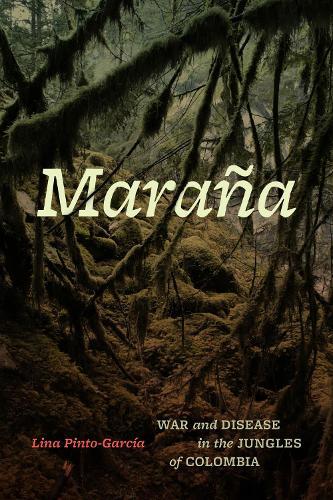
Delves into the relationship between war and disease, focusing on Colombian armed conflict and the skin disease known as cutaneous leishmaniasis. Cutaneous leishmaniasis, transmitted by female sandflies, produces skin lesions of varying size and shape. In Colombia, the insect vector of the disease is native to the same forested environments that have served as the main stage for one of the longest and most violent wars in Latin American history. As a result, the populations most affected by leishmaniasis in Colombia are members of the state army and nonstate armed groups. Lina Pinto-García explores how leishmaniasis and the armed conflict are inextricably connected and mutually reinforcing. Maraña means ""tangle"" in Spanish but is also commonly used in Colombia to name the entangled greenery, braided lianas, and dense foliage that characterize the tropical forests where leishmaniasis transmission typically occurs. Pinto-García argues that leishmaniasis and the war are not merely linked but enmarañadas to each other through narratives, technologies, and practices produced by the state, medicine, biomedical research, and the armed conflict itself. All told, Maraña is a passionate study of how war has shaped the production of scientific knowledge about leishmaniasis and access to its treatments in Colombia.
Full Product Details
Author: Lina Pinto-García
Publisher: The University of Chicago Press
Imprint: University of Chicago Press
Dimensions:
Width: 15.20cm
, Height: 1.50cm
, Length: 22.90cm
Weight: 0.313kg
ISBN: 9780226839349
ISBN 10: 0226839346
Pages: 240
Publication Date: 29 April 2025
Audience:
Professional and scholarly
,
Professional & Vocational
Format: Paperback
Publisher's Status: Active
Availability: Manufactured on demand

We will order this item for you from a manufactured on demand supplier.
Reviews
“War exacts many obvious costs upon bodies and ecologies: grave injuries, toxic waste, psychological trauma. In Maraña, Pinto-García calls our attention to a slower, more elusive, yet no less consequential cost of war. Her gripping account of how cutaneous leishmaniasis came to be the signature pathology of Colombia’s protracted armed conflict blends a keen eye for scientific detail with an incisive and meticulous critique of militarized healthcare. A major contribution to environmental and medical anthropology, this book illustrates how relations of care for people and landscapes are shaped by economies of violence—and how it might be otherwise.” -- Alex M. Nading, author of “Mosquito Trails: Ecology, Health, and the Politics of Entanglement” “This outstanding book constitutes a pathbreaking ethnography rooted in scientific evidence, technological studies, and medical anthropology, through which Pinto-García underscores and unwraps the maraña, or the entanglement, of the armed conflict with leishmaniasis in Colombia. She reveals how in this violent context, which takes place mainly in the tropical jungle, leishmaniasis has been constructed as a war or guerrilla disease. As the testimonies of soldiers, guerrillas, nurses, scientists, and local residents are unraveled, it becomes clear that the stigmatization of the disease has led to a biomedical war regime that prioritizes war over public health. The author leaves readers with the question of how to disentangle leishmaniasis and war, and how to consider a non-pharmaceutical solution to a public health problem.” -- María Clemencia Ramírez, author of “Between the Guerrillas and the State: The Cocalero Movement, Citizenship, and Identity in the Colombian Amazon”
“War exacts many obvious costs upon bodies and ecologies: grave injuries, toxic waste, psychological trauma. In Maraña, Pinto-García calls our attention to a slower, more elusive, yet no less consequential cost of war. Her gripping account of how cutaneous leishmaniasis came to be the signature pathology of Colombia’s protracted armed conflict blends a keen eye for scientific detail with an incisive and meticulous critique of militarized healthcare. A major contribution to environmental and medical anthropology, this book illustrates how relations of care for people and landscapes are shaped by economies of violence—and how it might be otherwise.” -- Alex M. Nading, author of “Mosquito Trails: Ecology, Health, and the Politics of Entanglement”
“Based on a scrupulous ethnography conducted in the Colombian jungle, Pinto-García thoroughly demonstrates how leishmaniasis is both socially produced by the armed conflict and metaphorically constructed through the state’s biopolitics. At the interface between medicine, epidemiology, and ecology, she offers a critical anthropology of the complex interactions between warfare and disease.” -- Didier Fassin, author of “The Worlds of Public Health: Anthropological Excursions” “War exacts many obvious costs upon bodies and ecologies: grave injuries, toxic waste, psychological trauma. In Maraña, Pinto-García calls our attention to a slower, more elusive, yet no less consequential cost of war. Her gripping account of how cutaneous leishmaniasis came to be the signature pathology of Colombia’s protracted armed conflict blends a keen eye for scientific detail with an incisive and meticulous critique of militarized healthcare. A major contribution to environmental and medical anthropology, this book illustrates how relations of care for people and landscapes are shaped by economies of violence—and how it might be otherwise.” -- Alex M. Nading, author of “Mosquito Trails: Ecology, Health, and the Politics of Entanglement” “This outstanding book constitutes a pathbreaking ethnography rooted in scientific evidence, technological studies, and medical anthropology, through which Pinto-García underscores and unwraps the maraña, or the entanglement, of the armed conflict with leishmaniasis in Colombia. She reveals how in this violent context, which takes place mainly in the tropical jungle, leishmaniasis has been constructed as a war or guerrilla disease. As the testimonies of soldiers, guerrillas, nurses, scientists, and local residents are unraveled, it becomes clear that the stigmatization of the disease has led to a biomedical war regime that prioritizes war over public health. The author leaves readers with the question of how to disentangle leishmaniasis and war, and how to consider a non-pharmaceutical solution to a public health problem.” -- María Clemencia Ramírez, author of “Between the Guerrillas and the State: The Cocalero Movement, Citizenship, and Identity in the Colombian Amazon” “Pinto-García negotiated remarkable access to both the Colombian Army and FARC guerrilla members. She deploys what she learned to tell multifaceted stories about the complex entanglements (or maraña) of war, disease, medicine, and violence, tracing the reciprocal interactions of leishmaniasis and its treatments amid a war that determined who fell sick and who could access care. Maraña offers poignant testimony of the suffering, stigma, and stigmata that endure long after formal hostilities cease.” -- David S. Jones, author of “Broken Hearts: The Tangled History of Cardiac Care” “Pinto-García’s Maraña is a milestone in new anthropologies of infectious diseases. No other monograph brings together the ethnographic study of war and zoonosis in such thought-provoking, boundary-breaking tension.” -- Christos Lynteris, author of “Visual Plague: The Emergence of Epidemic Photography”
Author Information
Lina Pinto-García is a postdoctoral fellow in the Connected Minds program at York University in Canada. She is also a research affiliate of the School of Anthropology and Museum Ethnography at the University of Oxford.