Overview
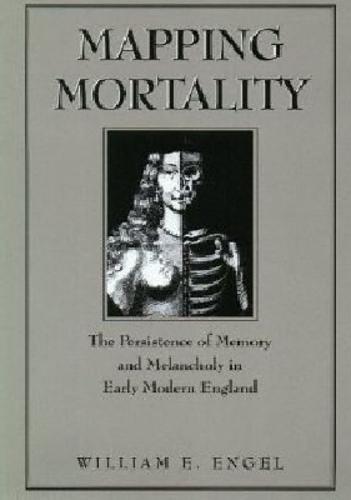
This text is a cultural study of the ways men and women in early modern England confronted, accommodated and paid tribute to mortal life and certain death. Drawing on prose and poetry, painting and statuary, social practices and religious rites, William Engel reopens central questions about Renaissance habits of thought. He explores how the metaphorics of that period signalled and enacted a continual revelation of mortality: the death of the body (figured as a kind of vehicle) and the eternality of the soul (that which was to be transported). Engel argues that early modern metaphorics was essentially mnemonic and emblematic, grounding itself in the relation of body and soul. Building on the work of Benjamin, Heidegger, Derrida, Baudrillard and Eliade, the book provides contemporary readers with a key for recovering and understanding the critical assumptions underlying a mnemonically oriented principle of aesthetics.
Full Product Details
Author: William E. Engel
Publisher: University of Massachusetts Press
Imprint: University of Massachusetts Press
Edition: New ed.
Dimensions:
Width: 15.90cm
, Height: 2.60cm
, Length: 23.40cm
Weight: 0.633kg
ISBN: 9780870239984
ISBN 10: 0870239988
Pages: 304
Publication Date: 31 December 1995
Audience:
College/higher education
,
Professional and scholarly
,
Undergraduate
,
Postgraduate, Research & Scholarly
Format: Hardback
Publisher's Status: Out of Print
Availability: In Print

Limited stock is available. It will be ordered for you and shipped pending supplier's limited stock.
Reviews
. . . a thoughtful and humane book . . .--Sixteenth Century JournalWilliam Engel is a master teacher [whose] diction is striking, precise, and memorable.--Sewanee Review. . . the novelty of Engel's approach is the rigour with which he argues his case for seeing all these large topics [mortality, memory, and melancholy] as closely interdependent for a range of writers.--Review of English Studies. . . as cleverly conceived as it is cleverly written. It rivets the attention . . . [and] will be remembered as a major contribution . . . [a] considerable addition to intellectual history.--Bibliotheque d'Humanisme et Renaissance
. . . a thoughtful and humane book . . .--Sixteenth Century Journal William Engel is a master teacher [whose] diction is striking, precise, and memorable.--Sewanee Review . . . the novelty of Engel's approach is the rigour with which he argues his case for seeing all these large topics [mortality, memory, and melancholy] as closely interdependent for a range of writers.--Review of English Studies . . . as cleverly conceived as it is cleverly written. It rivets the attention . . . [and] will be remembered as a major contribution . . . [a] considerable addition to intellectual history.--Bibliotheque d'Humanisme et Renaissance
Author Information
William E. Engel is an independent scholar, freelance tutor and author of Education & Anarchy. He has been Research Fellow at the Huntington Library, Newberry Library, and Folger Shakespeare Library; Visiting Scholar at Harvard University; and is currently Visiting Professor at The University of the South.