Overview
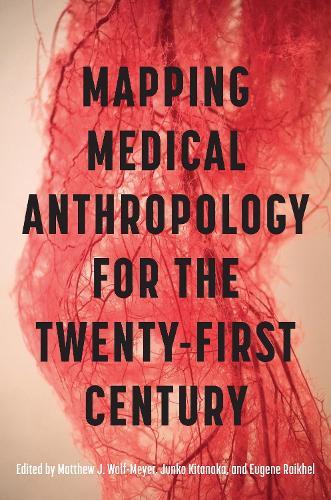
Mapping Medical Anthropology for the Twenty-First Century provides readers with a comprehensive survey of topics, methodologies, and theories in the discipline, drawing on contributions from leading anthropologists around the world. As a discipline, medical anthropology provides situational analysis of health, disease, and disability to show how the experiences of medical experts, patients, and their broader communities are informed by their social and cultural contexts. Adopting a keywords-driven approach, Mapping Medical Anthropology for the Twenty-First Century provides readers with an introduction to the concepts and approaches that have animated medical anthropology over the course of the twentieth century. Authors put these keywords into dialogue with their ethnographic and archival research to demonstrate how these concepts can be expanded to address contemporary phenomena related to health, disease, and disability. Mapping Medical for the Twenty-First Century provides newcomers to medical anthropology with a robust introduction to the discipline, while providing experienced readers a set of chapters that explore the discipline in novel and exciting ways.
Full Product Details
Author: Matthew J. Wolf-Meyer , Junko Kitanaka , Eugene Raikhel , Mara Buchbinder
Publisher: Rutgers University Press
Imprint: Rutgers University Press
Dimensions:
Width: 15.60cm
, Height: 1.80cm
, Length: 23.50cm
Weight: 0.427kg
ISBN: 9781978845893
ISBN 10: 1978845898
Pages: 272
Publication Date: 14 April 2026
Audience:
College/higher education
,
Professional and scholarly
,
General/trade
,
Tertiary & Higher Education
,
Professional & Vocational
Format: Paperback
Publisher's Status: Forthcoming
Availability: Not yet available 
This item is yet to be released. You can pre-order this item and we will dispatch it to you upon its release.
Table of Contents
Introduction: Topographies of Medicine: Bodies, Institutions, and Infrastructures Matthew Wolf-Meyer, Junko Kitanaka, and Eugene Raikhel, eds. Part I: Medicine’s Infrastructures Section Introduction: Medicine and Everyday Life: Transformations of the Life-course Through Biomedical Encounters Junto Kitanaka Chapter 1: Sickness, Illness, Body Politic, Planetary Health Emily Yates-Doerr Chapter 2:Disability, Development, Potentiality, Personhood Chris Sargent & Michele Friedner Chapter 3: Acute, Chronic, Suffering, Cure Ayo Wahlberg Chapter 4: Diagnosis, Symptom, Treatment, Care Todd Meyers Chapter 5: Hospital, Clinic, Expertise, Education Harris Solomon Part II: Medicine's Bodies Section Introduction: Making and Manipulating Bodies Eugene Raikhel Chapter 6: Mental, Somatic, Neuro- Jocelyn Lim Chua Chapter 7: Genes, Race, Nature, Phenotype Duana Fullwiley Chapter 8: Drugs, Embodiment, Harm, Pleasure Gideon Lasko Chapter 9: Health, Value, Technology, Prosthetic, Pharmaceutical Stefan Ecks Part III: Medicine's Institutions Section Introduction: Institutional Narratives of Medicine Matthew J. Wolf-Meyer Chapter 10: The State, Colonialism, Humanitarianism Michelle Pentecost Chapter 11: Laboratories, Experiments, Clinical Trials Denielle Elliott Chapter 12: Environment, Tropical Disease, Structural Inequality, Public Health T.S. Harvey Chapter 13: Precarity, Exposure, Toxicity, Evidence Paul Wenzel Geissler, Peter Mangesho, Caroline Meier Zu Biesen, Ruth Prince, Lulu Tessua, Anitha Tingira Chapter 14: Governance, Law, Policy, Activism Mara Buchbinder Notes on Contributors Index
Reviews
Author Information
Matthew J. Wolf-Meyer is a professor of science and technology studies at Rensselaer Polytechnic Institute in Troy, New York. He is the author of American Disgust: Racism, Microbial Medicine, and the Colony Within, Unraveling: Remaking Personhood in a Neurodiverse Age, and The Slumbering Masses: Sleep, Medicine, and Modern American Life. Junko Kitanaka is a professor of medical anthropology in the Department of Human Sciences at Keio University in Tokyo, Japan. Her book Depression in Japan: Psychiatric Cures for a Society in Distress won the American Anthropological Association's Francis Hsu Prize, among other awards Eugene Raikhel is an associate professor in the Department of Comparative Human Development and director of the Center for East European and Russian/Eurasian Studies at the University of Chicago. He is the author of Governing Habits: Treating Alcoholism in the Post-Soviet Clinic.
Tab Content 6
Author Website:
Countries Available
All regions
|