Overview
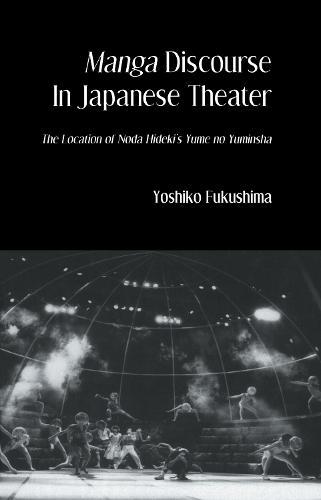
During the Japanese ""bubble"" economy of the 1980s, the youth of Japan began to exert unprecedented influence on Japanese culture through their spirited patronage of certain art forms previously deemed subcultural or avant-garde. Among these were manga (Japanese comics or animation) and shogekijo (Japanese little theater). These art forms, while very unlike in the manner in which they were produced and disseminated, can be shown to exhibit a common language: manga discourse. This discourse presents the ludic, image-oriented, and seemingly infantile but simultaneously transhistorical language. The range and meaning of these discursive forms as they are related to changes in the forms of shogekijo in Japan between the 1960s and the 1980s are explored here, using the work of Noda Hideki and his troupe Yume no Yuminsha as example. Founded in the early 70s in the dark recesses of the University of Tokyo, Noda's troupe blossomed into a major component of the theater boom of the bright leisure-oriented 80s. The question which Noda's theater raises for those who seek to define Japan's modernization in the arts is how something defined as instinctively ""little"" could become so big?In line with its predecessors in the avant-garde movements of the 1960s and 70s, the 1980s shogekijo borrowed from popular theater of the pre-modern period, in reaction to the western- and script-oriented shingeki, and from modern comedy in early twentieth century Japan. But unlike its avant-garde predecessors, it eschewed direct political confrontation with the power holders and consciously sought to expand its audiences through capitalistic means. Japanese youth born in the postwar generation could be led to appreciate the anti-shingeki message of shogekkijo, Noda predicted, only if it could be put in the playful and fantastic language of manga discourse. In some ways, this counterintuitive movement to youth subculture fulfilled shogekijo's mission to return theater to its Japanese roots and thereby complete the process of a truly Japanese modernization in the arts.
Full Product Details
Author: Yoshiko Fukushima
Publisher: Kegan Paul
Imprint: Kegan Paul
Dimensions:
Width: 15.60cm
, Height: 2.50cm
, Length: 23.40cm
Weight: 0.760kg
ISBN: 9780710309372
ISBN 10: 0710309376
Pages: 326
Publication Date: 24 March 2005
Audience:
Professional and scholarly
,
Professional & Vocational
Format: Hardback
Publisher's Status: Active
Availability: In Print

This item will be ordered in for you from one of our suppliers. Upon receipt, we will promptly dispatch it out to you. For in store availability, please contact us.
Reviews
<p> This unique volume opens a gateway for English speakers to enter the world of Noda Hideki. -- Kevin Wetmore, Loyola Marymount University, Asian Theater Journal