Overview
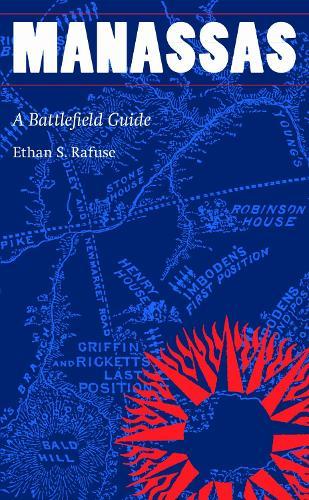
This volume is the essential guide to the Manassas battlefields, site of two of the Civil War's critical campaigns. Ethan S. Rafuse, a distinguished scholar of the Civil War, provides a clearly organized, thorough, and uniquely insightful account of both campaigns, along with expert analysis and precise directions for armchair traveler and battlefield visitor alike. The July 1861 Battle of First Manassas and the August 1862 Battle of Second Manassas unequivocally influenced the course and outcome of the Civil War. The first battle dealt a decisive blow to hopes that the inexperienced armies of the North and the South could bring about a quick military resolution of the secession crisis. The second battle was the climactic engagement of a spectacular campaign that carried the war to the outskirts of Washington DC and marked the coming of age of Robert E. Lee's Army of Northern Virginia. Manassas: A Battlefield Guide presents readers with a clear, convenient guide to the sites in northern and central Virginia that shaped the course and outcome of these campaigns. Lucid, concise narratives give readers a better understanding of the events that took place on these battlefields and of the terrain, personalities, and decisions that shaped them.
Full Product Details
Author: Ethan S. Rafuse
Publisher: University of Nebraska Press
Imprint: University of Nebraska Press
Dimensions:
Width: 14.60cm
, Height: 1.40cm
, Length: 23.50cm
Weight: 0.349kg
ISBN: 9780803236431
ISBN 10: 0803236433
Pages: 274
Publication Date: 01 May 2014
Audience:
General/trade
,
General
Format: Paperback
Publisher's Status: Active
Availability: To order 
Stock availability from the supplier is unknown. We will order it for you and ship this item to you once it is received by us.
Table of Contents
Acknowledgments Introduction How to Use This Guide First Manassas The Road to First Manassas Henry Hill Visitor Center Overview of July 21, 1861 Stop 1 Stone Bridge 1a “The plan . . . was a good one,” July 18–21, 1861 1b A Troubled March, 2:30–9:30 a.m. 1c Demonstration and Crossing, 9:30 a.m.–12:00 p.m. Stop 2 Matthews Hill 2a Evans Battles Burnside, 9:30–10:00 a.m. 2b “The day is ours!” 10:00–11:30 a.m. Stop 3 Stone House 3a The Federals Pause, 11:30 a.m.–12:30 p.m. Stop 4 Henry Hill 4a Battlefield Vista 4b “Like a stone wall,” 11:30 a.m.–2:00 p.m. 4c McDowell Advances His Artillery 4d Griffin’s Ordeal, 2:00–2:30 p.m. 4e Fight for the Federal Guns, 2:30–2:45 p.m. 4f Victory on Henry Hill, 3:00–5:00 p.m. Stop 5 Chinn Ridge 5a Howard’s Battle, 3:00–4:30 p.m. Stop 6 Sudley Church 6a The Federal Retreat, 4:30–7:00 p.m. 6b The Cost of the Battle Second Manassas The Road to Second Manassas Overview of August 28, 1862 Stop 1 Brawner Farm 1a Brawner Farm Interpretive Center 1b Movement to Contact, August 28, 1862 1c The Battle of Brawner Farm, 6:00–9:00 p.m. Overview of August 29, 1862 Stop 2 Unfinished Railroad 2a Pope’s Plan for August 29, August 28–29, 1862 2b Sigel Attacks, 10:00 a.m.–1:00 p.m. 2c Lee and Longstreet Arrive, 10:00–12:00 p.m. 2d The Afternoon Battle, 10:00 a.m.–4:30 p.m. 2e Kearny’s Assault, 4:30–6:30 p.m. Stop 3 Groveton 3a Hood versus Hatch, 6:00–8:00 p.m. Overview of August 30, 1862 Stop 4 Buck Hill 4a Waiting for Franklin, August 28–30, 1862 4b Morning Plans, 7:00–11:30 p.m. 4c The Pursuit, 11:30 a.m.–12:00 p.m. Stop 5 Deep Cut 5a Porter’s Attack, 2:30–3:15 p.m. 5b The Deep Cut, 3:15–4:00 p.m. Stop 6 New York Avenue 6a Longstreet’s Advance, 4:00 p.m. 6b The 5th New York, 4:00–4:15 p.m. 6c Hardin and Kerns, 4:15–4:30 p.m. Stop 7 Chinn Ridge 7a McLean’s Defense, 4:30–5:00 p.m. 7b Confederate Tide, 5:00–6:00 p.m. Stop 8 Henry Hill 8a Last Line, 4:30–6:00 p.m. 8b The Fight for Henry Hill, 6:00–7:00 p.m. 8c Securing the Union Retreat, 6:00–7:00 p.m. 8d “Another Bull Run!” 7:00 p.m., August 30–September 2, 1862 First Manassas Campaign Excursion Stop a Stone Bridge Stop b Fairfax Court House Stop c Blackburn’s Ford Jackson’s Line Excursion Stop a Jackson’s Arrival Stop b Keyes’s Advance Stop c The 33rd Virginia Stop d Stuart’s Charge Second Manassas Campaign Excursion Stop a Cedar Mountain Stop b Rapidan River Stop c Remington Stop d Freeman’s Ford Stop e Jeffersonton Stop f Bristoe Station Stop g Mayfield Fort Stop h Thoroughfare Gap Chantilly Excursion Stop a Pleasant Valley Church Stop b Ox Hill Battlefield Park Appendix A Orders of Battle Appendix B Organization, Weapons, and Tactics Sources For Further Reading
Reviews
This guidebook explores the campaigns of Manassas like no other. It will take you to obscure places long forgotten and accord them significance; it takes the familiar and illuminates them in ways not done before. Well written and dashed with analytical twists both thoughtful and helpful, Dr. Rafuse's work is by far the best of its kind. - John Hennessy, author of Return to Bull Run: The Campaign and Battle of Second Manassas No other work juxtaposes Lincoln's writing and speeches with contemporary commentaries and criticism of him. Rawley's careful selection of these documents and his judicious interweaving of his historical analysis and background come together to create a powerful dialogue with the reader as well. - From the foreword by William G. Thomas
""This guidebook explores the campaigns of Manassas like no other. It will take you to obscure places long forgotten and accord them significance; it takes the familiar and illuminates them in ways not done before. Well written and dashed with analytical twists both thoughtful and helpful, Dr. Rafuse's work is by far the best of its kind."" - John Hennessy, author of Return to Bull Run: The Campaign and Battle of Second Manassas ""No other work juxtaposes Lincoln's writing and speeches with contemporary commentaries and criticism of him. Rawley's careful selection of these documents and his judicious interweaving of his historical analysis and background come together to create a powerful dialogue with the reader as well."" - From the foreword by William G. Thomas
No other work juxtaposes Lincoln's writing and speeches with contemporary commentaries and criticism of him. Rawley's careful selection of these documents and his judicious interweaving of his historical analysis and background come together to create a powerful dialogue with the reader as well. --From the foreword by William G. Thomas--William G. Thomas (10/11/2013)
Author Information
Ethan S. Rafuse is a professor of history at the U.S. Army Command and General Staff College and has led staff rides and tours of historic battlefields for many military and civilian groups. He is also the author of several books, including Antietam, South Mountain, and Harpers Ferry: A Battlefield Guide (Nebraska, 2008) and McClellan's War: The Failure of Moderation in the Struggle for the Union.
Tab Content 6
Author Website:
Countries Available
All regions
|