|
|
|||
|
||||
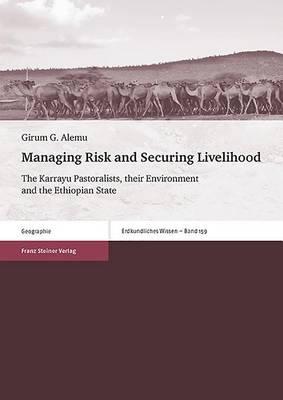
OverviewThe hegemonic perspective on adaptation solely focuses on climate stimuli as the driving force behind people's adaptation. Such a perspective underestimates the role played by historical trajectories of political and social forces of change in shaping current adaptation practices. In doing so, it also separates the environment from processes of social change. This work challenges this dominant view by arguing that adaptation practices pursued by pastoral communities need to be seen at the intersection of state-environment-pastoralists-interactions. In other words, the understanding of pastoralists' risk management and livelihood practices requires a perspective that situates local actors into their broader socio-political and environmental contexts. By using a political ecology approach that emphasizes on the agency of pastoral actors, this work demonstrates how the Karrayyu pastoral groups of upper Awash valley develop and use various risk management and livelihood practices under the influence of both socio-political and ecological sources of change. Full Product DetailsAuthor: Girum G AlemuPublisher: Franz Steiner Verlag Wiesbaden GmbH Imprint: Franz Steiner Verlag Wiesbaden GmbH Volume: 159 Dimensions: Width: 17.00cm , Height: 1.30cm , Length: 23.90cm Weight: 0.299kg ISBN: 9783515114042ISBN 10: 3515114041 Pages: 187 Publication Date: 06 June 2016 Audience: General/trade , General Format: Paperback Publisher's Status: Active Availability: Available To Order We have confirmation that this item is in stock with the supplier. It will be ordered in for you and dispatched immediately. Table of ContentsReviewsAuthor InformationGirum G. Alemu currently works as research associate at the Institute for Advanced Sustainability Studies (IASS) in Potsdam. He is interested in three broader but interrelated research topics: Political ecology, environment and development policy and livelihood security. His research interest mainly focuses on the interaction between broader scale political economy and local human-environment interactions and the implications of these interactions on livelihoods security. Tab Content 6Author Website:Countries AvailableAll regions |
||||