Overview
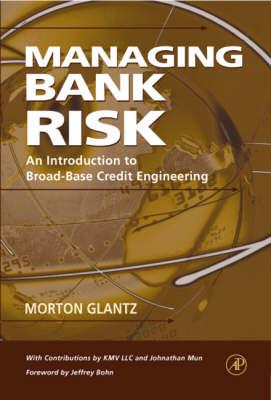
Featuring new credit engineering tools, Managing Bank Risk combines innovative analytic methods with traditional credit management processes. Professor Glantz provides print and electronic risk-measuring tools that ensure credits are made in accordance with bank policy and regulatory requirements, giving bankers with the data necessary for judging asset quality and value. The book's two sections, ""New Approaches to Fundamental Analysis"" and ""Credit Administration,"" show readers ways to assimilate new tools, such as credit derivatives, cash flow computer modeling, distress prediction and workout, interactive risk rating models, and probabilistic default screening, with well-known controls. By following the guidelines of the Basel Committee on Banking Supervision, Managing Bank Risk offers useful models, programs, and documents essential for creating a sound credit risk environment, credit granting processes, and appropriate administrative and monitoring controls.Key Features * Book includes features such as: * Chapter-concluding questions * Case studies illustrating all major tools * EDFT Credit Measure provided by KMV, the world's leading provide of market-based quantitative credit risk products * Library of internet links directs readers to information on evolving credit disciplines, such as portfolio management, credit derivatives, risk rating, and financial analysis * CD-ROM containing interactive models and a useful document collection * Credit engineering tools covered include: * Statistics and simulation driven forecasting * Risk adjusted pricing * Credit derivatives * Ratios * Cash flow computer modeling * Distress prediction and workouts * Capital allocation * Credit exposure systems * Computerized loan pricing * Sustainable growth * Interactive risk rating models * Probabilistc default screening * Accompanying CD includes: * Interactive 10-point risk rating model * Comprehensive cash flow model * Trial version of CB Pro, a time-series forecasting program * Stochastic net borrowed funds pricing model * Asset based lending models, courtesy Federal Reserve Bank * The Uniform Financial Institutions Rationg System (CAMELS) * Two portfolio optimization software models * a library of documents from the International Swap Dealers Association, the Basel Committee on Banking Supervision, and others
Full Product Details
Author: Morton Glantz (Lecturer in Finance & Business Economics, Fordham Graduate School of Business, New York, NY, USA) , Morton Glantz (Lecturer in Finance & Business Economics, Fordham Graduate School of Business, New York, NY, USA) , Morton Glantz (Lecturer in Finance & Business Economics, Fordham Graduate School of Business, New York, NY, USA) , Morton Glantz (Lecturer in Finance & Business Economics, Fordham Graduate School of Business, New York, NY, USA)
Publisher: Elsevier Science Publishing Co Inc
Imprint: Academic Press Inc
Dimensions:
Width: 15.20cm
, Height: 3.70cm
, Length: 22.90cm
Weight: 1.050kg
ISBN: 9780122857850
ISBN 10: 0122857852
Pages: 688
Publication Date: 03 January 2003
Audience:
Professional and scholarly
,
Professional & Vocational
Format: Hardback
Publisher's Status: Unknown
Availability: Out of stock 
Table of Contents
Introduction to Bank Risk Management; Accounting Standards, Flags and Distortions; Multivariate Ratio Analysis; Credit Analysis of Seasonal Businesses; Asset-Based Lending; Cash Flow Analysis; Projections and Risk Assessment; Risk Management and Sustainable Growth; Financial Distress; Establishing a Risk Management Area; Capital Adequacy; Portfolio Maintenance; Portfolio Management of Default Risk; EDF™ Credit Measure; Credit Derivatives; An Overview of Risk-Adjusted Return on Capital (RAROC) and CreditMetrics; Global Exposure Systems: Application and Design ; Pricing Models; Risk Rating Models.
Reviews
Mort Glantz has succeeded in writing a book which reformulates proven concepts of credit risk management in the context of contemporary best practice techniques in portfolio management. The invaluable supporting and reference materials make this volume a benchmark publication for the financial community. -George Votja, Director, Financial Services Forum This book should be required reading for the growing number of 'Credit Risk Managers' and 'Credit Risk Departments' at big banks and even community banks. One thing we learned from Enron and other troubled borrowers that did not make it through the 2001-2002 recession is that there can never be too much credit analysis, especially on complicated deals which are becoming the rule rather than the exception. Managing Bank Risk will be one of the most important tools in this regard for bankers, examiners, and others interested in understanding and measuring credit risk. -Kenneth H. Thomas, The Wharton School, University of Pennsylvania
Mort Glantz has succeeded in writing a book which reformulates proven concepts of credit risk management in the context of contemporary best practice techniques in portfolio management. The invaluable supporting and reference materials make this volume a benchmark publication for the financial community. -George Votja, Director, Financial Services Forum This book should be required reading for the growing number of 'Credit Risk Managers' and 'Credit Risk Departments' at big banks and even community banks. One thing we learned from Enron and other troubled borrowers that did not make it through the 2001-2002 recession is that there can never be too much credit analysis, especially on complicated deals which are becoming the rule rather than the exception. Managing Bank Risk will be one of the most important tools in this regard for bankers, examiners, and others interested in understanding and measuring credit risk. -Kenneth H. Thomas, The Wharton School, University of Pennsylvania
Author Information
Professor Morton Glantz serves as a financial consultant, educator, and adviser to a broad spectrum of professionals, including corporate financial executives, government ministers, privatization managers, investment and commercial bankers, public accounting firms, members of merger and acquisition teams, strategic planning executives, management consultants, attorneys, and representatives of foreign governments and international banks. Professor Morton Glantz is a principal of Real Consulting and Real Options Valuation, firms specializing in risk consulting, training, certification, and advanced analytical software in the areas of risk quantification, analysis, and management solutions. As a JP Morgan Chase (heritage bank) senior banker, Professor Glantz built a progressive career path specializing in credit analysis and credit risk management, risk grading systems, valuation models, and professional training. He was instrumental in the reorganization and development of the credit analysis module of the Bank's Management Training Program-Finance, which at the time was recognized as one of the foremost training programs in the banking industry. Professor Glantz is on the (adjunct) finance faculty of the Fordham Graduate School of Business. He has appeared in the Harvard University International Directory of Business and Management Scholars and Research, and has earned Fordham University Deans Award for Faculty Excellence on three occasions. He is a Board Member of the International Standards Board, International Institute of Professional Education and Research (IIPER). The IIPER is a global institute with partners and offices around the world, including the United States, Switzerland, Hong Kong, Mexico, Portugal, Singapore, Nigeria, and Malaysia. Professor Glantz is widely published in financial journals and has authored 6 books including The Banker's Handbook on Credit Risk (with Dr. Johnathan Mun) Elsevier 2008, Credit Derivatives: Techniques to Manage Credit.
Tab Content 6
Author Website:
Countries Available
All regions
|