Overview
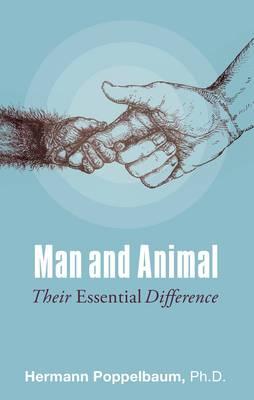
What is the historical and evolutionary relationship between man and animal? In this classic text, based on the anthroposophical science founded by Rudolf Steiner, Poppelbaum, trained in Biology, compares the outer forms of man and animal, revealing their essential differences and contrasting inner experiences. Drawing a bold and clear delineation between the fundamental nature of man and that of the animal, Poppelbaum argues that human beings are not the accidental outcome of animal development, but the hidden source of evolution itself. He goes on to discuss the true relationship of both man and animal to their environment, and develops a critique of contemporary theories regarding human and animal evolution. He argues that, rather than a simple reflex of the nervous system, the human spirit is a microcosmic reflection of the spiritual macrocosm, and our individual consciousness is a crucial seed for future evolution. 'To be man is to know the animals and all the creatures of the earth; it is to recognize our responsibility towards these beings, once of the same order as ourselves, but now obliged to live beside us in an incompleteness that never ceases its appeal to human beings - warning us to make ourselves worthy of the trust invested in us.' - Hermann Poppelbaum
Full Product Details
Author: Ph.D. Hermann Poppelbaum ,
Owen Barfield
Publisher: Rudolf Steiner Press
Imprint: Rudolf Steiner Press
Edition: 2nd Revised edition
Dimensions:
Width: 13.80cm
, Height: 1.50cm
, Length: 21.60cm
Weight: 0.249kg
ISBN: 9781855844070
ISBN 10: 1855844079
Pages: 184
Publication Date: 29 August 2014
Audience:
General/trade
,
General
Format: Paperback
Publisher's Status: Active
Availability: Available To Order

We have confirmation that this item is in stock with the supplier. It will be ordered in for you and dispatched immediately.
Reviews
HERMANN POPPELBAUM, Dr Phil. (1891 - 1979) was an anthropologist, psychologist, philosopher, anthroposophist, teacher and author of numerous books. An expert on the works of the Austrian philosopher Rudolf Steiner (1861 - 1925), Poppelbaum was a visiting lecturer in anthropology and psychology at Alfred University, New York. In 1949 he became director of the Education Section at the Goetheanum, Switzerland, and in 1963 the Department of Natural Sciences.
Author Information
Hermann Poppelbaum (1891-1979) was born in Frankfurt am Main. His interest in science awoke during his youth, and, with his brother, he founded the ""Linneo"" zoological association, which became the ""Minerva"" youth scientific association. He focused on questions of evolution and heredity at a time when controversy surrounded Haeckel's ideas. In 1913 he graduated in natural sciences with an experimental thesis, ""Studies in androgynomorphic butterflies."" During World War I, as an officer and prisoner of war in France, a kind of university was organized in the officers' concentration camp, where Poppelbaum lectured on heredity and evolution. In the camp he met Otto Palmer, who invited him to join the study group focused on Rudolf Steiner's writings. In 1920, he met Rudolf Steiner and participated in the formation of the Anthroposophical Society and, in 1930, became a member of the Board of Directors. After the National Socialist authorities banned the Anthroposophical Society in 1935, he was interrogated by the Gestapo, prompting him to emigrate to England with his wife and two children. In 1939, the outbreak of World War II surprised him in New York, where he was giving a series of lectures, forcing him to remain in the U.S., where he helped to establish North American Waldorf schools. In 1948 he rejoined his family in Switzerland and, in 1949 became director of the Pedagogical Section at the Goetheanum, and in 1963 director of the Natural Sciences Section.