Overview
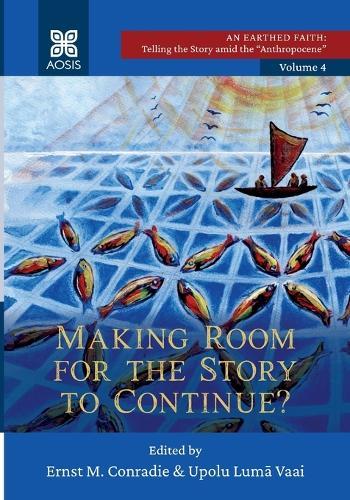
This volume is the fourth in a series titled An Earthed Faith: Telling the Story amid the ""Anthropocene."" The series aims to offer collaborative, constructive contributions to understanding the content and significance of the Christian faith from the perspective of Christian ecotheology, given the challenges associated with the ""Anthropocene."" The focus of this volume is on God's providence. The volume addresses the following question: How could the suffering of God's creatures in the ""Anthropocene"" be reconciled with trust in God's loving care? Addressing this question required theological reflection on the classic themes related to the doctrine of providence, including creatio continua, conservatio, gubernation, and concursus. The ten contributors were selected in order to optimize a diversity of positions in terms of geographical context, confessional traditions, and theological schools while also taking considerations of gender, race, age, and language into account. The volume captures and extends the current state of the debate in this regard while also indicating emerging horizons in Christian ecotheology.
Full Product Details
Author: Ernst M Conradie ,
Upon Lumā Vaai
Publisher: Pickwick Publications
Imprint: Pickwick Publications
Volume: 4
Dimensions:
Width: 17.80cm
, Height: 1.50cm
, Length: 25.40cm
Weight: 0.499kg
ISBN: 9798385271924
Pages: 284
Publication Date: 27 January 2026
Audience:
General/trade
,
General
Format: Paperback
Publisher's Status: Active
Availability: Available To Order

We have confirmation that this item is in stock with the supplier. It will be ordered in for you and dispatched immediately.
Reviews
""'Does God care?' and 'Is God involved?' are critical questions in the face of evil and suffering, as well as in the context of ecological disintegration. This collection of insightful essays by authors from across the theological landscape helps us reflect on those--and related-- questions. This work is a must-read."" --Jione Havea, Adjunct Professor in Biblical and Cultural Studies, School of Theology, Charles Sturt University, Australia ""A highly commendable collection of diverse, honest, critical and constructive accounts within a theological minefield, seeking to elaborate on what still may emerge as a source of trust in the midst of disasters. Thus, it truly opens a space for the Earth's and God's story to be told in connection."" --Rudolf von Sinner, Professor of Systematic Theology, Pontifícia Universidade Católica do Paraná at Curitiba, Brazil ""Tackling one of the most difficult questions imaginable, this book surprises and satisfies with its range and depth of insight. Essays from different cultural and confessional contexts shed a new kind of light on suffering in an ecological world of God's loving care. A worthy addition to this vitally important series."" --Elizabeth A Johnson, Distinguished Professor Emerita, Fordham University, New York, USA ""This compelling collection of essays comprise a deeply impressive attempt to think about providence in the context of the ""Anthropocene"". It will, in my view, make a highly significant contribution to advance the field of ecotheology."" --Peter Scott, Samuel Ferguson Professor of Applied Theology & Director of the Lincoln Theological Institute, The University of Manchester, UK ""'Does God care?' and 'Is God involved?' are critical questions in the face of evil and suffering, as well as in the context of ecological disintegration. This collection of insightful essays by authors from across the theological landscape helps us reflect on those--and related-- questions. This work is a must-read."" --Jione Havea, Adjunct Professor in Biblical and Cultural Studies, School of Theology, Charles Sturt University, Australia ""A highly commendable collection of diverse, honest, critical and constructive accounts within a theological minefield, seeking to elaborate on what still may emerge as a source of trust in the midst of disasters. Thus, it truly opens a space for the Earth's and God's story to be told in connection."" --Rudolf von Sinner, Professor of Systematic Theology, Pontifícia Universidade Católica do Paraná at Curitiba, Brazil ""Tackling one of the most difficult questions imaginable, this book surprises and satisfies with its range and depth of insight. Essays from different cultural and confessional contexts shed a new kind of light on suffering in an ecological world of God's loving care. A worthy addition to this vitally important series."" --Elizabeth A Johnson, Distinguished Professor Emerita, Fordham University, New York, USA ""This compelling collection of essays comprise a deeply impressive attempt to think about providence in the context of the ""Anthropocene"". It will, in my view, make a highly significant contribution to advance the field of ecotheology."" --Peter Scott, Samuel Ferguson Professor of Applied Theology & Director of the Lincoln Theological Institute, The University of Manchester, UK
Author Information
Ernst M. Conradie is a senior professor in the Department of Religion and Theology at the University of the Western Cape in South Africa. He works in the intersection between Christian ecotheology, systematic theology and ecumenical theology and comes from the Reformed tradition. He is the author of The Earth in God's Economy: Creation, Salvation and Consummation in Ecological Perspective (2015), Redeeming Sin? Social Diagnostics amid Ecological Destruction (2017), and Secular Discourse on Sin in the Anthropocene: What's Wrong with the World? (2020). He was the international convener of the Christian Faith and the Earth project (2007-2014), the leading editor (with Sigurd Bergmann, Celia Deane-Drummond, and Denis Edwards) of Christian Faith and the Earth: Current Paths and Emerging Horizons in Ecotheology (2014), and coeditor with Hilda Koster of The T&T Clark Handbook on Christian Theology and Climate Change (2019). He is responsible for registering the project ""An Earthed Faith: Telling the Story amid the 'Anthropocene'"" at UWC.