Overview
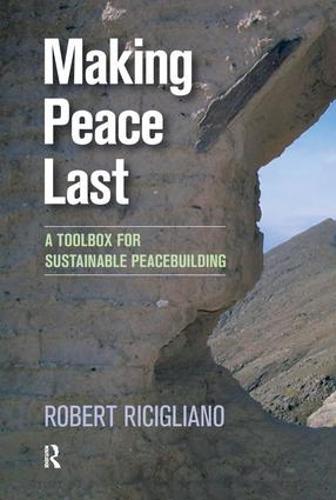
The international community invests billions annually in thousands of projects designed to overcome poverty, stop violence, spread human rights, fight terrorism and combat global warming. The hope is that these separate projects will 'add up' to lasting societal change in places like Afghanistan. In reality, these initiatives are not adding up to sustainable peace. Making Peace Last offers ways of improving the productivity of peacebuilding. This book defines the theory, analysis and practice needed to create peacebuilding approaches that are as dynamic and adaptive as the societies they are trying to affect. The book is based on a combination of field experience and research into peacebuilding and conflict resolution. This book can also be used as a textbook in courses on peace-building, security and development. Making Peace Last is a comprehensive approach to finding sustainable solutions to the world's most pressing social problems.
Full Product Details
Author: Robert Ricigliano ,
Rob Ricigliano
Publisher: Taylor & Francis Inc
Imprint: Routledge
Dimensions:
Width: 15.20cm
, Height: 2.30cm
, Length: 22.90cm
Weight: 0.521kg
ISBN: 9781594519949
ISBN 10: 1594519943
Pages: 288
Publication Date: 30 November 2011
Audience:
College/higher education
,
General/trade
,
Tertiary & Higher Education
,
General
Format: Hardback
Publisher's Status: Active
Availability: In Print

This item will be ordered in for you from one of our suppliers. Upon receipt, we will promptly dispatch it out to you. For in store availability, please contact us.
Reviews
No bigger challenge faces humanity than how to build peace. In this insightful, provocative, and practical book, Robert Ricigliano shows us how to take a systems approach. A very useful contribution! -William Ury, Harvard Negotiation Project, and author of The Third Side: Why We Fight and How We Can Stop The advance of peace in the post-cold-war era stopped around 2003 and global peace efforts must be reinvigorated. In his book Rob Ricigliano uses his research and experience to describe not only why so many well intended peace programs fail, but, more importantly, what can be done to systematically untangle the remaining wars and humanitarian outrages on our watch. -Jan Egeland, UN Under Secretary General for Humanitarian Affairs, 2003-2006 Thankfully, Making Peace Last arrives just as American policymakers realize that in order to build a modern security strategy, we must move away from reaction and toward resilience, away from borders and toward relationships. Today, our strength lies in the ability to see the United States in the scheme of things rather than as the scheme of things. This book shows us how. -Lorelei Kelly, Director, New Strategic Security Initiative The field of peacebuilding has long awaited a clear, systematic, and coherent convergence of more than thirty years of practical and theoretical learning that makes a real difference in both pursuing and sustaining peaceful relationships in settings of protracted conflict. Ricigliano provides the vision, the tools, and the evidence that peace can last, but it requires a level of clear analysis, creative engagement and adaptive flexibility that go beyond our fragmented and too often piecemeal approaches to complex violent conflict. -John Paul Lederach, Joan B. Kroc Institute of International Peace Studies, University of Notre Dame It may seem hard to believe but it is true: wars are on the decline. In the fifteen years between 1988 and 2003, more wars ended through negotiated settlement than had in the previous two hundred years. Robert Ricigliano tells us why in this vitally important new book. He details the important lessons we have learned on how to stop wars and prevent future conflict. If you care about peace, you need to read this book. -Joe Cirincione, President, Ploughshares Fund
“No bigger challenge faces humanity than how to build peace. In this insightful, provocative, and practical book, Robert Ricigliano shows us how to take a systems approach. A very useful contribution!” —William Ury, Harvard Negotiation Project, and author of The Third Side: Why We Fight and How We Can Stop “The advance of peace in the post-cold-war era stopped around 2003 and global peace efforts must be reinvigorated. In his book Rob Ricigliano uses his research and experience to describe not only why so many well intended peace programs fail, but, more importantly, what can be done to systematically untangle the remaining wars and humanitarian outrages on our watch.” —Jan Egeland, UN Under Secretary General for Humanitarian Affairs, 2003–2006 “Thankfully, Making Peace Last arrives just as American policymakers realize that in order to build a modern security strategy, we must move away from reaction and toward resilience, away from borders and toward relationships. Today, our strength lies in the ability to see the United States in the scheme of things rather than as the scheme of things. This book shows us how.” —Lorelei Kelly, Director, New Strategic Security Initiative “The field of peacebuilding has long awaited a clear, systematic, and coherent convergence of more than thirty years of practical and theoretical learning that makes a real difference in both pursuing and sustaining peaceful relationships in settings of protracted conflict. Ricigliano provides the vision, the tools, and the evidence that peace can last, but it requires a level of clear analysis, creative engagement and adaptive flexibility that go beyond our fragmented and too often piecemeal approaches to complex violent conflict.” —John Paul Lederach, Joan B. Kroc Institute of International Peace Studies, University of Notre Dame “It may seem hard to believe but it is true: wars are on the decline. In the fifteen years between 1988 and 2003, more wars ended through negotiated settlement than had in the previous two hundred years. Robert Ricigliano tells us why in this vitally important new book. He details the important lessons we have learned on how to stop wars and prevent future conflict. If you care about peace, you need to read this book.” —Joe Cirincione, President, Ploughshares Fund
Author Information
Robert Ricigliano is the Director of the Institute of World Affairs at the University of Wisconsin–Milwaukee.