Awards
- Commended for Choice Magazine Outstanding Reference/Academic Book Award 2004.
- Runner-up for Choice Magazine Outstanding Reference/Academic Book Award 2004.
- Short-listed for Choice Magazine Outstanding Reference/Academic Book Award 2004
- Short-listed for Choice's Outstanding Academic Titles 2004 (United States)
- Shortlisted for Choice Magazine Outstanding Reference/Academic Book Award 2004.
Overview
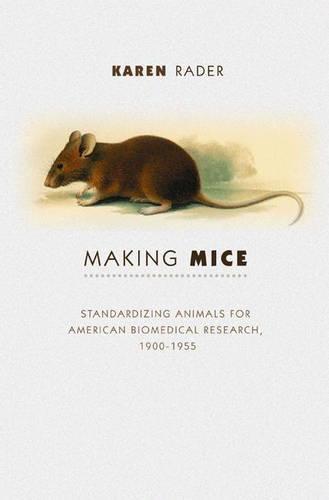
Making Mice blends scientific biography, institutional history, and cultural history to show how genetically standardized mice came to play a central role in contemporary American biomedical research. Karen Rader introduces us to mouse ""fanciers"" who bred mice for different characteristics, to scientific entrepreneurs like geneticist C. C. Little, and to the emerging structures of modern biomedical research centered around the National Institutes of Health. Throughout Making Mice, Rader explains how the story of mouse research illuminates our understanding of key issues in the history of science such as the role of model organisms in furthering scientific thought. Ultimately, genetically standardized mice became icons of standardization in biomedicine by successfully negotiating the tension between the natural and the man-made in experimental practice. This book will become a landmark work for its understanding of the cultural and institutional origins of modern biomedical research. It will appeal not only to historians of science but also to biologists and medical researchers.
Full Product Details
Author: Karen Rader
Publisher: Princeton University Press
Imprint: Princeton University Press
Dimensions:
Width: 15.20cm
, Height: 1.90cm
, Length: 23.50cm
Weight: 0.595kg
ISBN: 9780691016368
ISBN 10: 0691016364
Pages: 312
Publication Date: 21 March 2004
Audience:
Professional and scholarly
,
College/higher education
,
Professional & Vocational
,
Tertiary & Higher Education
Format: Hardback
Publisher's Status: Active
Availability: Manufactured on demand

We will order this item for you from a manufactured on demand supplier.
Language: English
Reviews
Extremely well written and enjoyable to read... The study of human diseases using standardized animal models has now become routine practice, but its acceptability was established in large part through the use of inbred mice, as Rader convincingly argues. -- Rachel A. Ankeny American Scientist A brilliant synthesis of scientific, intellectual, and cultural history. Its subject matter is new, and the book's ultimate impact on scientific history will be significant. The product of ten years of research and writing, the tome is polished, cogent, and magnificently documented. Choice Karen Rader has written an insightful and, at times, humorous chronological history of the famous Jax mice and their unflagging promoter, C.C. Little... Rader beautifully illustrates the give and take between the scientific community and the general society. Biology Digest In this compelling historical analysis, Karen Rader shows how the common mouse (Mus musculus) was transformed into a commodity, manufactured, and marketed not only to American research laboratories, but to politicians, health policy makers, and the members of the general public as well. -- Susan E. Lederer Journal of the History of Biology Rader's carefully researched and well-produced book will be indispensable reading for everyone interested in the laboratory mouse and more generally in the tools and practices of twentieth-century biomedicine. aya de Chadarevian, Journal of the History of medicine and Allied Sciences
Author Information
Karen Rader is Marilyn Simpson Chair of Science and Society at Sarah Lawrence College.