Overview
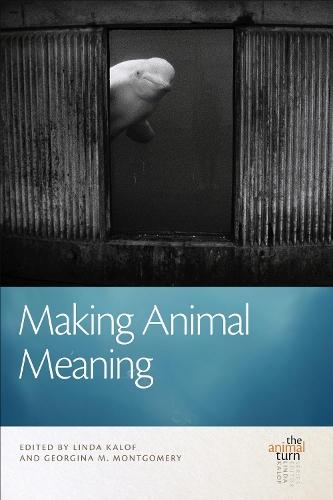
An elucidating collection of ten original essays, Making Animal Meaning reconceptualizes methods for researching animal histories and rethinks the contingency of the human-animal relationship. The vibrant and diverse field of animal studies is detailed in these interdisciplinary discussions, which include voices from a broad range of scholars and have an extensive chronological and geographical reach. These exciting discourses capture the most compelling theoretical underpinnings of animal significance while exploring meaning-making through the study of specific spaces, species, and human-animal relations. A deeply thoughtful collection — vital to understanding central questions of agency, kinship, and animal consumption — these essays tackle the history and philosophy of constructing animal meaning.
Full Product Details
Author: Linda Kalof ,
Georgina M. Montgomery
Publisher: Michigan State University Press
Imprint: Michigan State University Press
Dimensions:
Width: 17.80cm
, Height: 2.30cm
, Length: 25.40cm
Weight: 0.739kg
ISBN: 9781611860160
ISBN 10: 1611860164
Pages: 211
Publication Date: 01 December 2011
Audience:
Professional and scholarly
,
College/higher education
,
Professional & Vocational
,
Postgraduate, Research & Scholarly
Format: Hardback
Publisher's Status: Active
Availability: Awaiting stock

The supplier is currently out of stock of this item. It will be ordered for you and placed on backorder. Once it does come back in stock, we will ship it out for you.
Reviews
<p>A valuable contribution to theorizing what other animals mean to humans and how animals themselves create meaning. These original essays provide insight into how meanings are constructed and played out in specific contexts. The volume covers impressive ground - across disciplines, geographic locations, and time periods - while simultaneously maintaining its interesting focus.--Amy J. Fitzgerald, author of Animal Abuse and Family Violence: Researching the Interrelationships of Abusive Power and co-editor of The Animals Reader: The Essential Classic and Contemporary Writings .
This wide-ranging set of essays explores the varied ways in which humans have sought to understand animals as they are drawn or compelled to enter human cultures. Sheep and jaguars, gorillas and hamsters, cats and dogs, pets and pests, predators and prey, all jostle here with writers from diverse academic disciplines, who would make sense of the multifarious lives and relations shared by animals and humans. Kalof and Montgomery's challenging collection helps us to appreciate the complex, conflicting, and complementary ways of making animal meaning. —Tom Tyler, Oxford Brookes University A valuable contribution to theorizing what other animals mean to humans and how animals themselves create meaning. These original essays provide insight into how meanings are constructed and played out in specific contexts. The volume covers impressive ground – across disciplines, geographic locations, and time periods – while simultaneously maintaining its interesting focus. —Amy J. Fitzgerald, author of Animal Abuse and Family Violence: Researching the Interrelationships of Abusive Power and co-editor of The Animals Reader: The Essential Classic and Contemporary Writings. With essays exploring both broad methodological questions and more narrow case studies, Making Animal Meaning offers critical insights into the complex ways animals and humans shape each other’s lives, while also providing readers with needed reflections on the field of Animal Studies. —Nigel Rothfels, author of Savages and Beasts: The Birth of the Modern Zoo
A valuable contribution to theorizing what other animals mean to humans and how animals themselves create meaning. These original essays provide insight into how meanings are constructed and played out in specific contexts. The volume covers impressive ground - across disciplines, geographic locations, and time periods - while simultaneously maintaining its interesting focus.--Amy J. Fitzgerald, author of Animal Abuse and Family Violence: Researching the Interrelationships of Abusive Power and co-editor of The Animals Reader: The Essential Classic and Contemporary Writings .
This wide-ranging set of essays explores the varied ways in which humans have sought to understand animals as they are drawn or compelled to enter human cultures. Sheep and jaguars, gorillas and hamsters, cats and dogs, pets and pests, predators and prey, all jostle here with writers from diverse academic disciplines, who would make sense of the multifarious lives and relations shared by animals and humans. Kalof and Montgomery's challenging collection helps us to appreciate the complex, conflicting, and complementary ways of making animal meaning.--Tom Tyler, Oxford Brookes University A valuable contribution to theorizing what other animals mean to humans and how animals themselves create meaning. These original essays provide insight into how meanings are constructed and played out in specific contexts. The volume covers impressive ground - across disciplines, geographic locations, and time periods - while simultaneously maintaining its interesting focus.--Amy J. Fitzgerald, author of Animal Abuse and Family Violence: Researching the Interrelationships of Abusive Power and co-editor of The Animals Reader: The Essential Classic and Contemporary Writings. With essays exploring both broad methodological questions and more narrow case studies, Making Animal Meaning offers critical insights into the complex ways animals and humans shape each other's lives, while also providing readers with needed reflections on the field of Animal Studies. --Nigel Rothfels, author of Savages and Beasts: The Birth of the Modern Zoo
This wide-ranging set of essays explores the varied ways in which humans have sought to understand animals as they are drawn or compelled to enter human cultures.Sheep and jaguars, gorillas and hamsters, cats and dogs, pets and pests, predators and prey, all jostle here with writers from diverse academic disciplines, who would make sense of the multifarious lives and relations shared by animals and humans.Kalof and Montgomery's challenging collection helps us to appreciate the complex, conflicting, and complementary ways of making animal meaning. Tom Tyler, Oxford Brookes University A valuable contribution to theorizing what other animals mean to humans and how animals themselves create meaning. These original essays provide insight into how meanings are constructed and played out in specific contexts. The volume covers impressive ground across disciplines, geographic locations, and time periods while simultaneously maintaining its interesting focus. Amy J. Fitzgerald, author of Animal Abuse and Family Violence: Researching the Interrelationships of Abusive Power and co-editor of The Animals Reader: The Essential Classic and Contemporary Writings. With essays exploring both broad methodological questions and more narrow case studies, Making Animal Meaning offers critical insights into the complex ways animals and humans shape each other s lives, while also providing readers with needed reflections on the field of Animal Studies. Nigel Rothfels, author of Savages and Beasts: The Birth of the Modern Zoo A valuable contribution to theorizing what other animals mean to humans and how animals themselves create meaning. These original essays provide insight into how meanings are constructed and played out in specific contexts. The volume covers impressive ground - across disciplines, geographic locations, and time periods - while simultaneously maintaining its interesting focus.--Amy J. Fitzgerald, author of Animal Abuse and Family Violence: Researching the Interrelationships of Abusive Power and co-editor of The Animals Reader: The Essential Classic and Contemporary Writings . This wide-ranging set of essays explores the varied ways in which humans have sought to understand animals as they are drawn or compelled to enter human cultures. Sheep and jaguars, gorillas and hamsters, cats and dogs, pets and pests, predators and prey, all jostle here with writers from diverse academic disciplines, who would make sense of the multifarious lives and relations shared by animals and humans. Kalof and Montgomery's challenging collection helps us to appreciate the complex, conflicting, and complementary ways of making animal meaning.--Tom Tyler, Oxford Brookes University With essays exploring both broad methodological questions and more narrow case studies, Making Animal Meaning offers critical insights into the complex ways animals and humans shape each other's lives, while also providing readers with needed reflections on the field of Animal Studies. --Nigel Rothfels, author of Savages and Beasts: The Birth of the Modern Zoo
Author Information
Linda Kalof is Professor of Sociology at Michigan State University. She is also founder of the Michigan State University interdisciplinary graduate specialization in Animal Studies: Humanities and Social Science Perspectives. Georgina M. Montgomery, an award-winning educator, is an Assistant Professor at Michigan State University with a joint appointment in Lyman Briggs College and the Department of History.