Overview
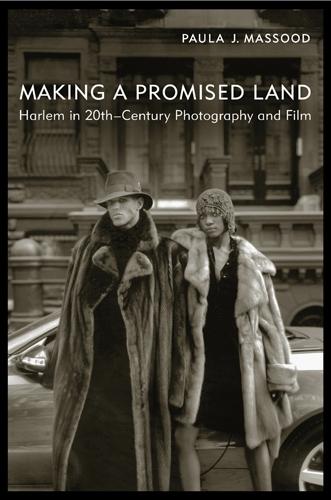
Making a Promised Land examines the interconnected histories of African American representation, urban life, and citizenship as documented in still and moving images of Harlem over the last century. Paula J. Massood analyzes how photography and film have been used over time to make African American culture visible to itself and to a wider audience and charts the ways in which the “Mecca of the New Negro” became a battleground in the struggle to define American politics, aesthetics, and citizenship. Visual media were first used as tools for uplift and education. With Harlem’s downturn in fortunes through the 1930s, narratives of black urban criminality became common in sociological tracts, photojournalism, and film. These narratives were particularly embodied in the gangster film, which was adapted to include stories of achievement, economic success, and, later in the century, a nostalgic return to the past. Among the films discussed are Fights of Nations (1907), Dark Manhattan (1937), The Cool World (1963), Black Caesar (1974), Malcolm X (1992), and American Gangster (2007). Massood asserts that the history of photography and film in Harlem provides the keys to understanding the neighborhood’s symbolic resonance in African American and American life, especially in light of recent urban redevelopment that has redefined many of its physical and demographic contours.
Full Product Details
Author: Paula J. Massood
Publisher: Rutgers University Press
Imprint: Rutgers University Press
Dimensions:
Width: 15.20cm
, Height: 2.00cm
, Length: 22.90cm
Weight: 0.426kg
ISBN: 9780813555874
ISBN 10: 0813555876
Pages: 264
Publication Date: 22 January 2013
Audience:
General/trade
,
General
Format: Paperback
Publisher's Status: Active
Availability: Temporarily unavailable

The supplier advises that this item is temporarily unavailable. It will be ordered for you and placed on backorder. Once it does come back in stock, we will ship it out to you.
Reviews
"""Massood focuses on Harlem and the representations of African American bodies and spaces in photographs and films in her engaging book, Making a Promised Land."" * International Review of African American Art * ""Examining still and moving images of Harlem over the last century, Massood thoughtfully analyzes two popular visual mediums of the 20th century, photography and film, as new modes of historical interpretation. The author examines African American urban history with a sharp eye for enlightening visual portrayals. Recommended."" * Choice * ""Thoroughly researched, well-argued, and clearly written, Making a Promised Land is a fine piece of work, providing new insight in its attention to visual culture in Harlem."" -- Farah Jasmine Griffin * author of If You Can't Be Free, Be A Mystery: In Search of Billie Holiday * ""In this elegant, evocative study, Massood explores the relationship between African American representation and urban life as documented in still and moving images over the past century . . . a compelling analysis of the changing image of Harlem in the cultural imaginary."" -- Valerie Smith * author of Toni Morrison: Writing the Moral Imagination * ""Massood focuses on Harlem and the representations of African American bodies and spaces in photographs and films in her engaging book, Making a Promised Land."" * International Review of African American Art * ""Examining still and moving images of Harlem over the last century, Massood thoughtfully analyzes two popular visual mediums of the 20th century, photography and film, as new modes of historical interpretation. The author examines African American urban history with a sharp eye for enlightening visual portrayals. Recommended."" * Choice * ""Thoroughly researched, well-argued, and clearly written, Making a Promised Land is a fine piece of work, providing new insight in its attention to visual culture in Harlem."" -- Farah Jasmine Griffin * author of If You Can't Be Free, Be A Mystery: In Search of Billie Holiday * ""In this elegant, evocative study, Massood explores the relationship between African American representation and urban life as documented in still and moving images over the past century . . . a compelling analysis of the changing image of Harlem in the cultural imaginary."" -- Valerie Smith * author of Toni Morrison: Writing the Moral Imagination *"
Thoroughly researched, well-argued, and clearly written, Making a Promised Land is a fine piece of work, providing new insight in its attention to visual culture in Harlem. --Farah Jasmine Griffin author of If You Can't Be Free, Be A Mystery: In Search of Billie Holiday (02/29/2012)
Thoroughly researched, well-argued, and clearly written, Making a Promised Land is a fine piece of work, providing new insight in its attention to visual culture in Harlem.
Author Information
PAULA J. MASSOOD is a professor of film studies in the department of film at Brooklyn College, CUNY, and on the doctoral faculty in the Program in Theatre at the Graduate Center, CUNY. She is the author of Black City Cinema: African American Urban Experiences in Film and the editor of The Spike Lee Reader.