Overview
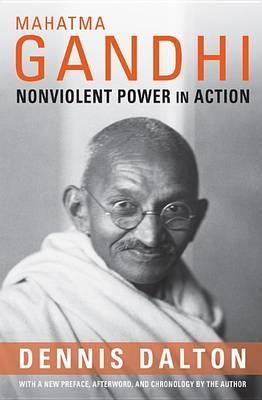
Featuring a new preface by the author, this book moves from the birth of Gandhi's method of nonviolent resistance in South Africa to an in-depth analysis of two of his signal triumphs: the civil disobedience movement of 1930 and hi historic Calcutta fast of 1947. By focusing on these critical years, Dal;ton makes it clear that political leadership and a lifelong career in national politics gave Gandhi an opportunity to develop and refine his ideas and to test and perfect his ideals. The book concludes with a comparison of Ganbdhi to Martin Luther King, Jr, and Malcolm X, confirming Gandhi's relevance to the study of race and political leadership in America.
Full Product Details
Author: Dennis Dalton
Publisher: Columbia University Press
Imprint: Columbia University Press
Edition: 2nd Revised edition
Dimensions:
Width: 15.90cm
, Height: 1.60cm
, Length: 22.90cm
Weight: 0.454kg
ISBN: 9780231122375
ISBN 10: 0231122373
Pages: 304
Publication Date: 08 February 2001
Audience:
General/trade
,
General
Format: Paperback
Publisher's Status: Out of Stock Indefinitely
Availability: Awaiting stock

Reviews
"""Presents an intellectually satisfying analysis of the Gandhian concepts of satyagraha and swaraj, of their interconnection, and of their application in his quest for Indian independence.... a clear, thoughtful study, the best in recent years. (from the first edition)"" -- Library Journal ""Presents an intellectually satisfying analysis of the Gandhian concepts of satyagraha and swaraj, of their interconnection, and of their application in his quest for Indian independence.... a clear, thoughtful study, the best in recent years. (from the first edition)"" -- ""Library Journal"" ""Presents an intellectually satisfying analysis of the Gandhian concepts of satyagraha and swaraj, of their interconnection, and of their application in his quest for Indian independence.... a clear, thoughtful study, the best in recent years. (from the first edition)"" -- ""Library Journal"""
Worthy study of Gandhi (1869-1948) as a political and social leader, by longtime Gandhi scholar Dalton (Political Science/Barnard). According to the author, Gandhi built his revolutionary platform on two moral principles. One was swaraj, meaning freedom - not in the modern American sense of unbridled choice but rather social and individual liberation achieved through discipline ruled from within. The other was satyagraha, or non-violent power. Here, too, Gandhi diverged from modern sensibilities, for satyagraha to him was more than passive resistance: It entailed active compassion, even love, for one's enemies. Although Gandhi later moderated some of his ideas - for instance, his wholesale rejection of modern civilization - Dalton makes it clear that the Mahatma's radical spiritual stance was the inexhaustible force that powered Indian resistance to British rule. Gandhi's greatest triumph was his march to the sea in 1930 protesting the infamous British salt tax, an event that Dalton describes in detail, as he does the spectacular Calcutta fast for peace during the 1947 Hindu-Moslem hostilities. Less well known, but also amply covered here, are the many harsh evaluations of Gandhi by fellow countrymen, most notably Rabindranath Tagore, Nobel-winning poet, who attacked the Mahatma for fostering nationalism rather than world peace. Revelatory, too, is Gandhi's own misstep in urging Jews to combat Hitler through satyagraha. Dalton concludes with a brief comparison of Gandhi, Malcolm X, and Martin Luther King, Jr., and with a glance at Gandhi's lessons for posterity. A bit too thick on intra-Indian political squabbles; otherwise, a tidy presentation of a sociopolitical vision that seems as fresh and radical today as it did half a century ago. (Kirkus Reviews)
<p> Presents an intellectually satisfying analysis of the Gandhian concepts of satyagraha and swaraj, of their interconnection, and of their application in his quest for Indian independence.... a clear, thoughtful study, the best in recent years. (from the first edition) -- Library Journal
Presents an intellectually satisfying analysis of the Gandhian concepts of satyagraha and swaraj, of their interconnection, and of their application in his quest for Indian independence.... a clear, thoughtful study, the best in recent years. (from the first edition) -- Library Journal
Author Information
Dennis Dalton is a professor of political science at Barnard College.