Overview
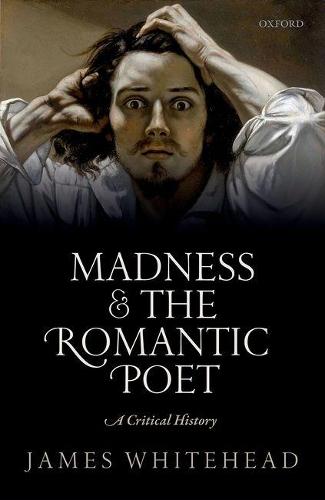
Madness and the Romantic Poet examines the longstanding and enduringly popular idea that poetry is connected to madness and mental illness. The idea goes back to classical antiquity, but it was given new life at the turn of the nineteenth century. The book offers a new and much more complete history of its development than has previously been attempted, alongside important associated ideas about individual genius, creativity, the emotions, rationality, and the mind in extreme states or disorder - ideas that have been pervasive in modern popular culture. More specifically, the book tells the story of the initial growth and wider dissemination of the idea of the 'Romantic mad poet' in the nineteenth century, how (and why) this idea became so popular, and how it interacted with the very different fortunes in reception and reputation of Romantic poets, their poetry, and attacks on or defences of Romanticism as a cultural trend generally - again leaving a popular legacy that endured into the twentieth century. Material covered includes nineteenth-century journalism, early literary criticism, biography, medical and psychiatric literature, and poetry. A wide range of scientific (and pseudoscientific) thinkers are discussed alongside major Romantic authors, including Wordsworth, Coleridge, Blake, Hazlitt, Lamb, Percy Bysshe Shelley, Keats, Byron, and John Clare. Using this array of sources and figures, the book asks: was the Romantic mad genius just a sentimental stereotype or a romantic myth? Or does its long popularity tell us something serious about Romanticism and the role it has played, or has been given, in modern culture?
Full Product Details
Author: James Whitehead (Lecturer in English, Liverpool John Moores University)
Publisher: Oxford University Press
Imprint: Oxford University Press
Dimensions:
Width: 17.40cm
, Height: 2.50cm
, Length: 24.00cm
Weight: 0.632kg
ISBN: 9780198733706
ISBN 10: 0198733704
Pages: 318
Publication Date: 27 July 2017
Audience:
College/higher education
,
Professional and scholarly
,
Tertiary & Higher Education
,
Professional & Vocational
Format: Hardback
Publisher's Status: Active
Availability: To order

Stock availability from the supplier is unknown. We will order it for you and ship this item to you once it is received by us.
Reviews
[A] learned and wide ranging monograph ... [it succeeds] in an innovative and comprehensive way ... an enormous achievement in terms of the collocation, analysis and discussion of a wide range of diverse texts, both primary and secondary ... Undoubtedly, it deserves to be well received. * Review of English Studies * This text is rich with a wealth of research from primary sources, secondary analyses and literary criticism. It is particularly deft in its dialogue with the work of Foucault and a variety of other notable scholars in the field ... In its mission to examine how the mythology of madness coalesced around the British Romantics, this text does a smart painstaking job of debunking and re-contextualizing, and should be incredibly useful to specialized scholars interested in the topic. * Jessica C Hume, The British Society for Literature and Science * Whitehead's meticulous study fills [a] critical gap in knowledge ... The originality of Whitehead's study lies in its appeal to an array of audiences. Far-reaching and interdisciplinary, it is of interest to those working in the medical humanities as well as to literary theorists and literature enthusiasts (especially in its examination of poetry, literary criticism and biography); to historians of psychiatry and those interested in the history of madness (particularly in its historical account of the rise of psychological approaches to poetry); to clinicians (in its discussion of the history of psychiatry and medicine and its explanation of how these disciplines affected and altered the cultural, social and literary meanings of madness); and to historians in general (given that it is, at its heart, a cultural history). * Shoshannah Jones Square, History of Psychiatry * James Whitehead's Madness and the Romantic Poet is recommended reading for anyone tempted to engage with the idea of the mad poet, whether in the Romantic period, or in more recent decades ... Whitehead is less interested in individual representations of madness in the period than he is in asking why the mad Romantic poet became a cultural meme. In doing so, he draws a convincing lineage. * Times Literary Supplement * Whitehead makes a compelling case for how the cultural construct of the mad poet has implications well beyond the realm of literary history, standing as a testimony to the impact of Romanticism on modernity. Whitehead's theoretical sophistication, evidenced by his engagement of the legacy of Foucault in particular, as well as his extraordinary erudition and meticulous research, are better experienced than described. The book richly rewards the time a reader invests to it. * Bridget Keegan, European Romantic Review *
[A] learned and wide ranging monograph ... [it succeeds] in an innovative and comprehensive way ... an enormous achievement in terms of the collocation, analysis and discussion of a wide range of diverse texts, both primary and secondary ... Undoubtedly, it deserves to be well received. * Review of English Studies *
[A] learned and wide ranging monograph ... [it succeeds] in an innovative and comprehensive way ... an enormous achievement in terms of the collocation, analysis and discussion of a wide range of diverse texts, both primary and secondary ... Undoubtedly, it deserves to be well received. * Review of English Studies * This text is rich with a wealth of research from primary sources, secondary analyses and literary criticism. It is particularly deft in its dialogue with the work of Foucault and a variety of other notable scholars in the field. ... In its mission to examine how the mythology of madness coalesced around the British Romantics, this text does a smart painstaking job of debunking and re-contextualizing, and should be incredibly useful to specialized scholars interested in the topic. * Jessica C Hume, The British Society for Literature and Science *
Author Information
James Whitehead is a Lecturer in English at the Centre for Literature and Cultural History at Liverpool John Moores University. He studied English Language and Literature at Magdalen College Oxford, University College London, and King's College London, where he also held a Wellcome Trust funded postdoctoral fellowship and lectured in English and medical humanities. Dr Whitehead has worked as an editor and library researcher for the third edition of the Oxford English Dictionary and his interests include Romanticism and its afterlives, psychiatry and mental illness in nineteenth and twentieth-century literature, and the study of life-writing.