Overview
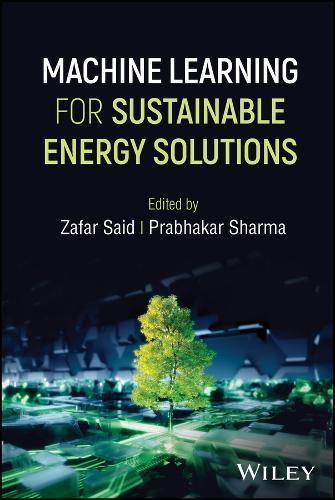
Comprehensive insights into integrating modern engineering techniques with machine learning and renewable energy to create a more sustainable world Through an interdisciplinary approach, Machine Learning for Sustainable Energy Solutions provides comprehensive insights into integrating modern engineering techniques such as machine learning (ML), artificial intelligence (AI), nanotechnology, digital twins, and the Internet of Things (IoT) with renewable energy. Each chapter is based on modern research and enhanced by experimental or simulated data. The book offers a thorough review of several energy storage techniques, helping readers fully grasp the larger background in which chemical, thermal, electrical, mechanical, and machine learning technologies may be used to evaluate, categorize, and maximize different storage systems. The book also reviews the confluence of the Internet of Things (IoT) and machine learning for real-time digestive parameter control and monitoring, along with the cooperative importance of mathematical modeling and artificial intelligence in maximizing reactor performance, gas output, and operational stability. Machine Learning for Sustainable Energy Solutions includes information on: Bio-based energy generation from biomass gasification and biohydrogen Usage of hybrid approaches, support vector machines, and neural networks to anticipate and maximize bioenergy production from challenging organic feedstocks Hydrogen-powered dual-fuel engines, covering response surface methodology (RSM) for multi-attribute optimization Scalable, experimentally confirmed ML-based solutions for long-standing problems like sedimentation, pumping losses, and stability of nanofluids The growing and important use of nanotechnology in energy systems, particularly in engine emissions management, energy storage, and heat transfer improvements Machine Learning for Sustainable Energy Solutions is an essential reference for professionals, researchers, educators, and students working in the fields of energy, environmental science, and machine learning. The book also helps decision-makers in various fields by providing them the required knowledge to make informed choices on sustainable practices and policies.
Full Product Details
Author: Zafar Said (University of Sharjah, Unites Arab Emirates) ,
Prabhakar Sharma (Delhi Skill and Entrepreneurship University, India)
Publisher: John Wiley & Sons Inc
Imprint: John Wiley & Sons Inc
ISBN: 9781394267408
ISBN 10: 1394267401
Pages: 304
Publication Date: 11 December 2025
Audience:
Professional and scholarly
,
Professional & Vocational
Format: Hardback
Publisher's Status: Active
Availability: Awaiting stock

The supplier is currently out of stock of this item. It will be ordered for you and placed on backorder. Once it does come back in stock, we will ship it out for you.
Author Information
Zafar Said, PhD, is a Mechanical and Aerospace Engineering Associate Professor at UAE University. With over AED six million in research funding, he has led industry-focused projects with SEWA, Tabreed, and Masdar, advancing innovations in nanofluids, solar energy, AI, and low-carbon fuels. Prabhakar Sharma, PhD, is an assistant professor at Delhi Skill and Entrepreneurship University, Delhi, India. He has 30 years of combined experience in academia and industry.