Overview
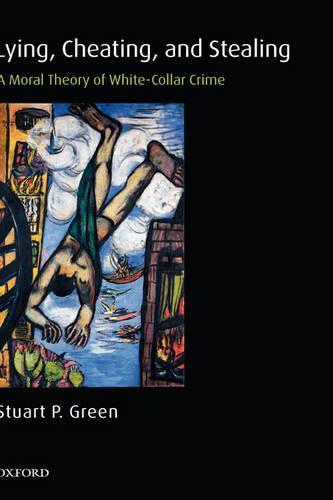
Where should the line between serious criminal fraud and lawful 'puffing' be drawn? What constitutes tax evasion beyond mere 'tax avoidance'? What separates obstruction of justice from 'zealous advocacy', or insider trading from 'savvy investing'? Can we meaningfully distinguish bribery from 'campaign contributions', or perjury from 'wiliness' on the witness stand? A look at some of the most high profile white collar crime cases in recent history will quickly reveal that there can sometimes be a fine line between serious fraudulent conduct and behaviour which, though it might be shrewd, crafty, or even devious, is not ultimately criminal. According to the traditional conception of the criminal law, penal sanctions should be used as a 'last resort', applicable only to conduct that is truly and unambiguously blameworthy. White-collar crime poses a serious challenge to this traditional view. This is the first book to use the tools of moral and legal theory as a means to examine a range of specific white-collar offenses, aiming to develop and apply a methodology that will allow us to make meaningful distinctions between genuine white collar criminality and merely aggressive business behavior. Particular attention is paid to the concept of moral wrongfulness, which is described in terms of violations of a range of familiar, but nevertheless powerful, moral norms that inform and shape the leading white-collar criminal offenses - norms against not only lying, cheating, and stealing, but also coercion, exploitation, disloyalty, promise-breaking, and defiance of law. It is through such analysis that the whole moral fabric of white-collar crime is brought into sharp relief.
Full Product Details
Author: Stuart P. Green (L.B. Porterie Professor of Law, Louisiana State University)
Publisher: Oxford University Press
Imprint: Oxford University Press
Dimensions:
Width: 16.20cm
, Height: 2.40cm
, Length: 24.20cm
Weight: 0.631kg
ISBN: 9780199268580
ISBN 10: 0199268584
Pages: 320
Publication Date: 26 January 2006
Audience:
Professional and scholarly
,
Professional & Vocational
Format: Hardback
Publisher's Status: Active
Availability: To order

Stock availability from the supplier is unknown. We will order it for you and ship this item to you once it is received by us.
Reviews
"This book marks a real advance in normative theorising about the moral foundations of the criminal law: it should provoke theorists to think not just about murder, but about insider trading; not just about rape, but about tax evasion - and about the wide range of regulatory offences' whose moral content has been so under-explored. This is an important book, which opens up the vast field of 'white-collar crime' to deep normative theorising - theorising that is informed by an acute grasp of the legal issues and by a thorough philosophical grounding. Professor Antony Duff, University of Stirling This is a long needed and pathbreaking consideration of white-collar crime from the perspective of a top-notch legal scholar. Stuart Green has absorbed knowledge in his own specialty and in the social sciences to provide a comprehensive and integrated understanding of behaviour that has been capturing headlines in the American media. Tough issues, long bypassed, come in for sophisticated scrutiny. I am certain that Lying, Cheating and Stealing will come to stand as a classic contribution to the study of law-breaking by the priveleged. Professor Gilbert Geiss, University of California, Irvine 'Mr. Green's book admirably clears away much of the conceptual underbrush surrounding the idea of white-collar crime... ""Lying, Cheating, and Stealing"" is strong on moral philosophy, not least in the way it illuminates the grey areas of business conduct. ... [it] will be helpful to anyone thinking about such cases [as Kenneth Lay's].' Andrew Stark, Wall Street Journal, 27 July 2006"
This book marks a real advance in normative theorising about the moral foundations of the criminal law: it should provoke theorists to think not just about murder, but about insider trading; not just about rape, but about tax evasion - and about the wide range of regulatory offences' whose moral content has been so under-explored. This is an important book, which opens up the vast field of 'white-collar crime' to deep normative theorising - theorising that is informed by an acute grasp of the legal issues and by a thorough philosophical grounding. Professor Antony Duff, University of Stirling This is a long needed and pathbreaking consideration of white-collar crime from the perspective of a top-notch legal scholar. Stuart Green has absorbed knowledge in his own specialty and in the social sciences to provide a comprehensive and integrated understanding of behaviour that has been capturing headlines in the American media. Tough issues, long bypassed, come in for sophisticated scrutiny. I am certain that Lying, Cheating and Stealing will come to stand as a classic contribution to the study of law-breaking by the priveleged. Professor Gilbert Geiss, University of California, Irvine 'Mr. Green's book admirably clears away much of the conceptual underbrush surrounding the idea of white-collar crime... Lying, Cheating, and Stealing is strong on moral philosophy, not least in the way it illuminates the grey areas of business conduct. ... [it] will be helpful to anyone thinking about such cases [as Kenneth Lay's].' Andrew Stark, Wall Street Journal, 27 July 2006
This book marks a real advance in normative theorising about the moral foundations of the criminal law: it should provoke theorists to think not just about murder, but about insider trading; not just about rape, but about tax evasion - and about the wide range of regulatory offences' whose moral content has been so under-explored. This is an important book, which opens up the vast field of 'white-collar crime' to deep normative theorising - theorising that is informed by an acute grasp of the legal issues and by a thorough philosophical grounding. Professor Antony Duff, University of Stirling This is a long needed and pathbreaking consideration of white-collar crime from the perspective of a top-notch legal scholar. Stuart Green has absorbed knowledge in his own specialty and in the social sciences to provide a comprehensive and integrated understanding of behaviour that has been capturing headlines in the American media. Tough issues, long bypassed, come in for sophisticated scrutiny. I am certain that Lying, Cheating and Stealing will come to stand as a classic contribution to the study of law-breaking by the priveleged. Professor Gilbert Geiss, University of California, Irvine 'Mr. Green's book admirably clears away much of the conceptual underbrush surrounding the idea of white-collar crime... Lying, Cheating, and Stealing is strong on moral philosophy, not least in the way it illuminates the grey areas of business conduct. ... [it] will be helpful to anyone thinking about such cases [as Kenneth Lay's].' Andrew Stark, Wall Street Journal, 27 July 2006
Author Information
Stuart Green is the L.B. Porterie Professor of Law at Louisiana State University. A graduate of Yale Law School, he has served as a Fulbright Distinguished Scholar in the United Kingdom and as a Visiting Professor at the University of Michigan Law School. He is co-editor, along with R.A. Duff, of Defining Crimes: Essays on the Special Part of the Criminal Law, published by OUP in 2005.