Overview
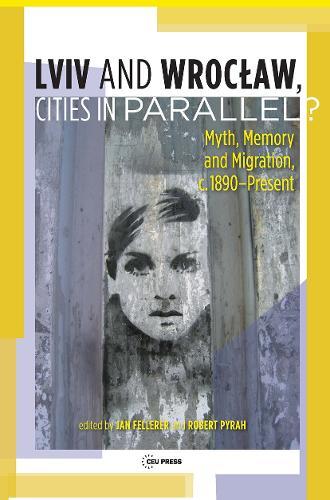
After World War II, Europe witnessed the massive redrawing of national borders and the efforts to make the population fit those new borders. As a consequence of these forced changes, both Lviv and Wrocław went through cataclysmic changes in population and culture. Assertively Polish prewar Lwów became Soviet Lvov, and then, after 1991, it became assertively Ukrainian Lviv. Breslau, the third largest city in Germany before 1945, was in turn ""recovered"" by communist Poland as Wrocław. Practically the entire population of Breslau was replaced, and Lwów's demography too was dramatically restructured: many Polish inhabitants migrated to Wrocław and most Jews perished or went into exile. The forced migration of these groups incorporated new myths and the construction of official memory projects. The chapters in this edited book compare the two cities by focusing on lived experiences and ""bottom-up"" historical processes. Their sources and methods are those of micro-history and include oral testimonies, memoirs, direct observation and questionnaires, examples of popular culture, and media pieces. The essays explore many manifestations of the two sides of the same coin—loss on the one hand, gain on the other—in two cities that, as a result of the political reality of the time, are complementary.
Full Product Details
Author: Robert Pyrah ,
Jan Fellerer
Publisher: Central European University Press
Imprint: Central European University Press
ISBN: 9789633863237
ISBN 10: 9633863236
Pages: 364
Publication Date: 10 October 2020
Audience:
Professional and scholarly
,
Professional & Vocational
Format: Hardback
Publisher's Status: Active
Availability: Manufactured on demand

We will order this item for you from a manufactured on demand supplier.
Reviews
Der vorliegende Band hinterfragt die ubliche Parallelisierung beider Stadtgeschichten anhand dreizehn spannender mikrohistorisch argumentierender Beitrage. Ausgehend von dem Umstand, dass in beiden Stadten aufgrund der tiefgreifenden demografischen Umwalzungen und Migrationserfahrungen erheblicher Bedarf an neuen lokalen Identitatsangeboten bestand, spuren die Beitrage dem Wandel von Erinnerungskulturen beider Stadte aus einer bottom-up-Perspektive nach. Der Sammelband fuhrt aktuelle Forschungen zur Geschichte beider Stadte zusammen, die bereits seit den 1990er-Jahren durch die weitestgehende Zuganglichkeit der Archive einen Aufschwung erlebt haben. Fur diesen Boom in der Forschung bildete gerade die multiethnische Pragung der ostmitteleuropaischen Stadte einen wichtigen Bezugspunkt, so auch im Falle L'vivs und (in geringerem Masse) Wroclaws. In konzeptueller Hinsicht knupft der Band an einen gegenwartigen, produktiven Trend in der historischen Forschung an, der die Mikrogeschichte ins Verhaltnis zur Meso- und Makrogeschichte setzt. Auf diese Weise koennen Befunde der historischen Vogelperspektive verifiziert, korrigiert oder erganzt werden. -- Heidi Hein-Kircher * H-Net Reviews * The focus of the volume on the processes of memory in the localities of L'viv and Wroclaw is an effective way to draw attention to the experience of large-scale historical processes at the local level, drawing on a repertoire of sources that would not otherwise be tapped. It will be of interest to students of a wide range of topics, including history, memory, urbanism, and mass population displacement in East-Central Europe and beyond. https://academic.oup.com/ahr/article/128/1/434/7098120 -- Violeta Davoliute * The American Historical Review *
Der vorliegende Band hinterfragt die ubliche Parallelisierung beider Stadtgeschichten anhand dreizehn spannender mikrohistorisch argumentierender Beitrage. Ausgehend von dem Umstand, dass in beiden Stadten aufgrund der tiefgreifenden demografischen Umwalzungen und Migrationserfahrungen erheblicher Bedarf an neuen lokalen Identitatsangeboten bestand, spuren die Beitrage dem Wandel von Erinnerungskulturen beider Stadte aus einer bottom-up-Perspektive nach. Der Sammelband fuhrt aktuelle Forschungen zur Geschichte beider Stadte zusammen, die bereits seit den 1990er-Jahren durch die weitestgehende Zuganglichkeit der Archive einen Aufschwung erlebt haben. Fur diesen Boom in der Forschung bildete gerade die multiethnische Pragung der ostmitteleuropaischen Stadte einen wichtigen Bezugspunkt, so auch im Falle L'vivs und (in geringerem Masse) Wroclaws. In konzeptueller Hinsicht knupft der Band an einen gegenwartigen, produktiven Trend in der historischen Forschung an, der die Mikrogeschichte ins Verhaltnis zur Meso- und Makrogeschichte setzt. Auf diese Weise koennen Befunde der historischen Vogelperspektive verifiziert, korrigiert oder erganzt werden. -- Heidi Hein-Kircher * H-Net Reviews *
Author Information
Robert Pyrah is Research Fellow at Wolfson College, University of Oxford