Overview
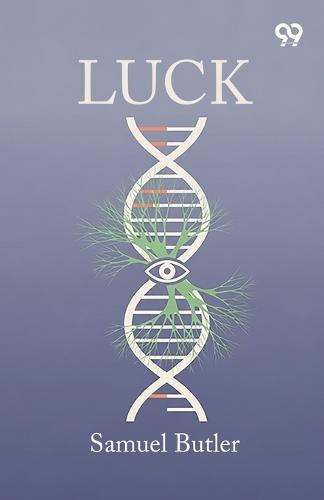
Luck or cunning as the main means of organic modification presents an argument that reconsiders how living beings change over generations by linking inherited traits to the persistence of memory. The work questions the idea that evolution operates solely through random variation, suggesting instead that the continuity between generations may be shaped by purposeful patterns that resemble remembered experience. The discussion highlights how organic development can be understood through a blend of observation, reasoning, and careful examination of biological processes. Early in the book, the narrator shifts from a general interest in classification to a closer look at evolutionary theory, emphasizing that understanding descent requires taking intention and structured influence into account. The text proposes that instinct should be viewed as memory carried forward, shaped not by chance alone but by influences that echo through successive generations. By exploring these ideas, the book invites readers to consider evolution as a process that blends adaptation, continuity, and an underlying sense of design, offering a perspective that moves beyond conventional interpretations.
Full Product Details
Author: Samuel Butler
Publisher: Double 9 Books
Imprint: Double 9 Books
Dimensions:
Width: 14.00cm
, Height: 1.10cm
, Length: 21.60cm
Weight: 0.222kg
ISBN: 9789375556855
ISBN 10: 9375556859
Pages: 186
Publication Date: 01 November 2025
Audience:
General/trade
,
General
Format: Paperback
Publisher's Status: Active
Availability: Available To Order

We have confirmation that this item is in stock with the supplier. It will be ordered in for you and dispatched immediately.
Author Information
Samuel Butler was an English author, critic, and scholar born in 1835. He is known for his contributions to literature, art criticism, and cultural commentary, combining intellectual rigor with keen observation and wit. Butler's work often explored philosophical, historical, and aesthetic themes, demonstrating a deep interest in the interplay between human creativity, moral values, and societal development. He wrote both fiction and nonfiction, including studies of art, literature, and social institutions, reflecting his diverse intellectual pursuits and scholarly curiosity. Butler's historical and artistic investigations, such as his account of the Sacro Monte at Varallo-Sesia, showcase his attention to detail and his desire to contextualize artistic achievement within broader cultural and religious frameworks. Throughout his life, he engaged with the ideas of his time, offering analysis, critique, and reflection that sought to illuminate the significance of human endeavor. Butler passed away in 1902, leaving a legacy of insightful writings that continue to inform studies of literature, art, and culture.