|
|
|||
|
||||
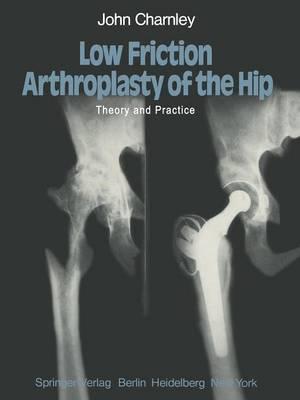
OverviewThe theme of this work is the application of the engmeermg theory of frictional torque to total hip replacement. The author adhered tenaciously to this theory, involving the use of a small-diameter femoral head, throughout the epoch when the large-diame ter, metal-to-metal design dominated the field. During that considerable period general satisfaction with the early results rendered criticisms of the large-diameter head unwelcome. There was a formidable array of counter criticism: the small head would pierce a film of synovial fluid; the small head would wear the socket too rapidly; the small head would always have a high risk of dislocation; detachment of the trochanter, to achieve precise orientation for the small head, was unacceptable. But all these objections have now been largely overcome. Lubrication of high molecular weight polyethylene (HMWP) on metal is now accepted as being mainly by the boundary regime with thick fluid films playing no part. We now know that HMWP can indeed tolerate the very high stresses imposed by the small head and in tribological theory there may even be some advantage in high stress. Dislocation is now known not to be an automatic sequel to the small head. Full Product DetailsAuthor: J. CharnleyPublisher: Springer-Verlag Berlin and Heidelberg GmbH & Co. KG Imprint: Springer-Verlag Berlin and Heidelberg GmbH & Co. K Edition: Softcover reprint of the original 1st ed. 1979 Dimensions: Width: 21.00cm , Height: 2.30cm , Length: 28.00cm Weight: 0.972kg ISBN: 9783642670152ISBN 10: 3642670156 Pages: 376 Publication Date: 12 February 2012 Audience: Professional and scholarly , Professional & Vocational Format: Paperback Publisher's Status: Active Availability: Manufactured on demand We will order this item for you from a manufactured on demand supplier. Table of Contents1 Low Friction Principle.- 2 Organisation of Follow-Up.- 3 Numerical Grading of Clinical Results.- 4 Cement-Bone Interface.- 5 Long-Term Clinical Results.- 6 Long-Term Radiological Results.- 7 Hip Sockets — Theory.- 8 Types of LFA Hip Socket.- 9 Femoral Prostheses — Theory.- 10 Types of LFA Femoral Prostheses.- 11 Pre-operative Measurement of X-Rays.- 12 Detachment and Reattachment of the Great Trochanter.- 13 Clean Air Operating — Theory.- 14 Clean Air Operating — Practice.- 15 Technique of Low Friction Arthroplasty of the Hip.- 16 Femoral Neck-Length Jig.- 17 Post-operative Management.- 18 Thrombo-embolic Complications.- 19 Post-operative Dislocation.- 20 Wear of Hip Sockets.- 21 Biomechanics.- 22 Selection of Patients.- Appendix A. Ectopic Ossification After LFA of the Hip.- Appendix B. Re-surfacing Arthroplasty of the Hip.- Appendix C. Special Instruments.- References.- Patent Details.ReviewsAuthor InformationTab Content 6Author Website:Countries AvailableAll regions |
||||