|
|
|||
|
||||
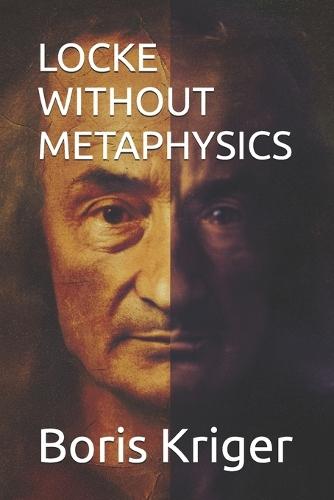
OverviewClassical epistemology asked ""how does the mind acquire knowledge of the world?"" and spent three and a half centuries unable to answer, because the question was badly posed. It presupposed a division between mind and world, between subject and object, between inner representation and outer reality - a division that does not exist in nature. This monograph replaces the question. Not ""how does the mind know?"" but ""what constraints must any persistent complex system satisfy in an environment with finite resources?"" The answer is a theorem, not a hypothesis. Two logically independent physical facts - finite signal speed (temporal latency) and finite channel capacity (informational complexity) - each independently force any viable adaptive system to maintain internal states carrying information about the future beyond what present observation provides. This is prediction. Not an evolutionary adaptation. Not a property of biological brains. A structural inevitability - a consequence of physical law that would hold in any universe with finite signal speed and finite channel capacity. Keywords: epistemology; predictive processing; complex systems; Bayesian inference; John Locke; viability constraints; structural inevitability; Dual-Pressure Convergence Theorem; philosophy of mind; naturalized epistemology; free energy principle; generative models; atemporality of memory; philosophy of science Full Product DetailsAuthor: Boris KrigerPublisher: Independently Published Imprint: Independently Published Dimensions: Width: 15.20cm , Height: 1.10cm , Length: 22.90cm Weight: 0.281kg ISBN: 9798257975479Pages: 204 Publication Date: 19 April 2026 Audience: General/trade , General Format: Paperback Publisher's Status: Active Availability: Available To Order We have confirmation that this item is in stock with the supplier. It will be ordered in for you and dispatched immediately. Table of ContentsReviewsAuthor InformationTab Content 6Author Website:Countries AvailableAll regions |
||||