Overview
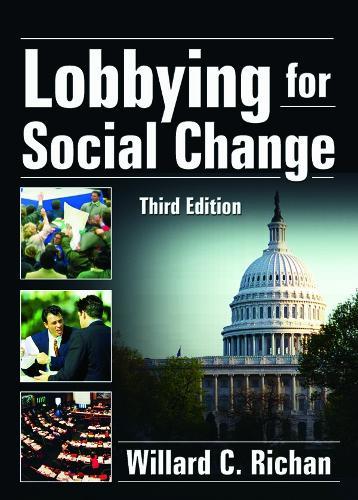
This step-by-step guide to lobbying covers it allfrom the basics for beginners to specific techniques for experienced lobbyists You and I may never achieve major public office, but we do not need to in order to affect public policy. Author Willard C. Richan To effect social change, any lobbyist’s case must be presented with skill, knowledge, and confidence. This reader-friendly book shows the way. It assumes no prior knowledge of the subject and provides the nuts and bolts of public policy advocacy (lobbying) in non-technical language. Lobbying for Social Change, Third Edition is organized in a way that easily lends itself to use in the classroom as well as by individual or group advocates, and it is packed with clearly presented case material that illustrates the lobbying process in action. This new edition provides updated case material, expanded coverage of electronic media, and two new chapters; one focusing on direct action for fundamental change, and the other presenting a case history of a grassroots lobbying campaign. Part I of Lobbying for Social Change, Third Edition, entitled The Basics, will show you how to: assess your political resources set an agenda for action understand whom to lobbyand how to gauge their power, motivation, and ability to effect or impede social change gather and use evidence to support your position Part II, Practical Applications, gives you nuts-and-bolts information about how lobbying is done. You’ll learn: how to work directly with policymakers-face-to-face, by mail, by telephone, etc. effective rules for to testifying in a public hearing how to make use of the mass media-writing news releases, participating in panel discussions, what to do when being interviewed (and how to increase your chances of being a repeat guest on talk and news shows), and how to effectively work with print and electronic media, including the Internet ways to take on the system through direct action Part III, Case History of a Grassroots Lobbying Campaign, takes you inside an actual campaign (in this case, to amend the impendingat the timewelfare reform bill). You’ll see how a group of five Philadelphia area social workers and one feminist activist started the Delaware County Coalition to Save Our Safety Neta coalition that would make a substantial impact on the specifics of welfare in the state of Pennsylvania. This new edition of the classic manual for lobbyists is packed with vital information for lobbying in the new millennium. We urge you to consider making it a part of your personal or teaching collection today!
Full Product Details
Author: Willard C. Richan
Publisher: Taylor & Francis Inc
Imprint: Routledge
Edition: 3rd edition
Dimensions:
Width: 15.60cm
, Height: 2.60cm
, Length: 21.60cm
Weight: 0.740kg
ISBN: 9780789031655
ISBN 10: 0789031655
Pages: 316
Publication Date: 07 November 2006
Audience:
Professional and scholarly
,
Professional & Vocational
Format: Hardback
Publisher's Status: Active
Availability: In Print

This item will be ordered in for you from one of our suppliers. Upon receipt, we will promptly dispatch it out to you. For in store availability, please contact us.